
GLP-1 receptor agonists have spent the last few years dominating conversations about weight loss and metabolic health. But new data presented at CHEST 2026, the annual conference of the American College of Chest Physicians, suggests their benefits may extend well beyond the scale. For anyone serious about recovery, performance, and long-term health, that's worth understanding.
What the CHEST 2026 Data Actually Shows
Researchers presented findings showing that GLP-1 medications, including semaglutide, produced meaningful reductions in obstructive sleep apnea (OSA) severity in adults with obesity. The reduction in apnea-hypopnea index (AHI) scores, the standard clinical measure of how many times per hour breathing is interrupted during sleep, was significant enough to move some participants from severe to moderate, or moderate to mild, categories.
What made these findings particularly notable is that the improvements appeared to go beyond what weight loss alone would predict. Earlier research had already established that losing body weight tends to reduce OSA severity by decreasing fat tissue around the upper airway. The CHEST 2026 data added to a growing body of evidence suggesting GLP-1 drugs may have additional anti-inflammatory or airway-specific mechanisms that contribute independently to that improvement.
This doesn't mean the science is settled. It means the conversation has shifted from "interesting preliminary signal" to "clinically relevant finding worth taking seriously."
Sleep Apnea Is Far More Common Than Most People Realize
Obstructive sleep apnea affects an estimated 1 billion people worldwide, according to a widely cited global prevalence study. Yet diagnosis rates remain strikingly low. Many people with moderate OSA have no idea they have it, particularly if they don't have an obvious snoring complaint or a bed partner to notice disrupted breathing patterns.
Active adults are especially likely to fly under the radar. If you're exercising regularly, eating reasonably well, and maintaining a healthy weight, OSA might not be on your radar. But it should be. The condition is tied not just to BMI but to airway anatomy, neck circumference, sleeping position, alcohol use, and age-related muscle tone changes. Even lean, fit individuals can develop it.
The symptoms you're most likely to dismiss: waking up tired despite a full night in bed, difficulty concentrating in the afternoon, a tendency to fall asleep easily during passive activities, and low-grade mood instability. If any of those feel familiar, that's worth raising with a clinician.
Why Untreated Sleep Apnea Quietly Undermines Your Fitness Goals
This is where the wellness implications become direct. Sleep apnea doesn't just make you tired. It systematically disrupts the biological processes that make training actually work.
During deep sleep, particularly slow-wave sleep, your body releases the majority of its daily growth hormone. That hormone drives muscle protein synthesis, supports fat metabolism, and aids tissue repair after training. When OSA causes repeated micro-arousals throughout the night, slow-wave sleep is fragmented or suppressed. The result is blunted growth hormone output, even if total sleep time looks adequate on a tracker.
The cortisol picture is equally problematic. Repeated nighttime oxygen drops trigger a low-grade physiological stress response. Cortisol rises. Over time, chronically elevated cortisol compromises muscle building, increases fat storage (particularly visceral fat), and impairs immune function. You can train hard and eat well while a silent sleep disorder quietly works against you.
As covered in how deep sleep builds muscle, burns fat, and supports brain health, the architecture of your sleep matters as much as its duration. OSA attacks that architecture directly.
There's also an inflammation dimension. Research has established clear links between fragmented, low-quality sleep and elevated inflammatory markers like C-reactive protein. The piece on how insomnia drives inflammation at a genetic level maps out some of that mechanistic evidence in detail. Obstructive sleep apnea creates a similar inflammatory environment, with real downstream consequences for cardiovascular health and metabolic function.
GLP-1 Drugs: A Meaningful Tool, Not a Universal Answer
The CHEST 2026 findings matter because they broaden the clinical case for GLP-1 medications in people who already have both obesity and OSA. For that population, the data suggests these drugs could reduce disease burden on two fronts simultaneously, which is clinically significant.
But GLP-1 medications are prescription drugs with side effect profiles, access barriers, and cost considerations. They're not appropriate for everyone, and they're certainly not a shortcut for people without the metabolic conditions they're indicated for. The goal here isn't to recommend a medication. It's to understand what the evidence means in the context of a complete wellness picture.
It's also worth noting that the exercise-as-medicine conversation is moving fast. Exercise is now officially recommended as a prescription-level intervention for cardiovascular health, and the mechanisms overlap substantially with sleep quality. Improved cardiovascular fitness reduces resting heart rate, lowers inflammation, and can meaningfully reduce OSA severity, particularly in people with mild to moderate presentations.
Lifestyle Levers That Actually Move the Needle on Sleep Apnea
Medication aside, here's what the evidence supports for people who want to address sleep quality and OSA risk through lifestyle:
- Weight management through sustainable habits. Even a 5 to 10 percent reduction in body weight has been shown to produce clinically meaningful reductions in AHI scores in people with obesity-related OSA. This doesn't require extreme approaches. Consistent, moderate deficit eating and increased activity tend to move this marker.
- Strategic exercise programming. Aerobic training improves upper airway muscle tone and reduces OSA severity independently of weight loss. Resistance training contributes through metabolic and body composition changes. If you're over 35 and building or rebuilding a training plan, the way your coach structures your program matters. The guidance on what a coach should prioritize when training athletes over 35 is directly relevant here, particularly around recovery load and sleep-performance feedback loops.
- Alcohol reduction, especially before bed. Alcohol is a muscle relaxant that dramatically worsens airway collapse during sleep. Even one to two drinks within three hours of bedtime can significantly elevate AHI scores in people with existing OSA.
- Positional sleep strategies. For many people, OSA is significantly worse in the supine (back) position. Side sleeping, maintained through body pillows or positional devices, can reduce severity substantially, particularly for mild to moderate cases.
- Consistent sleep and wake times. Circadian regularity supports deeper, more restorative sleep architecture. It won't cure structural OSA, but it reduces the compounding damage that irregular sleep patterns add on top of it.
- Late-night eating patterns. Eating close to bedtime increases gastric pressure and can worsen airway dynamics during sleep. There's also separate evidence linking late eating to broader metabolic disruption. The research on how late-night eating raises liver disease risk illustrates why nighttime nutrition timing carries more biological weight than it's often given credit for.
When to Actually Get Tested
If you recognize the symptoms described above, the diagnostic path is more accessible than it used to be. Home sleep apnea testing is now widely available through primary care providers and telehealth services, typically at a fraction of the cost of in-lab polysomnography. You don't need a specialist referral in most cases to start that process.
It's particularly worth pursuing if you're an older adult who has noticed declining training adaptations, increased recovery time, or mood and cognitive changes that don't track with your lifestyle habits. OSA prevalence increases with age, and the performance and health consequences compound over time without treatment.
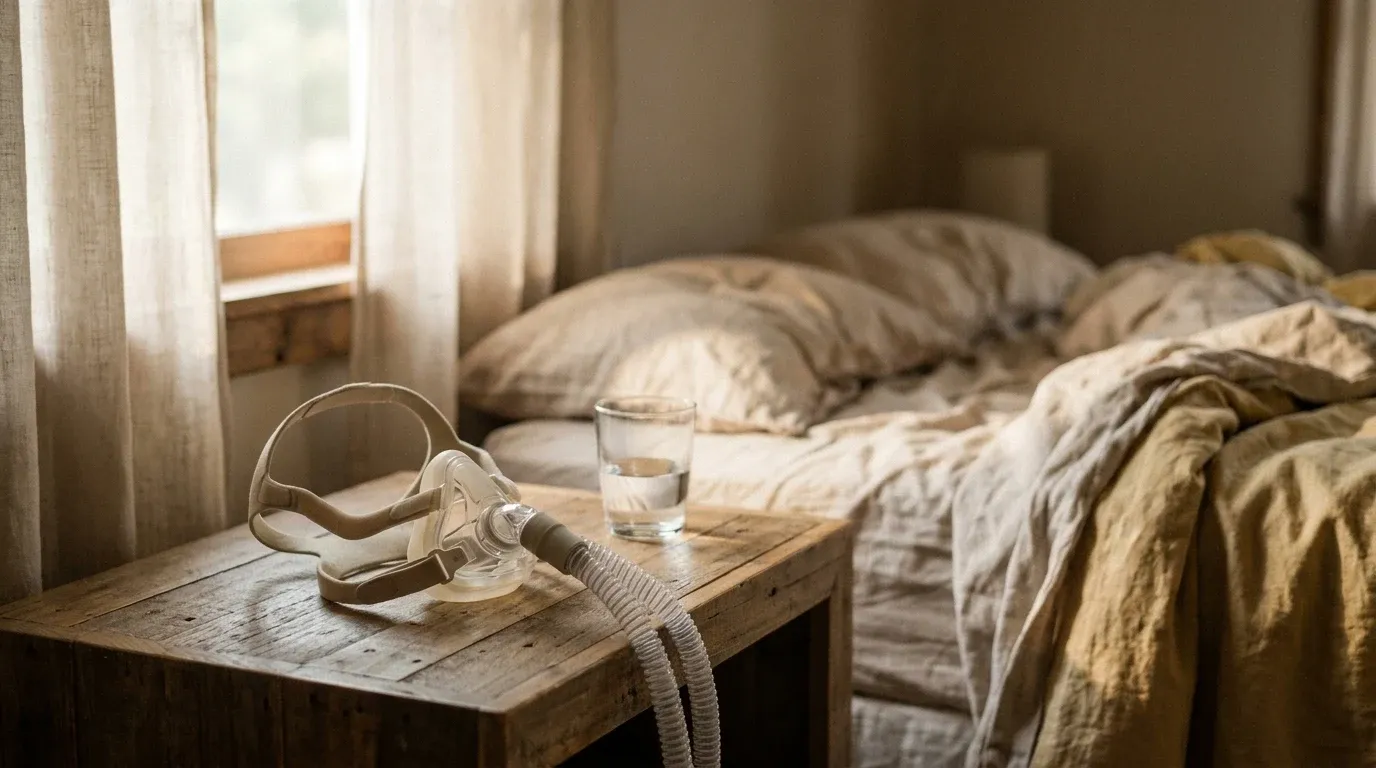
CPAP therapy, the standard first-line treatment, has a mixed reputation but a strong evidence base. Adherence is the real challenge, and newer mask designs have improved significantly. Oral appliance therapy is a viable alternative for mild to moderate cases, particularly for people who can't tolerate CPAP.
The Bigger Picture on Metabolic and Sleep Health
What makes the GLP-1 and sleep apnea story meaningful beyond the medication itself is what it signals about the relationship between metabolic health, inflammation, body composition, and sleep quality. These systems don't operate in isolation. Disrupted sleep worsens metabolic function. Poor metabolic health worsens sleep. The cycle compounds quietly over years.
GLP-1 drugs appear to break into that cycle at multiple points simultaneously. That's scientifically interesting. But the cycle can also be interrupted through structured lifestyle intervention, and for the majority of wellness-focused readers, that's the more actionable starting point.
Your sleep quality is a recovery metric. It's a hormonal metric. It's a metabolic metric. Treating it as seriously as your training load or your nutrition strategy isn't overcalibrated. Given what the data keeps showing, it might actually be undervalued.