
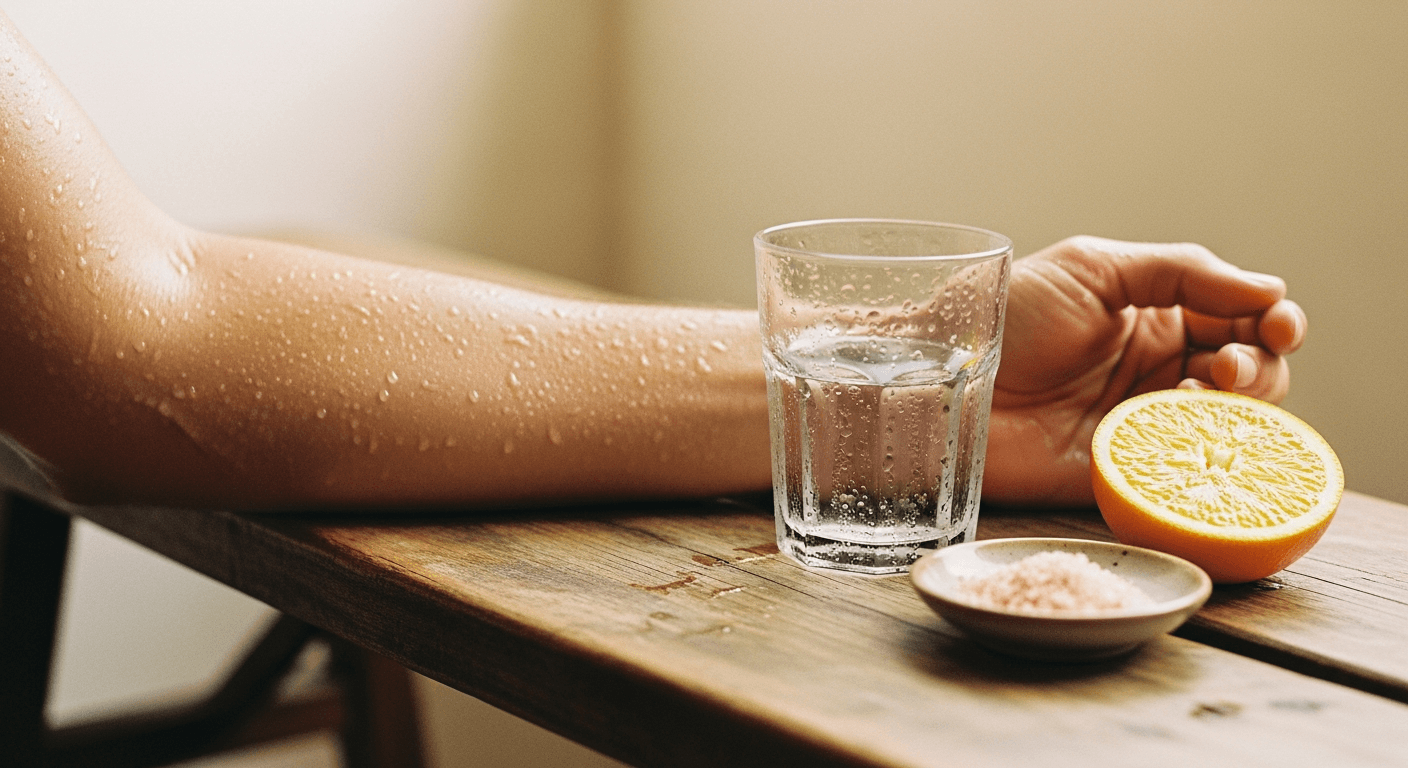
The fitness industry loves complexity. Protein timing windows, branched-chain amino acid ratios, creatine loading protocols. These topics generate content, sell supplements, and keep athletes endlessly optimizing. Meanwhile, two of the most powerful recovery levers available to you cost almost nothing and get almost no attention: water and electrolytes.
This isn't about telling you to drink more water in a vague, unhelpful way. It's about understanding what actually happens to your body after hard training, why plain water can sometimes make things worse, and how to fix the problem with food you probably already have at home.
Why Your Muscles Cramp and You're Blaming the Wrong Thing
Muscle cramps during or after training are almost universally blamed on overtraining or insufficient rest. Sometimes that's accurate. But research consistently points to electrolyte imbalance as one of the primary culprits, particularly losses of sodium, potassium, and magnesium through sweat.
Electrolytes are minerals that carry an electrical charge. They regulate muscle contractions, nerve signaling, and fluid balance at the cellular level. When those concentrations drop below functional thresholds, your muscles fire erratically. That cramping in your calves at mile eight, or the persistent tightness in your hamstrings two days after a hard session, may not be a training load problem at all.
Prolonged soreness follows similar logic. Electrolyte depletion impairs the cellular processes involved in muscle repair. If you're training hard but recovering slowly despite adequate sleep and protein intake, your fluid and mineral balance deserves a serious look before you restructure your entire program.
This matters especially if you're also combining strength and endurance work. Cardio and Lifting Together: What Science Confirms outlines the compounding stress that concurrent training places on recovery systems. That compounding stress includes electrolyte demand, which most athletes in that training style underestimate significantly.
What Intense Exercise Actually Does to Your Fluid Balance
During an hour of moderate to intense exercise, the average person loses between 0.5 and 2 liters of sweat depending on body size, exercise intensity, heat, and individual sweat rate. Elite athletes and those training in hot environments can exceed that range substantially.
Here's where it gets important: sweat isn't just water. It contains sodium at concentrations ranging from 200 to 1,000 milligrams per liter, along with meaningful amounts of potassium, magnesium, and chloride. When you finish a long run or a heavy training block and drink two glasses of plain water, you're replacing volume without replacing the minerals that make that volume functional.
The result is a condition known as hyponatremia in its extreme form, but even mild dilution of sodium levels can blunt the thirst mechanism, impair muscle function, and leave you feeling foggy and flat for hours after training. Many athletes interpret this as fatigue from the workout itself. Often, it's the electrolyte gap.
Hydration needs also don't reset the moment you stop sweating. Research indicates that full fluid and electrolyte restoration after significant exercise can take anywhere from 12 to 24 hours, depending on how much was lost and how strategically you rehydrate. Drinking a large amount of plain water in a short window after training doesn't accelerate that process. It can actually slow it by suppressing thirst before sodium levels are normalized.
Plain Water Is Not Always the Answer
This idea runs counter to decades of public health messaging, so it's worth being direct about it. Plain water is appropriate for everyday hydration and low-intensity activity. For sessions lasting longer than 60 to 75 minutes, high-intensity intervals, or any training done in significant heat, plain water alone is an incomplete recovery strategy.
The body retains fluid most effectively when it enters alongside sodium. Sodium triggers the hormonal signals that tell your kidneys to hold onto water rather than excrete it. Without adequate sodium intake during rehydration, a larger portion of what you drink gets passed as urine before it can be absorbed and distributed where it's needed.
This doesn't mean you need to buy expensive sports drinks loaded with sugar and artificial dyes. It means you need to think about electrolytes as part of your post-training nutrition, not as an afterthought or a luxury product category.
Food-First Strategies That Actually Work
The supplement industry has done an effective job making electrolyte replenishment seem complicated and expensive. It isn't. Your kitchen likely already contains most of what you need.
Sodium: The most critical electrolyte for post-exercise recovery. Lightly salted whole foods work well. A small handful of salted nuts, a piece of toast with salted butter, or a glass of vegetable broth after training can meaningfully restore sodium levels without any specialist product. For longer sessions in heat, adding a quarter teaspoon of table salt to a water bottle is a simple and effective strategy.
Potassium: Works alongside sodium to regulate fluid inside and outside cells. Bananas are the cliché, but potatoes, avocado, and leafy greens are actually higher in potassium per serving. A post-workout meal built around a baked potato with Greek yogurt and spinach covers a significant portion of your daily potassium needs in a single sitting.
Magnesium: Often the overlooked third in the electrolyte conversation. Magnesium is involved in over 300 enzymatic reactions, including those governing muscle relaxation. Nuts, seeds, dark chocolate, and legumes are practical sources. Many athletes are chronically low in magnesium without realizing it, which contributes directly to persistent cramping and poor sleep quality after training.
Calcium: Plays a role in muscle contraction and signaling. Dairy, fortified plant milks, and sardines are efficient sources that double as post-workout protein contributors.
It's also worth considering how food quality fits into this picture. Highly processed convenience foods often contain sodium in forms that don't support recovery as effectively, while crowding out potassium and magnesium-rich whole foods. Ultra-Processed Foods: What Practitioners Say in 2026 covers how food processing affects nutrient availability in ways that matter for active people specifically.
When Supplements Make Sense
Food-first is the right default. But there are situations where electrolyte supplements add genuine value rather than just cost.
If you're competing in endurance events lasting more than two hours, consuming adequate sodium through food during the event isn't practical. Purpose-formulated electrolyte products with meaningful sodium content (look for at least 300 to 500 milligrams per serving) serve a real function here. Cycling Event Nutrition: Your Race-Day Fueling Guide provides a useful framework for thinking about this in a structured competitive context.
Athletes training twice daily, those in physically demanding jobs, and people who are heavy or salty sweaters may also have electrolyte needs that are difficult to cover through diet alone without deliberate planning.
If you're evaluating supplement options, prioritize products with minimal ingredients and transparent sodium, potassium, and magnesium levels on the label. Ignore marketing language about "advanced hydration matrices" and focus on the actual mineral content per serving. Most effective options cost between $0.50 and $1.50 per serving. Anything significantly beyond that is paying for branding.
The Recovery Picture Is Bigger Than Fluids
Electrolyte balance and hydration are foundational, but they don't exist in isolation. Sleep, stress load, and how you structure your training volume all interact with how efficiently your body recovers from hard sessions.
Chronic stress elevates cortisol, which disrupts fluid regulation and increases urinary losses of key minerals including magnesium and potassium. If your training recovery feels perpetually inadequate, your life stress load may be compounding the problem. Stress Coping Strategies That Actually Work in 2026 addresses this intersection between psychological load and physical recovery in practical terms.
Sleep is the other major variable. Research shows that even moderate sleep restriction impairs muscle protein synthesis and extends the inflammatory response to exercise. You can optimize your electrolyte intake precisely, but if you're consistently under-sleeping, you're limiting the returns on every other recovery strategy. Too Little or Too Much Sleep Both Hurt You outlines the evidence for why both extremes of sleep duration create measurable performance and health costs.
A Practical Starting Point
You don't need a protocol. You need a few consistent habits that are easy to execute regardless of where you are or what you have access to.
- Before training: Drink 400 to 600 ml of water in the 2 hours before a hard session. Eat a small sodium-containing snack if you haven't eaten a meal in the previous 3 hours.
- During training (over 60 minutes): Aim for 400 to 800 ml of fluid per hour with added sodium. A pinch of salt in your water bottle is sufficient for most situations.
- Immediately post-training: Eat something real within 30 to 60 minutes. A meal with sodium, potassium, and protein covers hydration, electrolyte replenishment, and muscle repair simultaneously. You don't need three separate products.
- Over the following 12 to 24 hours: Keep fluid intake steady rather than front-loading a large amount. Pale yellow urine is a practical guide. Clear urine often indicates overhydration, not optimal hydration.
- Monitor your food quality: A diet rich in whole foods will naturally supply most of your electrolyte needs. The athletes who struggle most with cramps and slow recovery are often those eating highly processed diets that are high in sodium from poor sources while being depleted in potassium and magnesium.
Recovery doesn't require an expensive supplement stack or a complicated nutritional strategy. It requires consistency with the fundamentals. Water and electrolytes are about as fundamental as it gets. Getting them right costs very little and delivers returns that most protein powders and recovery formulas can't match.