
The wellness industry is loud. Breathwork apps, meditation retreats, somatic therapy, nervous system resets. If you've ever tried to figure out what actually works for stress and anxiety, you've likely run into more marketing than evidence. That's where the research from the National Center for Complementary and Integrative Health (NCCIH) is genuinely useful. It cuts through the noise with a clear framework for what the science actually supports.
Here's the short version: several mind-body practices have a solid, reproducible evidence base for reducing stress and anxiety. Others are promising but need more research. And the way you practice matters as much as what you choose to practice.
What NCCIH Research Actually Covers
The NCCIH is the US federal agency dedicated to studying complementary and integrative health approaches. It funds clinical trials, systematic reviews, and mechanistic studies that assess everything from acupuncture to tai chi. When it comes to stress and anxiety, it has compiled some of the most rigorous comparative evidence available on mind-body practices.
Their findings consistently identify a core group of practices with measurable, replicable effects: mindfulness meditation, yoga, controlled breathwork (also called diaphragmatic or slow breathing), and to a lesser extent, tai chi and qigong. These aren't just practices that make people feel better in self-reported surveys. They show up with physiological data to back them.
Meditation: The Most Studied of the Group
Mindfulness-based stress reduction, known as MBSR, has been studied in hundreds of clinical trials. The evidence shows it reduces perceived stress, lowers anxiety scores, and produces measurable changes in cortisol levels and inflammatory markers. Brain imaging studies have found changes in regions associated with emotional regulation after consistent mindfulness practice, including reduced amygdala reactivity to stressors.
NCCIH-supported research also points to Mindfulness-Based Cognitive Therapy (MBCT) as having strong evidence for reducing anxiety, particularly in people with recurrent depressive episodes. The key finding across this body of research is consistency. Eight-week structured programs show effects that shorter or irregular practice does not reliably reproduce.
It's worth noting that not all meditation is the same. Focused attention practices, open monitoring practices, and loving-kindness meditation appear to produce different neurological and psychological effects. The research base is strongest for focused attention and MBSR-style practice when it comes specifically to stress reduction.
Yoga: Stress Relief With a Physical Dimension
Yoga is harder to study uniformly because the term covers an enormous range of styles, intensities, and durations. That said, the evidence base for yoga's effect on stress is substantial. Meta-analyses consistently find that regular yoga practice reduces self-reported stress, lowers anxiety, and improves measures of autonomic nervous system function, including heart rate variability.
The physiological mechanism here matters. Yoga appears to activate the parasympathetic nervous system, the branch responsible for the rest-and-digest response, and reduce activity in the sympathetic nervous system, which governs the fight-or-flight response. This shift shows up in blood pressure data, cortisol measures, and heart rate variability readings in well-designed studies.
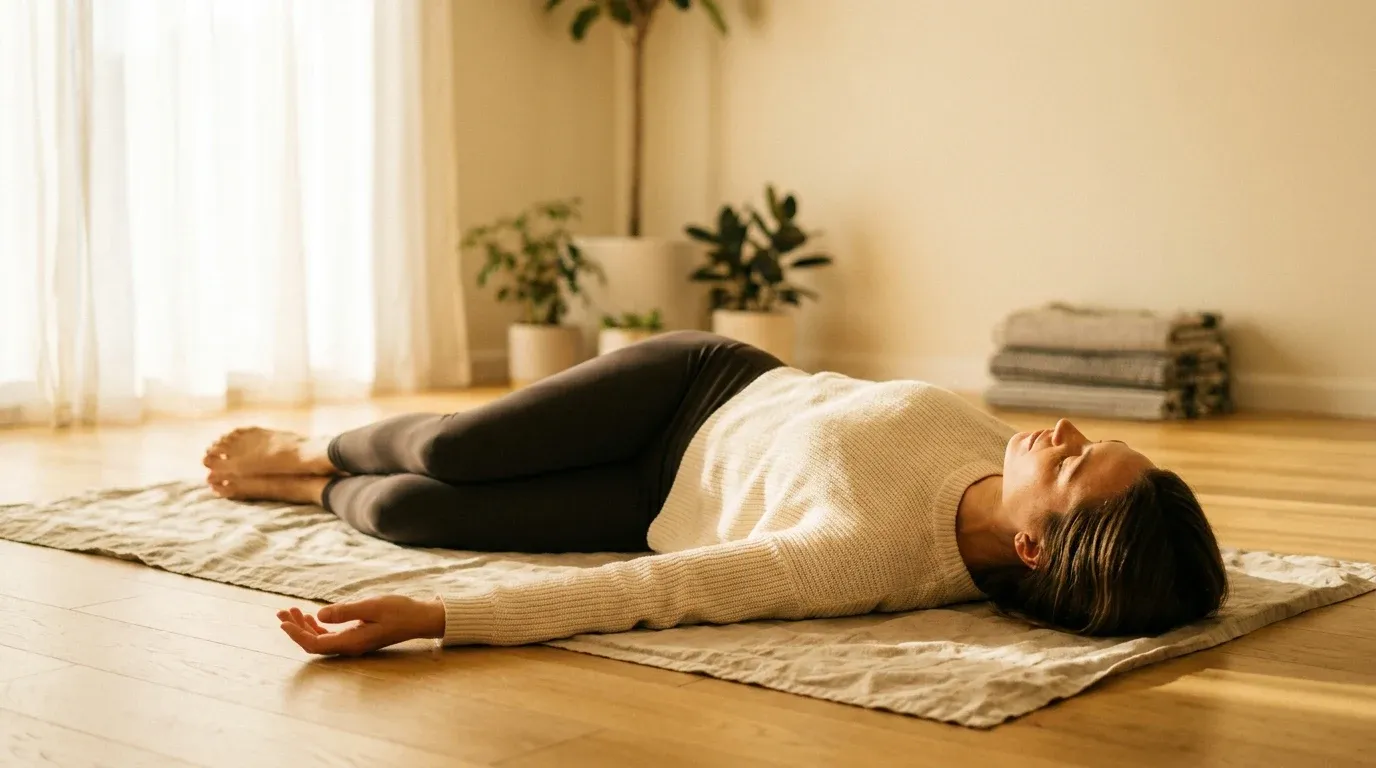
Hatha and restorative yoga styles show the most consistent results for stress and anxiety specifically, likely because of their emphasis on slow movement, breath coordination, and sustained postures. High-intensity vinyasa styles, while offering cardiovascular benefits, don't have the same strength of evidence for anxiety reduction specifically. If you're looking at yoga primarily for stress management, slower styles are a better-supported choice.
The overlap between physical recovery and stress management is real. If you're already managing a hard training load, practices like restorative yoga may serve double duty. The relationship between recovery quality and mental resilience is something that why a week off the gym can actually build more muscle explores in more depth.
Controlled Breathwork: Fast-Acting and Underused
Of all the mind-body practices in the evidence base, controlled breathing techniques may be the most immediately accessible and the most underrated. Slow paced breathing, typically at around five to six breath cycles per minute, produces rapid changes in autonomic nervous system activity. Vagal tone increases. Heart rate variability improves. Cortisol response to acute stressors is blunted.
NCCIH-supported research has examined techniques including diaphragmatic breathing, resonance frequency breathing, and box breathing. The evidence for acute stress reduction is strong. Even a single session of slow, controlled breathing has been shown to produce measurable reductions in self-reported anxiety and physiological markers of arousal.
For chronic stress management, regular breathwork practice, not just occasional use during acute stress moments, is where the stronger long-term data sits. Studies tracking participants over weeks find cumulative improvements in baseline anxiety, resting heart rate, and perceived stress that don't appear with infrequent use.
This matters if you're someone who also tracks sleep quality. Stress and sleep are tightly linked physiologically, and both tend to improve together when autonomic regulation improves. The evidence around your sleep habits and their connection to longevity is a useful companion read here.
Tai Chi and Qigong: Promising, With Caveats
Both tai chi and qigong show meaningful effects on stress and anxiety in the available research, but the evidence base is smaller and methodologically more variable than what exists for meditation or yoga. Studies are often shorter in duration, use smaller samples, and vary considerably in the style of practice being assessed.
That said, the physiological effects are plausible and consistent with what the better-studied practices show. Slow, deliberate movement combined with breath awareness and attentional focus appears to engage similar parasympathetic pathways. For older adults especially, the evidence is reasonably strong, with improvements in anxiety, mood, and stress response documented across multiple trials.
If you're drawn to these practices, they're unlikely to be a poor choice. The evidence just doesn't yet allow the same confidence as it does for MBSR or yoga.
Quality and Consistency Beat Technique Every Time
This is the finding that gets the least attention in wellness coverage, but it may be the most practically useful. Across the research NCCIH has compiled, the pattern is clear: practice consistency and engagement quality predict outcomes more reliably than the specific technique a person chooses.
A person who practices mindfulness meditation three to four times per week for eight weeks will likely see more benefit than someone who tries five different practices once each. A person who attends yoga classes with genuine attentional engagement will likely outperform someone going through the motions. The research on dose-response in mind-body practices consistently supports this framing.
This has a practical implication. Rather than optimizing for the "best" technique, it makes more sense to identify the practice you're most likely to stick with and do it regularly. Enjoyment, accessibility, and fit with your schedule are real determinants of whether you'll actually practice consistently enough to see results.
The same logic applies across wellness more broadly. Sustainable habits built around what works for your life outperform theoretically optimal protocols that you abandon after two weeks. If you're also thinking about how to structure your physical training and recovery alongside these practices, understanding when your training might be secretly sabotaging your sleep is worth your time.
What the Evidence Doesn't Support (Yet)
NCCIH is also useful for what it hasn't confirmed. Several popular practices lack strong evidence for stress and anxiety specifically, even when they have plausible mechanisms or enthusiastic communities. Floatation therapy, sound baths, and many somatic modalities show early or anecdotal data but not yet the controlled trial evidence that would justify strong clinical recommendations.
That doesn't mean they're ineffective. It means they haven't been studied rigorously enough to know with confidence. If you enjoy them and find them helpful, that's legitimate. But don't weight them equally with the practices that have decades of controlled research behind them.
It's also worth recognizing that mind-body practices are not a substitute for clinical treatment in cases of clinical anxiety disorders, PTSD, or major depressive disorder. NCCIH positions these approaches as complementary, not replacement, interventions. If you're dealing with significant mental health challenges, combining evidence-based mind-body practices with professional support is the direction the research points.
Building a Practice That Actually Works for You
The honest takeaway from the NCCIH evidence base is straightforward. Meditation, yoga, and controlled breathwork all work, and they work through real physiological mechanisms, not placebo alone. The strength of your results will depend less on which one you choose and more on how consistently you practice.
Start with one. Pick the format most compatible with your life. Build frequency before you build duration. And recognize that stress management, like physical fitness, responds to progressive, consistent effort rather than occasional intense effort.
Your overall wellness picture is larger than any single intervention. Sleep quality, physical recovery, and nutritional support all interact with how well your stress response functions. The broader connections are worth understanding. For instance, what the science says about infrared sauna and post-workout recovery touches on some of the same autonomic and inflammatory pathways that mind-body practices engage.
The science on mind-body approaches for stress is more solid than the wellness market often suggests, and more nuanced than the simplest headlines imply. Use it accordingly.