
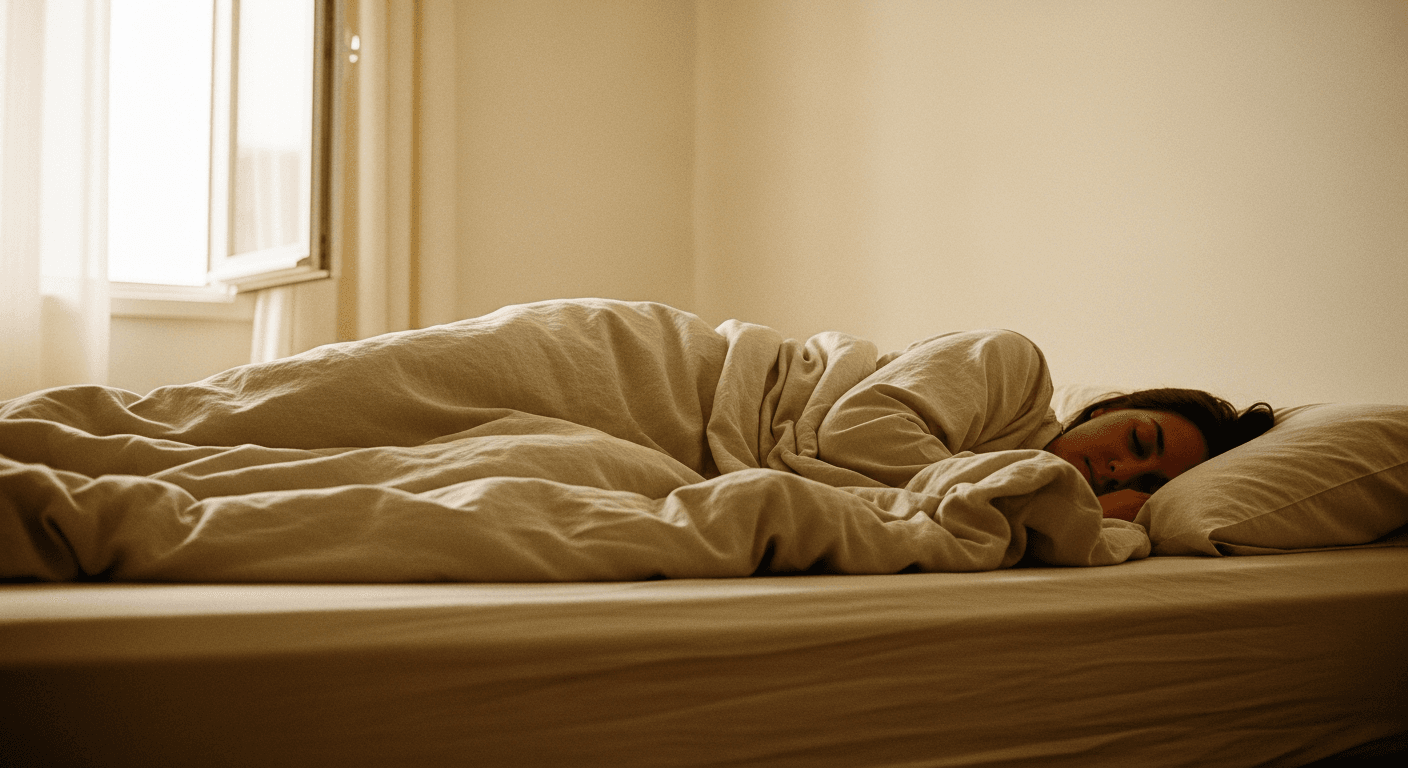
Most people think of sleep as damage control. Get enough of it and you avoid brain fog, irritability, and poor workouts. Miss it and you pay the price. But the science has moved well past that framing. Researchers now have strong evidence that consistent, healthy sleep habits are directly linked to a longer lifespan. Not by a small margin, either.
This reframes everything. Sleep isn't just recovery. It's one of the most powerful longevity tools available to you, and it costs nothing.
What the Research Actually Shows
A large-scale study tracking adults over multiple decades found that people who maintained five key sleep behaviors. sleeping seven to eight hours per night, falling asleep easily, staying asleep, not relying on sleep aids, and waking up rested. had a significantly lower risk of all-cause mortality compared to those who didn't. Men who met all five criteria lived an estimated 4.7 years longer. Women gained approximately 2.4 additional years.
That's not a marginal benefit. That's the kind of lifespan difference most people associate with quitting smoking or regular cardiovascular exercise. And it's achievable through behavioral changes that don't require a prescription, a gym membership, or a major lifestyle overhaul.
Separate research has reinforced the link between poor sleep and cardiovascular disease, metabolic dysfunction, immune suppression, and accelerated cognitive decline. The mechanism isn't mysterious. While you sleep, your body runs critical maintenance. Cellular repair, memory consolidation, hormone regulation, and waste clearance in the brain all depend on adequate, quality sleep. Disrupt these processes night after night and the damage compounds.
Why Consistency Matters More Than One Good Night
Here's where most people go wrong. They catch up on weekends, pull late nights during the week, and assume the math balances out. It doesn't. The longevity benefits tied to sleep are cumulative. They reflect years of sustained behavior, not occasional recovery sessions.
Irregular sleep patterns, even when total hours are adequate, have been associated with higher rates of metabolic syndrome, elevated inflammation markers, and disrupted circadian rhythm. Your body's internal clock is deeply tied to when you sleep, not just how long. Shifting your sleep schedule by two or three hours on weekends, a pattern researchers have started calling "social jetlag," can blunt the restorative effects of otherwise decent sleep.
Think of it like strength training. One great session doesn't build muscle. Consistent effort over months and years does. Sleep works the same way. The compounding effect of good habits is where the real benefit lives.
Short-Term Cognition and Long-Term Lifespan Are Connected
The brain is particularly sensitive to sleep disruption, and the consequences operate on two timescales. In the short term, poor sleep degrades working memory, decision-making, reaction time, and emotional regulation. These aren't abstract risks. They affect your performance at work, your relationships, and your ability to stick to other health habits.
Over the long term, chronic sleep deficiency has been associated with structural changes in the brain, including reduced gray matter volume and accelerated cognitive aging. Research published in the past few years has linked consistently poor sleep in midlife to a meaningfully higher risk of dementia in later life.
This dual effect matters because it creates a feedback loop. Poor sleep impairs your ability to make good decisions, including decisions about exercise, nutrition, and stress management. All of which, in turn, affect your sleep quality. Breaking that loop early is one of the highest-return moves you can make for your long-term health.
It's also worth noting that identifying underlying issues like sleep apnea is part of that picture. If you snore heavily, wake frequently, or feel exhausted despite adequate hours, don't dismiss it as personality. one night sleep test isn't enough to rule out apnea, and modern tools can help you get a clearer picture. Speaking of which, if you're already using a wearable device, understanding what the data actually means can be genuinely useful. Learn what your sleep tracker can actually tell you about apnea before assuming everything is fine.
The Habits That Actually Move the Needle
The research doesn't point to any single secret behavior. It points to a cluster of consistent practices that, taken together, dramatically improve both sleep quality and duration. Here's what the evidence supports most strongly.
- Anchor your sleep and wake times. Going to bed and waking up at the same time every day, including weekends, is one of the most effective ways to stabilize your circadian rhythm. Your body responds to regularity. Even a 30-minute variation can reduce sleep quality over time.
- Protect the hour before bed from screens. Blue light from phones and laptops suppresses melatonin production, delaying your ability to fall asleep. But the problem with late-night scrolling isn't just light. It's also cognitive arousal. Endless scrolling hurts your memory and keeps your nervous system in a state of low-level stimulation that is genuinely incompatible with restful sleep onset.
- Manage stress before it manages you. Elevated cortisol at night is one of the primary drivers of poor sleep quality. Building a pre-sleep wind-down routine that includes breathwork, light stretching, journaling, or even a consistent tea ritual signals to your nervous system that the day is over. This isn't soft advice. It's physiology.
- Control your sleep environment. Temperature, light, and noise are underestimated levers. Most adults sleep best in a room between 65 and 68 degrees Fahrenheit. Blackout curtains and white noise aren't luxuries. For many people, they're functional tools.
- Limit alcohol and caffeine strategically. Caffeine has a half-life of five to seven hours, meaning an afternoon coffee at 3 PM still has a meaningful presence in your bloodstream at 10 PM. Alcohol, despite making you feel drowsy, suppresses REM sleep and fragments the second half of the night. Both are worth auditing honestly.
Sleep as Part of a Broader Wellness Architecture
Sleep doesn't operate in isolation. Its quality is downstream of your movement habits, your nutrition, your stress load, and your recovery practices. The research on longevity consistently shows that the biggest benefits come from people who treat multiple health behaviors as a system, not a menu of options to pick from selectively.
If your recovery between workouts is poor, sleep is usually part of the problem. If your stress is chronic and unmanaged, sleep quality will reflect that. Addressing sleep in isolation while ignoring these inputs is like fixing one leak in a boat full of them.
Building complementary habits around recovery is worth your time. Simple recovery habits that actually work don't have to be complicated or expensive. And when you start looking at sleep as one pillar in a connected system rather than a standalone behavior, it becomes much easier to protect it.
Nutrition also plays a role that often goes underestimated. Magnesium deficiency, blood sugar instability, and micronutrient gaps can all affect sleep architecture in measurable ways. If you're eating well but still struggling with sleep quality, it may be worth looking more closely at what your body is actually getting versus what you think you're giving it.
The Real Cost of Treating Sleep as Optional
There's a cultural narrative, particularly in high-performance circles, that treats minimal sleep as a badge of dedication. That narrative has real consequences. Chronic short sleepers, defined as those regularly getting fewer than six hours per night, show consistently worse health outcomes across nearly every measured category. Cardiovascular disease, type 2 diabetes, obesity, depression, and earlier mortality are all more prevalent in this group.
The science doesn't leave much room for debate here. If you're regularly sleeping fewer than seven hours and waking up unrefreshed, you're not optimizing. You're accumulating deficit with compounding interest.
Reframing sleep as a performance input and longevity investment rather than a passive necessity is one of the most important shifts you can make. The data is clear, the mechanisms are understood, and the habits that support healthy sleep are well within reach for most people. You don't need a supplement, a tracker, or a specialist. You need consistency, and you need to take it seriously.
That's a low barrier for something that could genuinely add years to your life.