
You finish a hard session, feel great, then wake up two days later barely able to sit down. That delayed wave of soreness is one of the most searched fitness complaints on the internet, and most of the advice attached to it is either outdated or flat-out wrong. Here's what the evidence actually says.
What DOMS Really Is (and What It Isn't)
Delayed Onset Muscle Soreness, or DOMS, typically peaks between 24 and 72 hours after training. For decades, lactic acid took the blame. That theory is incorrect. Lactic acid clears from muscle tissue within an hour of stopping exercise. It has nothing to do with the stiffness you feel two days later.
The real mechanism involves microscopic tears in muscle fibers, specifically at the Z-discs inside individual muscle cells. This damage triggers a localized inflammatory response. Fluid accumulates, nerve endings become sensitized, and that's the dull, achy pressure you're feeling. It's a normal part of adaptation, not a sign something has gone wrong.
DOMS is most intense after eccentric movements, the lowering phase of a squat, the descent in a bicep curl, downhill running. These contractions create more structural disruption than concentric or isometric work. That's why the first time you try a new exercise, or return after a long break, the soreness hits harder.
Active Recovery Beats Full Rest for Most People
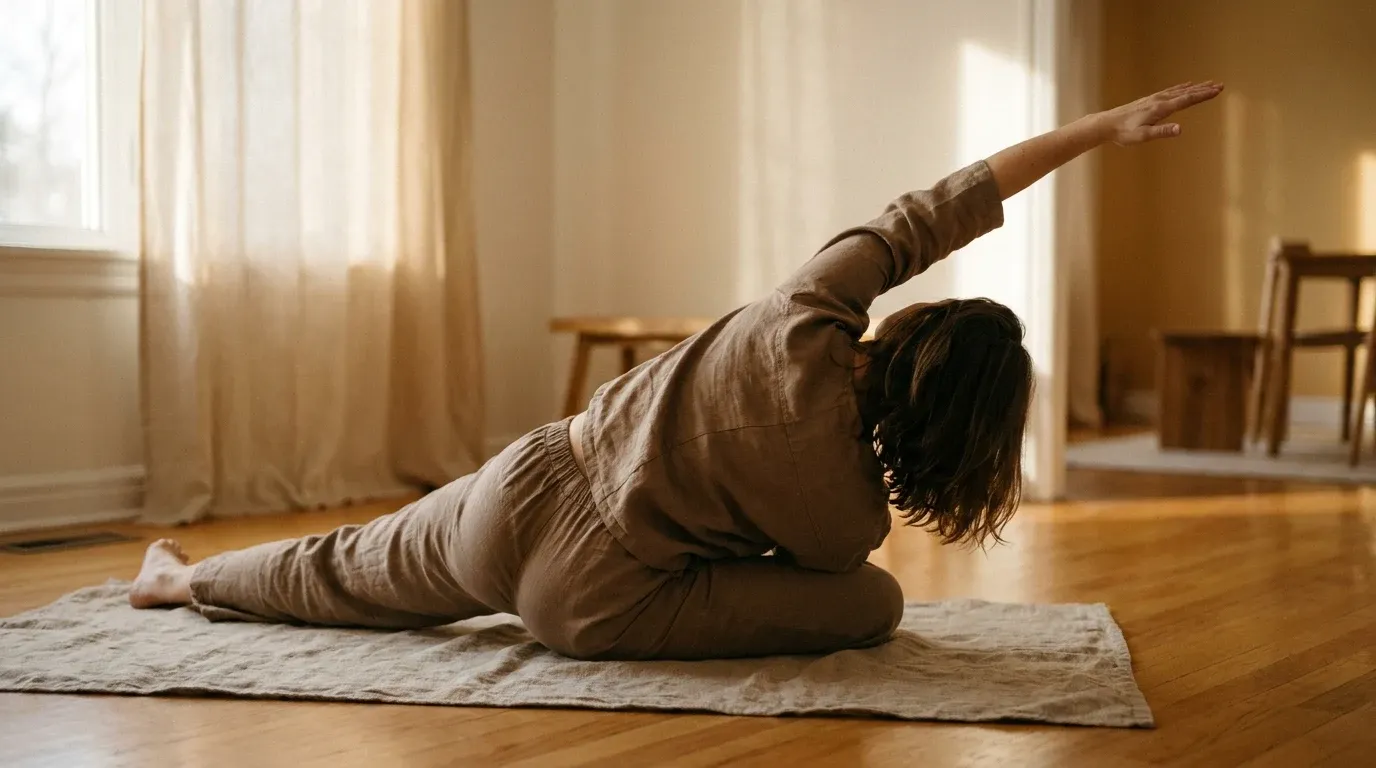
The intuitive response to soreness is to stop moving. Research consistently shows the opposite approach works better. Low-intensity movement, think a 20-minute walk, easy cycling, or light swimming, increases blood flow to damaged tissue, accelerates the removal of metabolic waste, and reduces the perceived intensity of soreness faster than passive rest.
The key word is low intensity. You're not trying to train through soreness. You're using gentle movement to keep circulation moving. Heart rate around 50 to 60 percent of your maximum is enough. Going harder turns recovery work into a second stressor, which delays the process rather than helping it.
Foam rolling sits in a similar category. The evidence on its structural effects is modest, but studies consistently show it reduces soreness perception and improves range of motion in the short term. Five to ten minutes on affected muscle groups after a session or the following morning is a reasonable, low-cost addition to your routine.
Nutrition That Actually Moves the Needle
Two nutritional strategies stand out in the research on post-exercise recovery: protein timing and anti-inflammatory foods.
Protein is the raw material for muscle repair. Consuming 20 to 40 grams of high-quality protein within two hours of training is well-supported by clinical literature for stimulating muscle protein synthesis. Spreading protein intake across three to four meals throughout the day, rather than loading it all into one sitting, produces better repair outcomes over a 24-hour window.
Tart cherry juice has accumulated a surprisingly strong evidence base. Multiple randomized trials show it reduces DOMS severity and accelerates strength recovery, likely due to its high anthocyanin content, which modulates inflammatory signaling. A typical protocol used in studies is around 8 to 12 ounces twice daily, starting a day or two before intense training and continuing for 48 to 72 hours after.
Omega-3 fatty acids, found in fatty fish, walnuts, and flaxseed, also show consistent anti-inflammatory effects in exercise recovery research. They don't eliminate soreness, but they appear to reduce its peak and duration with regular dietary intake. If you're evaluating supplement options, it's worth reading how to identify overhyped products versus ones with legitimate evidence behind them before spending money on anything bottled.
What doesn't hold up? Static stretching immediately after training has no meaningful effect on DOMS, according to multiple systematic reviews. It may still benefit flexibility and joint health in the long run, but if you're doing it specifically to prevent next-day soreness, the evidence doesn't support that use. Most topical analgesic creams treat the sensation of pain without addressing the underlying tissue repair process.
Temperature Therapy: Matching the Tool to the Goal
Cold and heat both have a place in recovery, but they work through different mechanisms and suit different situations. Using them interchangeably, or defaulting to one out of habit, means you're likely getting half the benefit you could.
Cold exposure, ice baths, cold showers, cryotherapy, reduces acute inflammation by constricting blood vessels and slowing nerve conduction. This makes it useful in the hours immediately after a high-impact session, particularly for reducing swelling in joints or heavily loaded tissues. Athletes competing across consecutive days often use cold immersion to manage soreness and maintain performance output.
The trade-off is significant, though. That same anti-inflammatory effect can blunt the adaptive signaling that makes training productive in the first place. Research shows that regular post-training cold immersion can suppress long-term strength and hypertrophy gains. If your goal is to build muscle or increase strength, cold therapy right after lifting is a poor default habit. Understanding when cold exposure helps and when it works against you is one of the more practical recovery decisions you can make.
Heat works differently. Applied 24 hours or more after training, it increases blood flow, relaxes muscle tissue, and can reduce the stiffness associated with DOMS. A warm bath, heating pad, or sauna session the day after a hard workout supports tissue relaxation without the adaptive trade-offs of cold. For general soreness management, heat is often the better default for recreational athletes not competing under time pressure.
Sleep: The Recovery Tool You Can't Hack Around
No nutrition protocol or cold plunge replaces adequate sleep. During deep and REM sleep stages, the body releases growth hormone, synthesizes protein, and runs the cellular repair processes that DOMS recovery depends on. Restricting sleep to six hours or less measurably reduces muscle protein synthesis rates and prolongs soreness duration.
Sleep quality matters as much as quantity. Research on how sleep architecture affects physical recovery is growing, and the connection between poor sleep and impaired training adaptation is well-established. The broader protective effects of consistent sleep quality extend well beyond muscle repair, touching cardiovascular and metabolic health in meaningful ways.
Prioritizing seven to nine hours in a cool, dark room with consistent sleep and wake times isn't glamorous advice. It also consistently outperforms every wearable alert or supplement protocol layered on top of it.
The Bigger Fix: Progressive Overload Over Time
Recovery tools are downstream of training design. If you're regularly experiencing severe DOMS that disrupts your daily function or persists beyond four to five days, the problem isn't that you need better supplements or a colder ice bath. The problem is your training load is too aggressive relative to your current adaptation level.
Progressive overload, the principle of gradually increasing training stress over weeks and months rather than spiking it session to session, is the most reliable way to reduce injury risk and manage chronic soreness. The body adapts to repeated bouts of exercise through a mechanism sometimes called the repeated bout effect. After your first exposure to a novel exercise or intensity, the same stimulus produces significantly less DOMS the next time around. That adaptation is permanent, but it requires consistent, structured training to build.
Athletes who use biometric tracking to inform load management are increasingly able to quantify this. Data on heart rate variability, sleep quality, and strain metrics can flag accumulating fatigue before it becomes an injury. The intersection of elite athletic biometric data and training load management is producing practical insights that apply well beyond Formula 1.
The goal isn't to avoid soreness entirely. Some degree of DOMS is a normal marker of effective training. The goal is to earn it deliberately, support recovery systematically, and not mistake suffering for progress.
A Practical Framework to Apply Now
- Within 2 hours post-training: Consume 20 to 40 grams of protein. Hydrate with water or an electrolyte drink. Avoid aggressive cold immersion if your goal is strength or hypertrophy.
- Day after training: Use 20 to 30 minutes of low-intensity active recovery. Apply heat if soreness is significant. Foam roll major muscle groups for 5 to 10 minutes.
- Ongoing nutrition: Increase omega-3 intake through food sources. Use tart cherry juice around high-intensity training blocks. Focus on consistent protein distribution across meals rather than single large doses.
- Sleep: Treat seven to nine hours as a non-negotiable training variable, not a lifestyle preference.
- Training structure: Build load progressively. If severe DOMS is a recurring problem, reduce intensity or volume before adding more recovery tools on top of the same training error.
The soreness is real. The science is clearer than most fitness content suggests. Applying it doesn't require expensive products or complicated protocols. It requires understanding what's actually happening in your body and responding to it in the right order.