
If you've ever woken up after eight hours of sleep feeling like you didn't sleep at all, the problem might not be how long you're sleeping. It might be what kind of sleep you're actually getting. A new device developed at the University of Texas at Austin could change that equation entirely, and it doesn't require a prescription or a trip to a sleep clinic.
Researchers at UT Austin unveiled NEUSLeeP in July 2026: a soft, skin-worn patch that uses non-invasive deep brain stimulation to guide the brain into deeper, more restorative REM sleep. The findings, published on July 14, 2026, are drawing serious attention from sleep researchers and consumer health experts alike.
What NEUSLeeP Actually Does
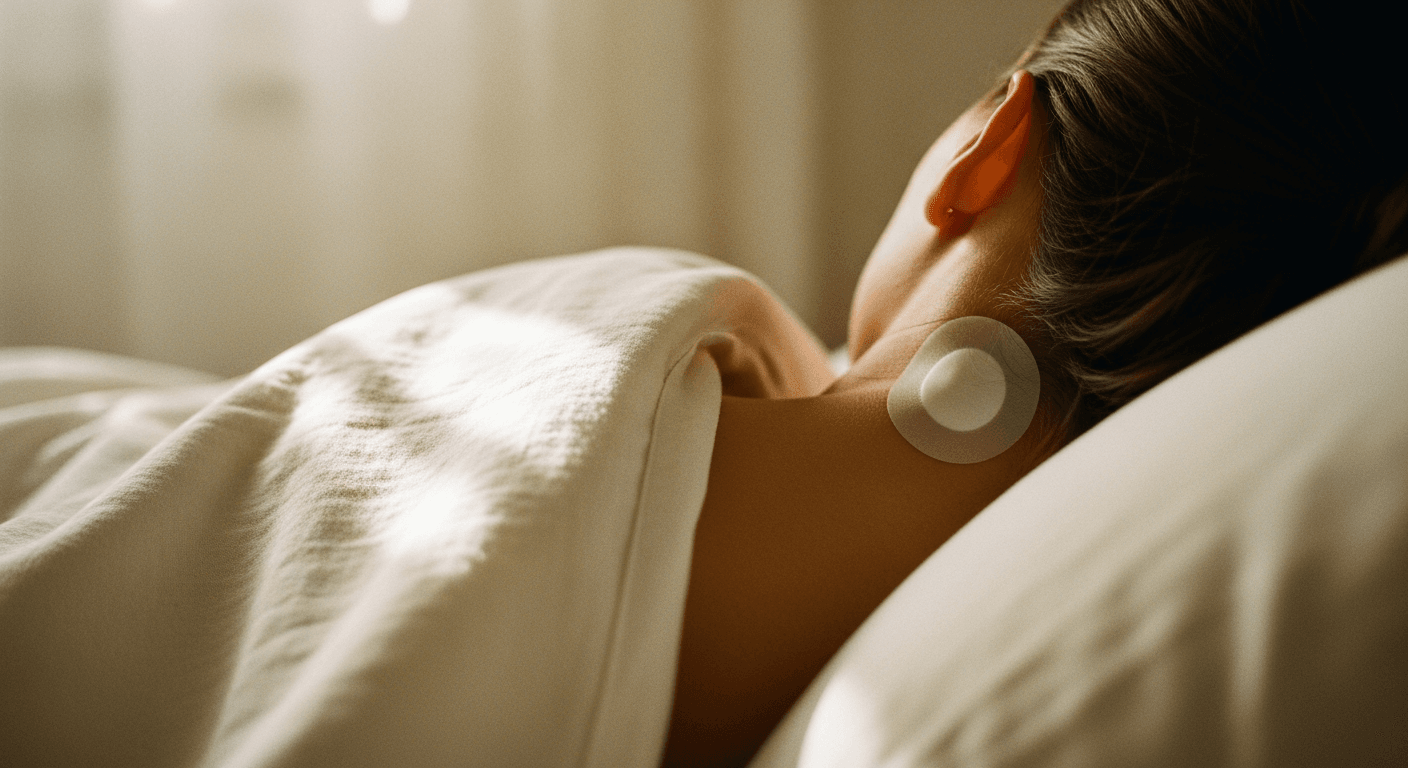
NEUSLeeP is a flexible patch worn against the skin that delivers precisely calibrated electrical signals to the brain without breaking the skin, implanting anything, or requiring sedation. The technology is built on non-invasive deep brain stimulation, a field that has been advancing steadily but has rarely produced something designed for everyday home use until now.
The mechanism works by detecting sleep stage transitions and gently nudging the brain's electrical activity toward the patterns associated with REM sleep. Think of it less like forcing sleep and more like clearing a path the brain was already trying to take.
What makes this different from earlier experimental devices is the form factor. It's soft, wearable, and designed from the ground up to be used at home, not just in a lab or hospital setting. That distinction matters enormously for accessibility.
The Trial Numbers Are Hard to Ignore
In clinical trials, participants using NEUSLeeP entered REM sleep 43 minutes sooner than those without the device. They also stayed in REM sleep 16 minutes longer on average. Those aren't marginal gains. For context, most adults need between 90 and 120 minutes of REM sleep per night to support healthy cognitive and physical function. Shaving 43 minutes off the time it takes to get there is a meaningful shift.
The results also highlight something that standard sleep tracking often misses: time in bed is not the same thing as time in restorative sleep. If you're curious about what your current device is actually measuring, what your sleep tracker can actually tell you about apnea is worth understanding before you assume your hours are translating to real recovery.
The trial data positions NEUSLeeP as one of the most clinically meaningful consumer sleep innovations published this year, particularly because it targets REM specifically rather than total sleep time.
Why REM Sleep Is the One You Actually Need More Of
Not all sleep stages are created equal. REM, which stands for rapid eye movement, is the stage most associated with memory consolidation, emotional regulation, and physical recovery. It's when the brain processes the events of the day, strengthens neural connections, and clears metabolic waste. Missing it consistently has real consequences.
Chronic REM deficiency has been linked to increased anxiety, impaired decision-making, slower physical recovery from training, and even greater long-term risk for neurodegenerative conditions. For athletes and active people, it's also when growth hormone is released, making REM directly relevant to muscle repair and adaptation.
The emotional regulation piece is just as significant. People who are consistently REM-deprived tend to be more reactive, less resilient under stress, and more prone to mood instability. These aren't minor inconveniences. They compound over time.
Pairing better sleep quality with solid daytime habits accelerates those benefits further. 5 simple recovery habits that actually work covers the behavioral side of the equation that no wearable can replace on its own.
Drug-Free and Surgery-Free: Why That's a Big Deal
The existing options for people with serious sleep disorders are limited and often come with trade-offs. Pharmaceutical sleep aids can suppress REM sleep rather than enhance it, which is a significant and underreported irony. Many common sedatives and sleep medications actually reduce the proportion of REM sleep even while increasing total sleep duration. You might sleep longer and still wake up feeling worse.
Surgical interventions exist for specific conditions like sleep apnea, but they're invasive, expensive, and not suitable for the vast majority of people who simply struggle with poor sleep quality without a diagnosable disorder.
NEUSLeeP's value proposition is the absence of those trade-offs. No dependency risk. No hormonal interference. No recovery period. For the large and growing population of people who want to optimize sleep without pharmacological intervention, that's a genuinely different option.
It's also worth noting that sleep disorders and sleep quality issues are frequently underdiagnosed. Research has consistently shown that a single clinical test doesn't capture the full picture, as one night of sleep testing isn't enough to accurately classify apnea, which means many people are navigating sleep problems without a clear diagnosis. A home-use device that improves sleep quality without requiring accurate clinical staging could help a much broader group of people than traditional treatment pathways reach.
Designed for Home Use: What That Means for the Market
Consumer sleep technology has been growing fast. The global sleep tech market was valued at over $15 billion in 2025 and is projected to keep expanding as awareness of sleep's role in overall health continues to rise. Most of that market has been dominated by passive trackers: devices that measure what your sleep looks like but don't do anything to change it.
NEUSLeeP sits in a much smaller and more interesting category: active intervention devices. These go beyond logging your data and actually attempt to influence your biology. Until now, most of the devices in this category required clinical supervision or were cost-prohibitive for everyday consumers.
A home-use patch changes the distribution model entirely. You don't need a referral, a clinic appointment, or a specialist's oversight. That friction reduction is one of the most important factors in whether a health technology actually gets used consistently by real people outside of research settings.
The cognitive benefits of better REM sleep also extend into the day in ways that matter beyond just feeling rested. Poor sleep quality degrades working memory and attention in ways that accumulate quickly. endless scrolling hurts your memory, and exercise fights back, but starting with better sleep lays the foundation for all of it.
What You Should Know Before It Reaches Your Doorstep
NEUSLeeP is not yet commercially available as of the date of publication. The July 2026 findings represent peer-reviewed research, but the path from published trial results to retail availability involves regulatory review, manufacturing scale-up, and clinical validation across broader and more diverse populations.
Here's what that means practically: the technology is real, the results are credible, and the timeline to availability will depend on regulatory processes in each market. In the US, that means FDA clearance. In the UK, MHRA review. These processes exist for good reason, and they add time.
If you're hoping to use something like this in the next few months, temper expectations. If you're thinking about the next one to three years of consumer sleep technology, NEUSLeeP represents a genuine signal of where the field is heading.
In the meantime, the fundamentals of sleep hygiene still apply and still matter. Consistent sleep timing, reduced blue light exposure before bed, temperature-controlled sleep environments, and limiting alcohol, which suppresses REM directly, remain the highest-leverage interventions available to you right now without any device.
The Bigger Picture
What the NEUSLeeP research really confirms is something sleep scientists have been saying for years: the quality of your sleep architecture matters more than the raw number of hours you log. Eight hours of light, fragmented sleep is not equivalent to six hours of well-structured sleep with adequate deep and REM stages.
As consumer technology gets better at influencing biology rather than just observing it, the gap between people who optimize their sleep and people who simply track it will widen. NEUSLeeP is an early indicator of that shift. It won't be the last.
For now, the most actionable thing you can take from this research is renewed attention to your own REM sleep. Whether that means reassessing your current sleep habits, looking more critically at what your tracker is actually telling you, or simply understanding why you feel the way you do after a full night in bed, the case for treating REM as the priority it is has never been stronger.