
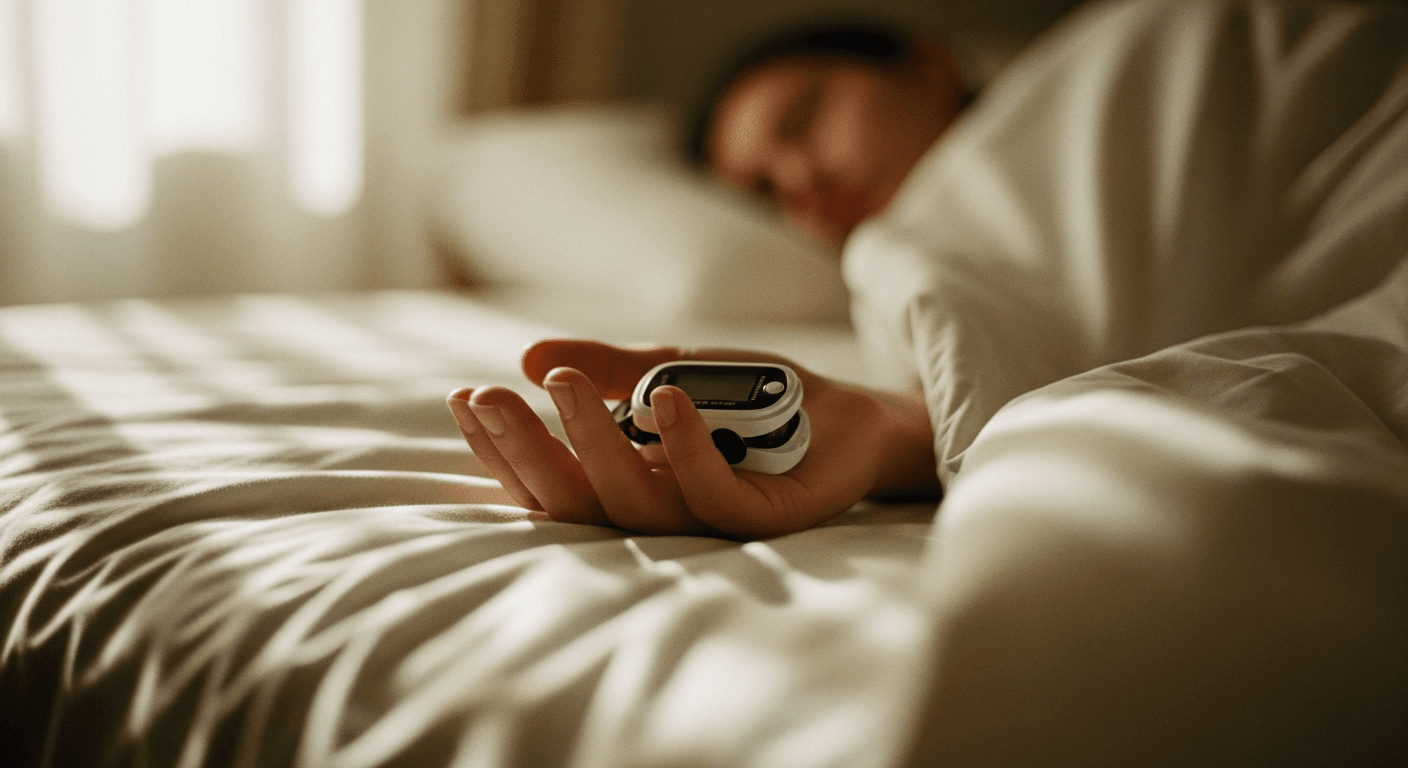
One Night of Sleep Testing Isn't Enough, Study Finds
If you've ever had a sleep study done and walked away with a clean bill of health, or a diagnosis that didn't quite match how you actually feel, there may be a concrete scientific reason for that. New research from Flinders University, published in npj Digital Medicine on July 7, 2026, confirms what some clinicians have long suspected: a single night in a sleep lab is a poor foundation for diagnosing obstructive sleep apnea.
The findings challenge one of the most entrenched standards in sleep medicine and have real consequences for millions of people worldwide who may be living with an incorrect diagnosis, or no diagnosis at all.
The Problem With One Night
Obstructive sleep apnea is not a static condition. The number of times your breathing is interrupted during sleep, measured as the apnea-hypopnea index (AHI), can shift meaningfully from one night to the next. Your sleep position changes. Your stress levels vary. Alcohol, timing, and even room temperature all play a role.
The Flinders University study quantified exactly how much that variability matters. Researchers found that basing a diagnosis on a single night of polysomnography, the current gold standard in sleep labs, routinely leads to misclassification of OSA severity. A person with moderate sleep apnea might register as mild on one night, or vice versa. In some cases, the condition may not appear to meet the diagnostic threshold at all.
That's not a small clinical footnote. OSA severity classification directly determines whether you receive treatment, and what kind. A mild classification might mean a recommendation to lose weight and change your sleep position. A moderate or severe classification typically means a CPAP machine. Getting that wrong, in either direction, has measurable consequences for your long-term health.
Under-Treatment and Over-Treatment Are Both Real Risks
The concern here runs in two directions. Under-diagnosis is the more obvious risk. If a single night of testing misses the severity of your condition, you could spend years without appropriate treatment while sleep apnea quietly contributes to cardiovascular strain, metabolic disruption, and cognitive decline.
But over-diagnosis or over-classification carries its own problems. Patients prescribed CPAP therapy who don't actually need it at the severity level indicated may struggle with compliance, abandon treatment, and distrust future medical recommendations. It also directs healthcare resources toward people who may not need intensive intervention while others go untreated.
The Flinders research argues that multi-night monitoring provides a statistically more reliable picture of a patient's true AHI and, therefore, their actual severity category. Across multiple nights, the noise of day-to-day variability averages out and a clearer pattern emerges.
Why the One-Night Standard Has Persisted
It's worth asking why sleep medicine has relied on single-night polysomnography for so long if the limitations were always theoretically present. The answer is largely logistical. Full overnight sleep studies conducted in a clinical setting are expensive, time-consuming, and constrained by lab availability. In the US, a single in-lab polysomnography study typically costs between $1,000 and $3,500 depending on location and insurance coverage. Running multiple nights was never considered feasible at scale.
At-home sleep apnea tests have expanded access somewhat, often running between $150 and $400 out of pocket, but they still typically capture only one or two nights of data. The diagnostic framework has been built around what was practical, not necessarily what was optimal.
The Flinders study, by publishing directly in npj Digital Medicine, a journal focused on digital health evidence, is implicitly pointing toward a more technologically enabled future for sleep diagnosis. And that future is already sitting on a lot of people's wrists.
Where Wearables Come In
Consumer sleep trackers have matured significantly in the past few years. Devices from Oura, Garmin, Apple, Whoop, and others now collect nightly data on sleep stages, oxygen saturation, heart rate variability, and respiratory rate. While none of them are FDA-cleared diagnostic tools for OSA on their own, they produce longitudinal data across weeks and months, exactly the kind of multi-night picture the Flinders research says matters.
For people who suspect they have sleep apnea, or who've already received a clinical diagnosis and want to understand how their treatment is performing, these devices offer something a one-night lab study simply cannot: continuity. You can see how your sleep quality shifts with lifestyle changes, travel, alcohol consumption, or weight fluctuation over time.
This connects to a broader shift happening in sleep science right now. Research like a wearable ultrasound patch designed to enhance REM sleep shows that the next generation of monitoring technology is moving beyond passive tracking toward active intervention. The hardware is catching up to what the research is asking for.
If you're already using a wearable and flagging consistently disrupted sleep or low oxygen saturation readings overnight, that data could be genuinely valuable to bring to a clinician. It doesn't replace a formal test. But it provides context that a single lab night cannot.
What This Means for Your Sleep Health Right Now
You don't need to wait for clinical guidelines to catch up before taking this research seriously. There are practical steps you can take based on what this study reveals.
- If you've had a sleep study with borderline results, it's worth asking your doctor whether a follow-up night or a home monitoring period makes sense given this new evidence.
- If you've been told you don't have sleep apnea but still feel chronically unrefreshed, the variability issue documented in this research is a legitimate reason to push for more comprehensive testing.
- If you're currently on CPAP therapy, most modern machines already log your nightly data, including AHI readings per session. Reviewing that data over time with your clinician gives you exactly the multi-night picture the Flinders study recommends.
- If you use a consumer wearable, track your sleep scores, overnight SpO2 readings, and sleep stage consistency over at least two to four weeks before any clinical appointment. It won't diagnose you, but it documents the variability.
It also helps to understand what poor sleep is actually doing to your body in the interim. Research covered in Berkeley's work on deep sleep, muscle repair, and fat metabolism underlines why consistently fragmented or shallow sleep isn't just a quality-of-life issue. It has downstream effects on body composition and hormonal regulation. And a Columbia University study found that losing just 80 minutes of sleep per night correlates with meaningful weight gain, reinforcing why getting diagnosis right matters beyond how tired you feel in the morning.
The Broader Diagnostic Credibility Problem
Sleep apnea affects an estimated one billion people globally, with a large portion of cases undiagnosed or misdiagnosed. The Flinders study adds to a growing body of evidence that clinical confidence in single-measurement diagnostics may be systematically overestimated across several areas of medicine. This isn't unique to sleep medicine. Single biomarker snapshots, single blood draws, single imaging studies, each captures one moment in a condition that often fluctuates.
What makes the sleep apnea case particularly striking is how directly the single-night standard shapes treatment decisions. The AHI threshold between mild and moderate OSA isn't a suggestion. It triggers a completely different clinical pathway. When the measurement instrument itself is unreliable across nights, the entire decision tree built on top of it becomes questionable.
The researchers' call for multi-night monitoring isn't just a methodological preference. It's a challenge to reconsider how confident clinical medicine should be in snapshot diagnostics generally. That conversation is happening in nutrition research too, where funding and methodology questions are shaping the reliability of recommendations. The erosion of nutrition science funding is a parallel case study in what happens when the infrastructure for good evidence weakens.
The Path Forward
Getting multi-night sleep studies adopted as a clinical standard won't happen overnight. It requires updated insurance reimbursement frameworks, revised clinical guidelines from bodies like the American Academy of Sleep Medicine, and the validation of consumer wearables as at least supplementary diagnostic tools. None of that is simple or fast.
But the research now exists to make the argument formally. The Flinders University findings give clinicians, patients, and health systems a peer-reviewed basis for questioning the one-night rule. That's how clinical standards actually change: not through sudden policy shifts, but through accumulated evidence that makes the old approach harder to defend.
In the meantime, you're not powerless. Track more nights. Bring data to appointments. Ask specific questions about night-to-night variability when sleep studies are discussed. The study has confirmed what the science now supports. Whether your doctor's office has caught up yet is a different question, and one worth raising directly.