
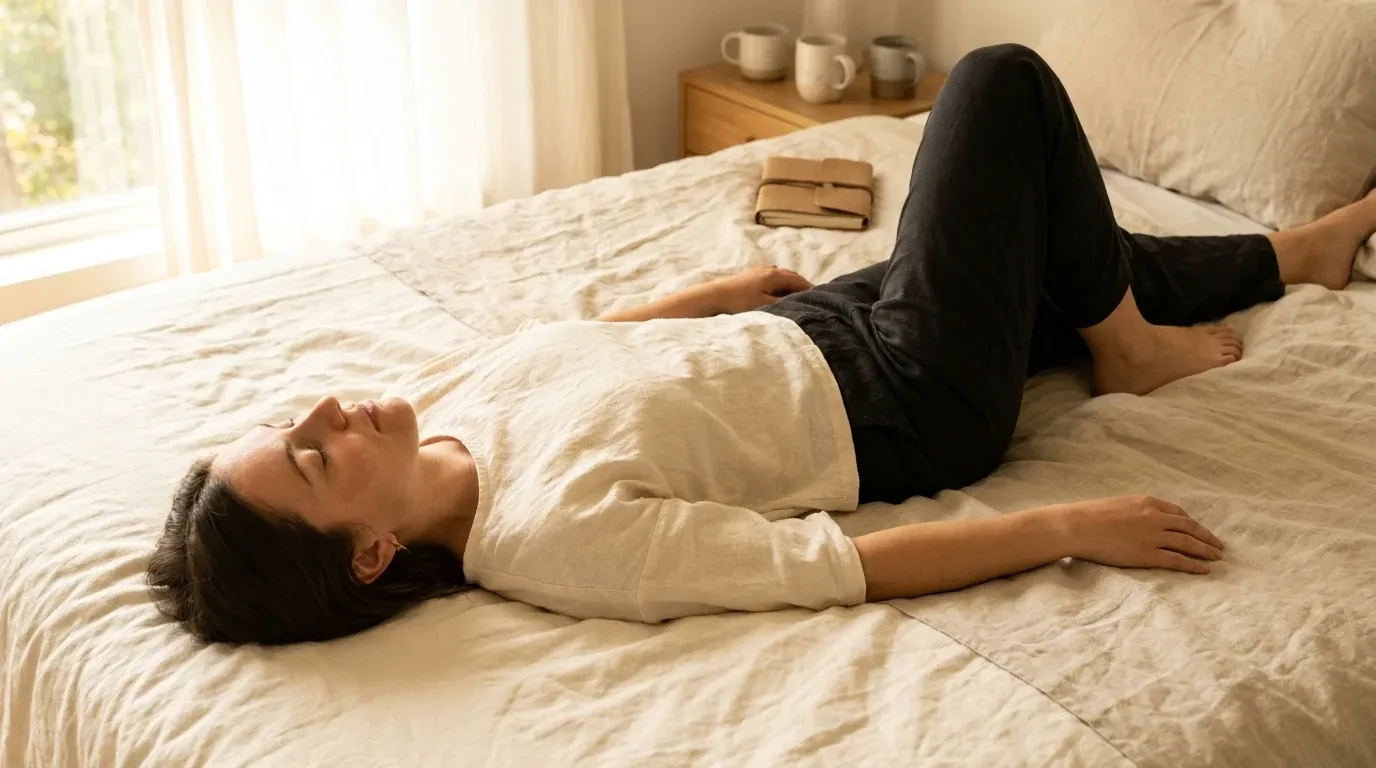
The recovery industry doesn't want you to hear this. Sleep more, eat enough protein, take a rest day. That's it. That's the framework that the latest independent data keeps returning to, no matter how many cold plunge tubs, compression boots, or peptide stacks get thrown into the analysis.
A new independent analysis published October 15, 2026 reviewed outcomes across the most commonly used recovery interventions, from percussive therapy and cryotherapy to infrared sauna and active recovery sessions. Its finding was blunt: passive rest matched or outperformed the majority of those tools when measuring cellular muscle repair markers. Not occasionally. Consistently.
That's worth sitting with for a moment. Because if you've been spending money, time, and mental energy trying to optimize your recovery, there's a real chance you've been overcomplicating something that works best when you leave it alone.
What the Data Actually Says About Recovery
Across multiple systematic reviews published in the last five years, three lifestyle factors emerge at the top of every effectiveness ranking: sleep, complete protein intake, and scheduled rest days. The consistency is striking. These aren't emerging variables that researchers are still debating. They're the ceiling that commercial recovery products are being measured against, and most of those products don't clear it.
Sleep is the clearest example. During deep sleep stages, your body releases the majority of its daily growth hormone output, drives protein synthesis in damaged muscle tissue, and clears metabolic waste from the central nervous system. Deep sleep builds muscle, burns fat, and sharpens cognitive function in ways that no external recovery device has come close to replicating. When you cut sleep short to fit in a morning recovery session, you're trading the most effective tool you have for something measurably less effective.
Protein timing and total daily intake show a similarly strong signal. The cellular repair process that follows hard training depends on amino acid availability. If you're not hitting adequate complete protein across your day, no recovery modality compensates for that deficit. The structural materials simply aren't there.
Rest days work for the same fundamental reason. Muscle adaptation doesn't happen during training. It happens in the hours and days after, when mechanical stress triggers a repair process that requires time, not intervention. Interrupting that process with low-intensity "active recovery" may actually blunt the adaptation signal in some cases, particularly in athletes who are already under high cumulative load.
The Optimization Trap Nobody Talks About
Here's where the picture gets more interesting. The pressure to constantly optimize your recovery, to never leave performance on the table, to always be doing something productive with your downtime, may itself be working against you.
Stress is not just a psychological experience. It activates the hypothalamic-pituitary-adrenal axis, elevates cortisol, and suppresses the parasympathetic state your body needs to repair tissue effectively. If scrolling through recovery protocols and tracking HRV variability at 10pm is creating low-grade anxiety about whether you're recovering correctly, that anxiety has a physiological cost.
Research on how insomnia drives systemic inflammation reinforces this. Poor sleep quality, whether caused by training load or by cognitive arousal around health optimization, produces measurable increases in inflammatory markers. The irony is that the culture of recovery obsession may be producing exactly the stress response it claims to resolve.
This doesn't mean wellness tracking is useless. It means the threshold question you should be asking is: does this tool reduce my stress load, or add to it? If wearing a recovery wearable makes you feel informed and calm, that's a genuine benefit. If it makes you feel like you're always behind on your scores, the device is working against its own purpose.
Who Is Most Affected by This
Active adults over 35 feel this pressure acutely. Recovery timelines genuinely lengthen with age. The temptation to compensate with more interventions is understandable. But the evidence points in a different direction. As experienced coaches working with athletes over 35 consistently emphasize, the first adjustments that produce results are almost always structural: more rest days, better sleep hygiene, higher protein targets. Not more modalities.
The same logic applies to recreational athletes who are training seriously for the first time. Women in their 30s and 40s entering high-intensity formats like HYROX often arrive with a strong work ethic and a genuine curiosity about optimization. The most useful thing a coach can tell that athlete is that recovery doesn't require a product. It requires patience and consistency with the basics.
When Active Recovery Actually Earns Its Place
Passive rest isn't the answer to every situation. There are specific contexts where active recovery modalities add genuine value, and it's worth being precise about what those are.
- Same-day recovery between sessions. If you're training twice in one day, a light active recovery session between the two, easy movement, light stretching, low-intensity cardio, can accelerate lactate clearance and reduce perceived fatigue for the second session. This is the strongest use case in the literature for active recovery.
- Psychological readiness. For athletes who feel psychologically flat or anxious on rest days, a 20-minute walk or gentle mobility work can restore a sense of agency without imposing a meaningful physiological load. The benefit here is mental, but mental readiness is a real performance variable.
- Managing chronic stiffness or minor soft tissue issues. Structured movement, particularly for athletes dealing with hip flexor restriction or thoracic mobility limitations, addresses issues that passive rest alone won't resolve. This is where working with a qualified professional makes sense, whether that's a sports physio or a trainer who understands your history.
- Periodization peaks. In the final week before a major competition, active recovery protocols can maintain neuromuscular readiness while reducing fatigue accumulation. This is a specific, time-bound use case, not a default approach.
Outside of these scenarios, the evidence consistently favors doing less rather than more. The burden of proof should fall on the intervention, not on the rest.
A Practical Framework for Deciding
Rather than following a fixed protocol, use this decision logic before choosing between passive rest and an active recovery modality.
Start with sleep. If you got less than seven hours last night, no recovery session compensates for that deficit. Prioritize sleep above everything else. Evidence-based stress reduction approaches, including mindfulness and CBT techniques, are among the most effective tools for improving sleep onset if cognitive arousal is keeping you awake.
Check protein first. Before adding a recovery modality, confirm you're hitting your protein targets for the day. Most active adults are not. The structural inputs need to be present before the repair process can proceed.
Ask what problem you're solving. If you feel genuinely fatigued and sore, that's your nervous system signaling a need for rest, not movement. If you feel restless and flat, light movement may help. Know the difference before deciding.
Assign a cost to the intervention. Every recovery modality has a cost in time, money, or cognitive load. A compression boot setup costs $300 to $600 or more. A cold plunge habit can cost significantly more. Before committing to any of these, ask whether that cost is proportional to what the evidence actually supports for someone at your training volume and recovery baseline.
Default to rest when uncertain. If you're not sure which way to go, rest is the evidence-based default. Not because it's the easy choice, but because the data supports it more consistently than the alternatives.
Reframing What Rest Actually Is
The wellness industry has done a remarkably effective job of making rest feel like a failure state. An untracked rest day can feel like lost progress. A full night of sleep without a recovery protocol attached to it can feel passive to the point of irresponsibility.
That framing is not just wrong. It's counterproductive. Rest is an active biological process. Your body is synthesizing protein, clearing inflammatory byproducts, consolidating motor patterns, and restoring hormonal balance. None of that requires your participation. It requires you to stop interfering.
The October 2026 analysis doesn't tell athletes to abandon every recovery tool they use. It tells them to stop treating passive rest as the fallback option when nothing else is available. Rest is the anchor. Everything else is supplementary at best.
Give yourself permission to do nothing. The evidence is on your side.