
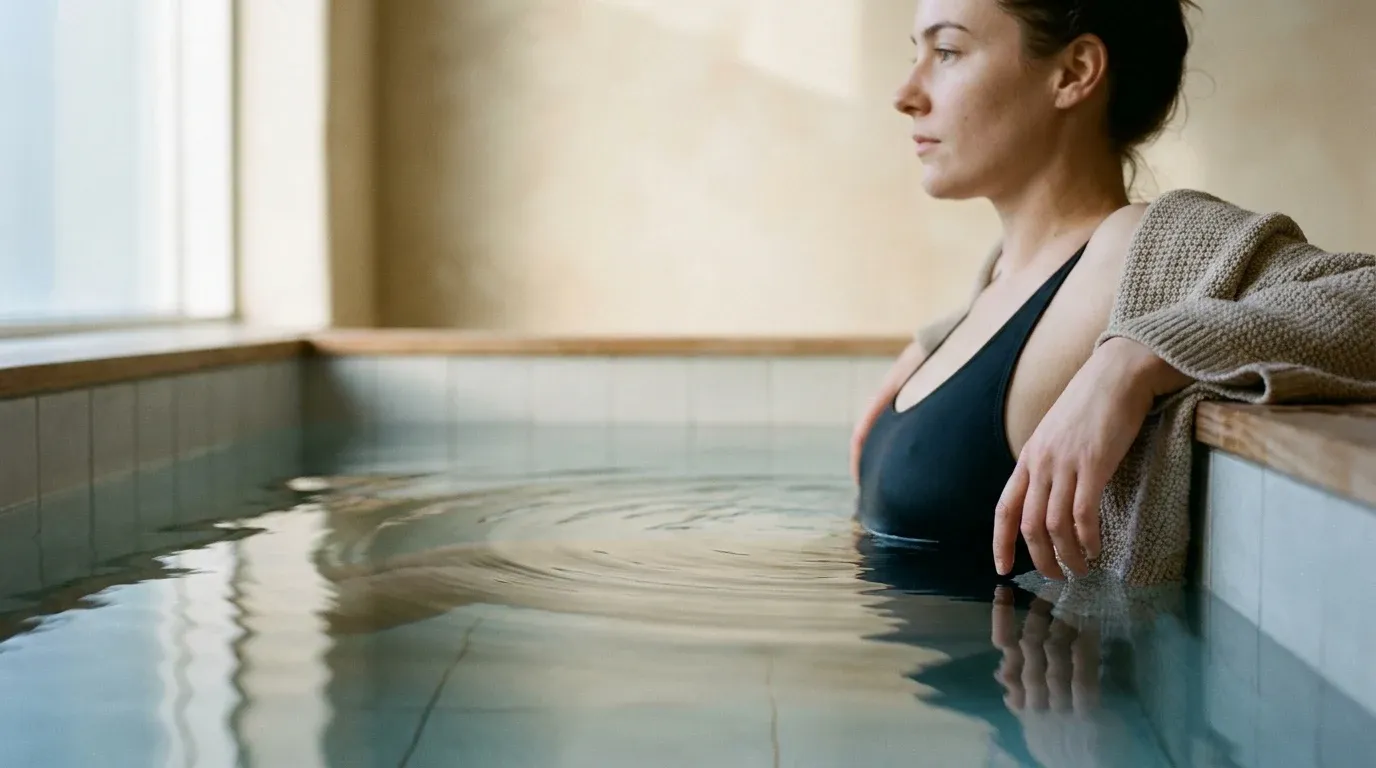
You've probably built a recovery routine you're proud of. The ice bath setup in your bathroom, the compression tights hanging by the door, the massage gun charging on the nightstand. It feels scientific. It feels serious. The problem is that some of these habits are actively working against the results you're training for.
New research is forcing a hard look at the recovery industry, and the findings aren't flattering for most of the premium tools it sells. Here's what the evidence actually says, and what you should probably keep doing instead.
Cold-Water Immersion: The Adaptation Trap
Ice baths became mainstream when elite athletes started posting them on social media. They look dramatic, they feel like discipline, and they do reduce acute soreness. That last part is real. The catch is that soreness reduction and muscle recovery are not the same thing.
Research published in leading sports science journals has shown that frequent cold-water immersion blunts the inflammatory signaling pathways that your muscles need to adapt and grow stronger after training. Specifically, it appears to suppress satellite cell activity and reduce anabolic signaling. For endurance athletes, the picture is mixed. For anyone primarily focused on building strength or muscle mass, the evidence increasingly suggests that cold immersion after resistance training is counterproductive.
One controlled study found that athletes who used cold-water immersion regularly after resistance sessions showed significantly less muscle growth and strength gain over 12 weeks compared to those who skipped it entirely. The inflammation you're trying to suppress is part of the signal your body uses to build.
This doesn't mean cold exposure has no place in your life. Used strategically, well away from resistance sessions, it may still support mood, alertness, and nervous system recovery. But defaulting to an ice bath after every lift is likely costing you gains.
Compression Garments: Modest at Best
Compression tights and sleeves are popular, and the market for them runs into the billions globally. The science, though, is underwhelming. Meta-analyses on compression garments show small and inconsistent effects on perceived soreness and next-day performance. Some studies show minor benefits in reducing muscle oscillation during activity. Others show no meaningful effect on actual recovery outcomes.
They're not harmful the way cold immersion can be. But if you're spending $80 to $150 on compression gear because you believe it's accelerating your recovery, the evidence doesn't support that investment. For most everyday athletes, they function primarily as a comfort tool.
The Two Pillars That Actually Work
Strip away the marketing, and the research consistently narrows to two recovery interventions with strong, replicated evidence: sleep and post-exercise protein intake.
Sleep: Seven to nine hours per night is not a soft recommendation. It's the window in which the majority of physical repair and hormonal restoration happens. Growth hormone secretion peaks during slow-wave sleep. Protein synthesis rates increase. Inflammatory markers reset. Studies tracking athletic performance consistently show that sleep restriction to under six hours dramatically impairs strength output, reaction time, and injury risk within days. The effects are dose-dependent and cumulative.
If you're serious about your training, your sleep schedule deserves the same attention you give your programming. Irregular sleep schedules are fueling anxiety and depression, but the downstream effects on physical recovery are equally significant and often overlooked by athletes who otherwise manage their training carefully.
Post-exercise protein: Twenty to forty grams of high-quality protein consumed within roughly two hours of training provides the raw material for muscle protein synthesis. Leucine content matters specifically. Whey protein, eggs, Greek yogurt, and high-quality plant blends that combine leucine-rich sources all qualify. This is not a complicated intervention, but it remains the single most reliably supported nutritional strategy for improving recovery outcomes. No supplement on the market comes close to matching its effect size.
If you're in an older demographic, the protein signal matters even more. The science behind building muscle after 50 shows that protein sensitivity declines with age, meaning you need both consistent intake and strategic timing around sessions to get the same anabolic response younger athletes get automatically.
Soreness Is Not a Recovery Metric
This is one of the most consequential misunderstandings in recreational fitness. Delayed onset muscle soreness (DOMS) reflects local tissue inflammation and mechanical stress. It does not reliably reflect the state of your neuromuscular recovery or your readiness to train again.
Many of the trendy recovery tools, from percussion massage to cold immersion to foam rolling, are very effective at reducing perceived soreness without meaningfully improving actual muscle function. You can walk away from a recovery session feeling great, then underperform your next workout or accumulate fatigue because your muscles and central nervous system weren't actually ready.
The practical implication is that you shouldn't use "I don't feel sore" as the primary signal for training frequency decisions. Performance metrics, heart rate variability trends, and sleep quality are more reliable indicators. A session that leaves your legs feeling fresh may have done nothing for your underlying readiness to generate force.
This distinction matters especially if you're trying to add explosive work to your lifting routine, where neuromuscular freshness is critical and the consequences of training on incomplete recovery are more pronounced than in lower-intensity work.
Tart Cherry Juice: One of the Few Supplements Worth Considering
The supplement aisle is full of recovery products making claims that the research doesn't support. Tart cherry juice is one of the rare exceptions with a credible evidence base.
Multiple randomized controlled trials have found that tart cherry juice produces small-to-moderate reductions in muscle soreness and measurable improvements in strength restoration after intense exercise. The proposed mechanism involves its high concentration of anthocyanins, which have both antioxidant and anti-inflammatory properties. Unlike ice baths, the anti-inflammatory effect appears to operate at a level that reduces tissue damage without suppressing the adaptive signaling your muscles need.
The practical dosing protocol used in most research involves roughly 250 to 500ml of tart cherry juice or concentrate twice daily, starting a few days before a particularly hard training block or competition and continuing for a few days after. It's not transformative, and it won't substitute for sleep or protein. But among supplements with real trial data, it earns a place on the shortlist.
For a broader look at which recovery and health interventions have actually passed rigorous review, Yale's review of 51 anti-aging interventions provides a useful benchmark for how to think about evidence quality in this space.
What to Do With Your Recovery Routine Right Now
You don't need to throw everything out. But a few adjustments, grounded in what the research actually supports, will likely make a meaningful difference.
- Prioritize sleep above all other recovery tools. If you're cutting sleep to fit in a morning ice bath, you've made the wrong trade-off every time.
- Hit your post-exercise protein window consistently. Twenty to forty grams within two hours of training, every session, is more valuable than any device or garment you can buy.
- Reserve cold immersion for deliberate use, not default habit. If you're doing resistance training focused on strength or hypertrophy, avoid cold immersion immediately after those sessions.
- Don't mistake comfort tools for recovery tools. Foam rolling, massage guns, and compression gear may help you feel better. That's worth something. Just don't confuse it with physiological recovery.
- Consider tart cherry juice during high-load blocks. It's inexpensive, low-risk, and has better trial data than almost anything else in the supplement category.
- Use objective markers to guide training frequency. Track performance metrics over time rather than relying on how sore or fresh you feel day to day.
The recovery industry thrives on the gap between what feels like it's working and what actually is. Most of the expensive tools exist in that gap. The habits that genuinely move the needle, sleep and protein, cost almost nothing and require no special equipment. The science on that hasn't changed, and it's unlikely to.