
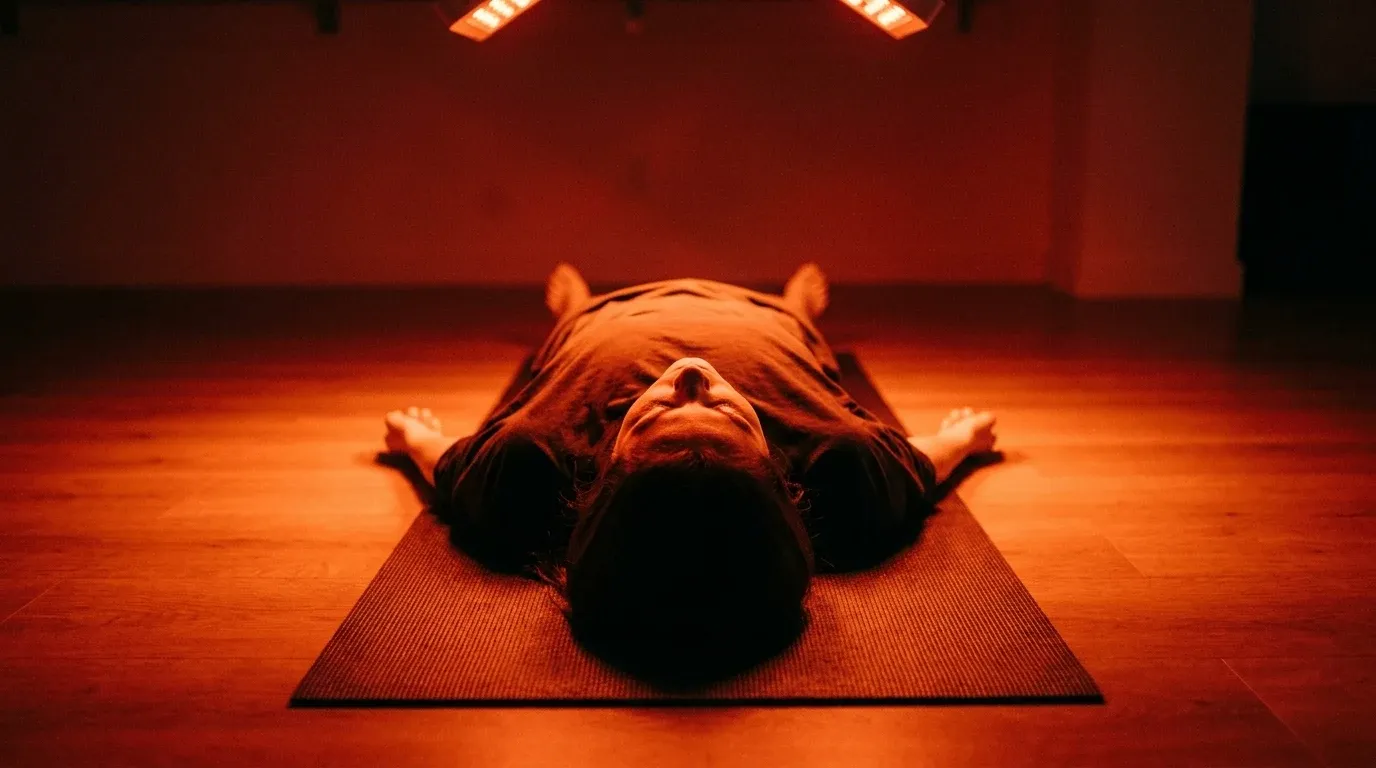
For years, red light therapy sat firmly in the territory of elite sports medicine clinics, professional locker rooms, and high-end biohacking studios where the price of entry kept most people out. That's changing. A wave of studio partnerships is bringing photobiomodulation technology directly into neighborhood Pilates and yoga classes, and the shift is worth paying attention to.
The most visible signal right now: STRONG Pilates Oxford and Khanom have both partnered with BON CHARGE to integrate red light recovery technology into their class formats. The rollout, confirmed for October 2026, places red light therapy blankets and face masks inside dedicated recovery rooms attached to standard mat Pilates and yoga sessions. This isn't a boutique biohacking lounge in a major city. It's community-level fitness infrastructure, and it signals something real is moving.
What's Actually Being Offered in These Studios
The formats arriving in mainstream settings aren't the large panel systems you'd find in a sports medicine facility. What's landing in studios right now centers on two primary devices: full-body red light therapy blankets designed for post-class use, and targeted face masks used during structured recovery windows.
Blankets wrap around the body and deliver near-infrared and red light across a wide surface area, typically used for 10 to 20 minutes after training. Face masks use similar wavelengths but concentrate exposure on skin, which makes them popular for both recovery and skin-related outcomes. Both formats are designed around short sessions that slot naturally into the cool-down period of a Pilates or yoga class without requiring any extra equipment expertise from the participant.
The BON CHARGE partnership specifically emphasizes post-session recovery as the primary use case. That framing matters, because it aligns the product directly with what the existing evidence actually supports.
What the Evidence Says
The science behind red light therapy, technically called photobiomodulation (PBM), has been building for decades. Red and near-infrared wavelengths in the 630–850nm range penetrate tissue and appear to stimulate mitochondrial activity, particularly in cells under oxidative stress. The proposed mechanism centers on cytochrome c oxidase, an enzyme in the mitochondrial respiratory chain that absorbs these specific wavelengths and responds by increasing ATP production.
In practical terms, the strongest evidence supports two outcomes: accelerated muscle recovery and reduction in exercise-induced inflammation. A meta-analysis published in Lasers in Medical Science found that pre- and post-exercise PBM treatment significantly reduced markers of muscle damage, including creatine kinase and lactate dehydrogenase, compared to placebo. Studies using delayed-onset muscle soreness (DOMS) protocols have shown consistent reductions in both perceived soreness and functional performance deficits in the 24–72 hour window after training.
If you want a deeper look at how this research stacks up, Red Light Therapy and Muscle Recovery: What Science Says breaks down the clinical literature in detail.
The evidence for skin outcomes, circadian rhythm support, and joint pain is more mixed but genuinely promising. What the evidence does not yet firmly support is using low-quality consumer devices with unverified irradiance levels and expecting clinical outcomes. That gap between laboratory-grade devices and mass-market products is where consumers need to pay close attention.
Why Studio Integration Makes Sense Right Now
Home red light therapy panels have been available for years, but adoption has been slowed by two friction points: cost and uncertainty about proper use. A quality panel with clinically relevant irradiance can run $400 to $1,200 or more, and most buyers have no baseline for whether they're using it correctly.
Studio integration removes both barriers. You show up, you complete a Pilates session, and you spend 15 minutes in a recovery room with equipment that's been configured by people who understand the parameters. The protocol is handled. That's a meaningful difference from buying a device online and hoping you've got the settings right.
It also fits naturally into how recovery is being repositioned inside group fitness. Recovery is no longer the passive absence of training. It's becoming its own structured practice, and studios are building programming around it. The same logic that drove the growth of dedicated recovery studios offering compression therapy and contrast bathing is now reaching Pilates and yoga formats. Red light therapy fits because it requires no physical exertion, zero equipment skill from the user, and very little time.
This also connects to a broader picture of how fitness communities are approaching stress load. Research consistently shows that exercise combined with social support is one of the most effective stress management combinations available. Studios that offer both the training environment and the recovery infrastructure are building something more complete than a single-modality workout destination.
The Consumer Checklist: What Actually Affects Your Results
Not all red light therapy is equal. The devices appearing in studios vary considerably from the cheapest consumer products on the market, and if you're evaluating either a studio offering or a home device, there are four variables that determine whether you're getting anything meaningful from a session.
- Wavelength range. Effective devices operate between 630nm and 850nm. Red wavelengths (630–660nm) penetrate to skin and superficial tissue. Near-infrared wavelengths (810–850nm) go deeper, reaching muscle and joint tissue. For post-exercise muscle recovery specifically, near-infrared is the relevant range. Devices that don't specify wavelength output, or that use wavelengths outside this window, aren't backed by the same evidence base.
- Irradiance output. This is the power density delivered to tissue, measured in milliwatts per square centimeter (mW/cm²). Most clinical studies producing positive results use irradiance levels between 20 and 200 mW/cm². Below that threshold, the photon dose reaching tissue is unlikely to trigger the mitochondrial response the research documents. Cheap face masks and blankets often don't publish irradiance data. That omission is a red flag.
- Session duration. Longer isn't better. PBM research shows a biphasic dose response: too little light produces no effect, the right dose produces benefit, and too much can actually inhibit the response. Most effective protocols in recovery research run between 5 and 20 minutes per targeted area. Studios using 10–15 minute post-class sessions are operating within the documented effective range.
- Proximity to the device. Irradiance drops off significantly with distance. A device that delivers 100 mW/cm² at 6 inches may deliver a fraction of that at 24 inches. Blanket-style devices address this by wrapping directly against the body. Panel systems require you to position yourself at the correct distance, which is where home users frequently get it wrong.
When evaluating a studio offering, it's reasonable to ask what wavelengths the equipment uses and whether the brand publishes irradiance data. A studio partnering with a credible brand like BON CHARGE is working with a company that does publish these specifications. That's the baseline you should expect from any commercial offering.
How This Fits Into a Broader Recovery Strategy
Red light therapy works best as one layer of a recovery stack, not a standalone solution. The fundamentals still drive the majority of recovery outcomes. Sleep quality, protein timing, hydration, and training load management all have larger effect sizes than any single recovery modality. If you're not getting enough sleep, a 15-minute red light session won't fix that deficit.
Where red light therapy adds genuine value is at the margins, and margins matter when you're training consistently. If you're pushing volume and trying to maintain performance across a weekly schedule, reducing the 48–72 hour soreness window by a meaningful amount has real compounding value. That's the honest framing of what the evidence supports.
If your recovery ceiling is being set by training variables you haven't addressed yet, such as insufficient rest between sessions or poorly managed progressive overload, those are the levers to pull first. Understanding how rest intervals affect performance and identifying what's actually stalling your progress will move the needle more than any single recovery tool.
That said, for someone already managing the fundamentals well, adding structured red light exposure in a post-class format is a low-risk, low-effort addition with a plausible mechanism and growing evidence support. The studio model removes the guesswork, and the BON CHARGE partnership at STRONG Pilates Oxford and Khanom gives mainstream fitness participants access to equipment they wouldn't otherwise encounter.
What to Watch Going Forward
The STRONG Pilates and Khanom partnerships likely represent an early wave of a broader integration pattern. As the cost of quality red light panels and blankets continues to fall, and as more studios look for differentiated recovery offerings, expect this technology to appear in more group fitness formats across 2026 and beyond.
The risk is that rapid mainstream expansion will pull in underpowered, unverified devices riding the trend. The consumer market for red light therapy already contains a wide range of products that don't meet the wavelength or irradiance thresholds the research uses. As the category grows, so does the noise.
Your best protection is the checklist above. Ask for the specs. Look for published irradiance data. Treat wavelength claims without supporting data the same way you'd treat a supplement that doesn't disclose its dosage. The underlying science is solid. The application is what varies, and that's what's worth evaluating carefully as red light therapy finds its place in everyday fitness.