
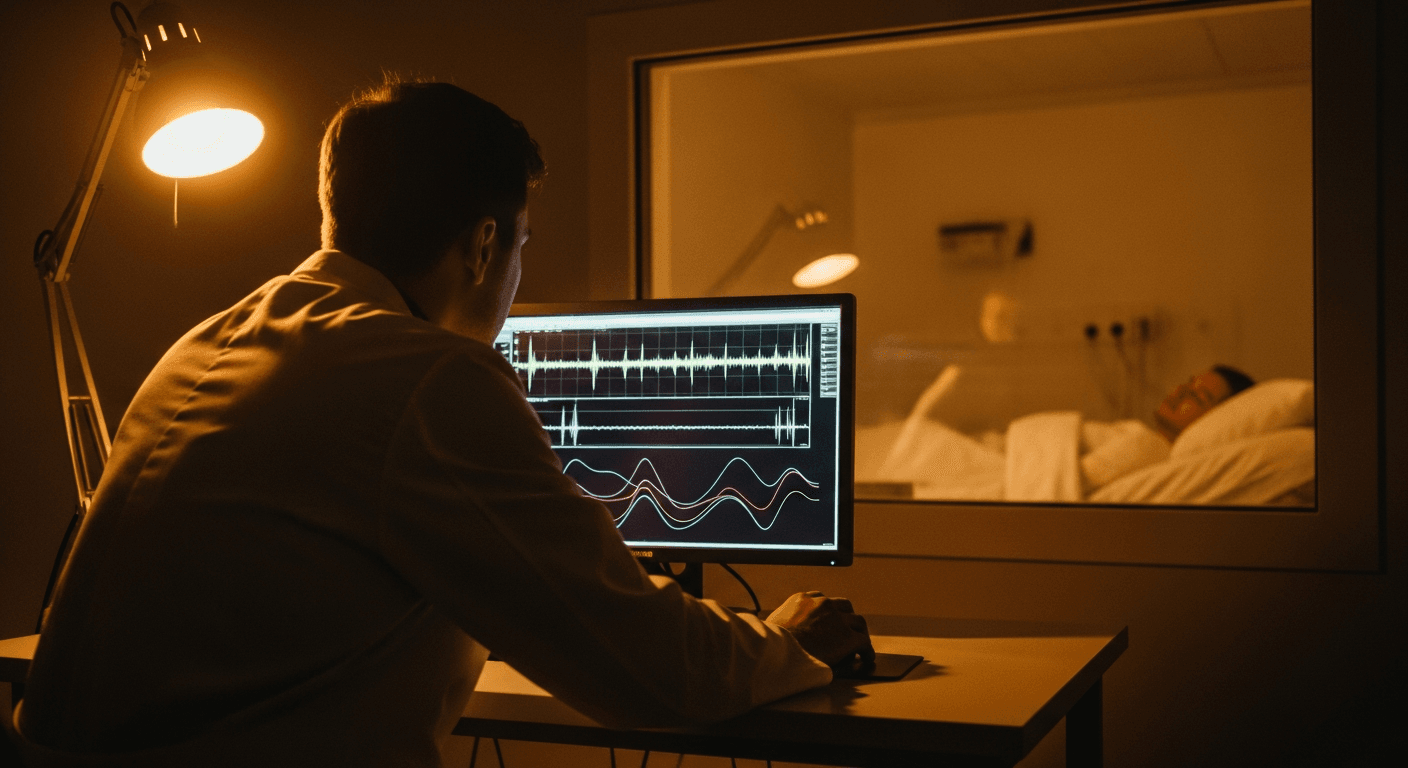
Every year, the SLEEP meeting brings together the world's leading sleep medicine researchers. The 2026 edition in Baltimore, organized by the American Academy of Sleep Medicine and the Sleep Research Society, produced several findings that will change how health professionals and athletes think about sleep. Here are the most important ones.
Sleep Fragmentation: An Independent Cardiovascular Risk Factor
The finding that drew the most attention from attending cardiologists: sleep fragmentation — waking multiple times per night — is an independent cardiovascular risk factor, separate from total sleep duration.
Research presented at the conference showed that adults sleeping 7-8 hours per night but with frequent micro-awakenings had cardiovascular risk profiles similar to those sleeping under 6 hours continuously. Sleep quality — measured by continuity — turns out to be as important as quantity.
For athletes, this reinforces the importance of sleep conditions that minimize interruptions: complete darkness, room temperature between 63-68°F, ambient noise reduction.
Exercise Timing and Sleep: Precise Data
Another research block at SLEEP 2026 focused on the interaction between exercise and sleep quality. The results nuance some common assumptions.
Morning exercise (before 10am) improves deep sleep stages the following night — more time in slow-wave sleep, the most restorative stage for muscle recovery and immune function. Effect observed most with moderate to high intensity sessions.
High-intensity evening exercise (after 8pm) delays sleep onset by an average of 43 minutes and reduces the first REM cycle. The effect disappears with moderate exercise (fast walking, dynamic yoga) even late in the evening. Blue light from screens after training amplifies this effect.
The 8-Hour Rule Gets Nuanced
The 7-9 hour recommendation for adults remains valid. But SLEEP 2026 brought important data on what happens within that range.
Sleep quality metrics — proportion of deep sleep, number of complete REM cycles, sleep onset latency — predict next-day cognitive performance better than total duration alone. An adult sleeping 7 hours with optimal sleep architecture will outperform one sleeping 8.5 hours with fragmentation.
For those tracking sleep with wearables, this means looking at quality scores, not just total hours.
Wake Time: The Most Powerful Lever
A finding that surprised even the researchers themselves: maintaining a consistent wake time is more effective than a consistent bedtime for stabilizing circadian rhythm. Multiple studies showed that variability in wake time — even 30-45 minutes from day to day — is the strongest predictor of chronically poor sleep quality.
For athletes with weekend competitions and variable weekday training schedules, this is a practically important discovery: targeting a fixed wake time should take priority over everything else.