
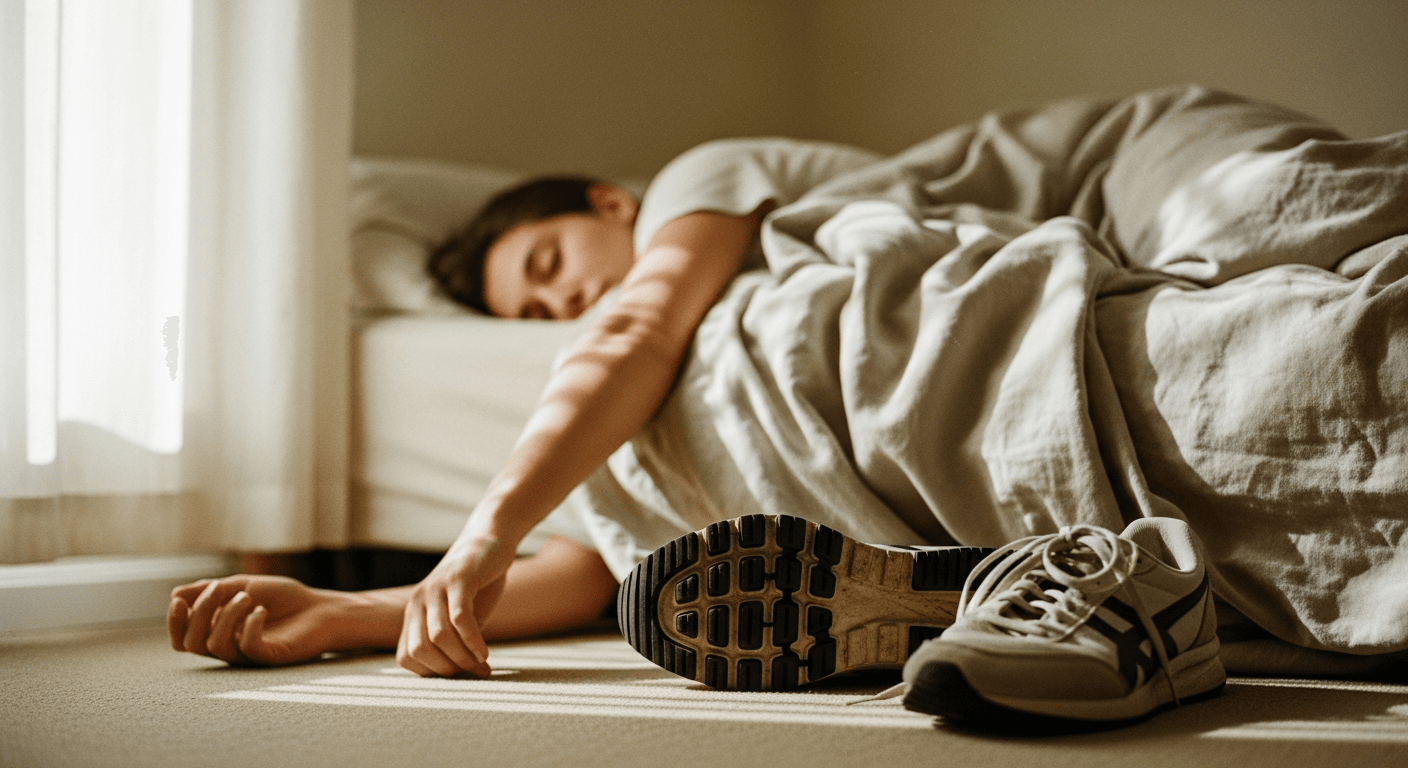
We know we should sleep more. We know we should move more. What we know less is how few people actually do both consistently — and which one drives the other.
A new study analyzed 28 million days of real-world health data from 70,000 people. The finding: fewer than 13% consistently meet both sleep and physical activity recommendations at the same time.
The number that says everything
Less than 13%. That means among 100 people you know, fewer than 13 are consistently hitting both sleep and exercise targets. The other 87 are falling short on one, the other, or both.
This isn't a motivation or willpower problem. It reflects how these two behaviors interact — and the genuine difficulty of maintaining both simultaneously.
The key finding: sleep calls the shots
The study sheds light on the direction of causality. Sleep quality and duration have a stronger influence on next-day physical activity than the reverse.
In other words: if you sleep poorly tonight, you're statistically less likely to exercise tomorrow. But if you exercise today, that doesn't necessarily improve your sleep tonight in any meaningful way.
That's counterintuitive. You often hear that exercise improves sleep — and it's true over the long term. But in the immediate 24-hour window, sleep determines exercise, not the other way around.
What this changes for building your routine
If you treat sleep as a secondary variable — something to catch up on during the weekend, something that can wait — you're directly compromising your chances of being active tomorrow. This isn't theory; it's a correlation measured across millions of days of real-world data.
The logic that shifts:
- Before: I missed my workout because I was tired — I'll sleep earlier tomorrow
- After: if I want to train tomorrow, I need to sleep enough tonight
Exercise isn't the priority. The sleep that makes it possible is.
The two targets to hit
To join the 13% who consistently manage both:
- Sleep: 7 to 9 hours per night for adults (WHO / NSF recommendation)
- Physical activity: 150 minutes of moderate activity or 75 minutes of vigorous activity per week, plus 2 strength sessions. Research confirms that even 10 minutes of daily movement improves sleep quality — a useful starting point if you're building the habit from scratch.
Neither target is impossible. What makes them difficult is treating them separately when they're interdependent. Start with sleep. The rest follows.
Sources: Medical Xpress — Medical News Today