
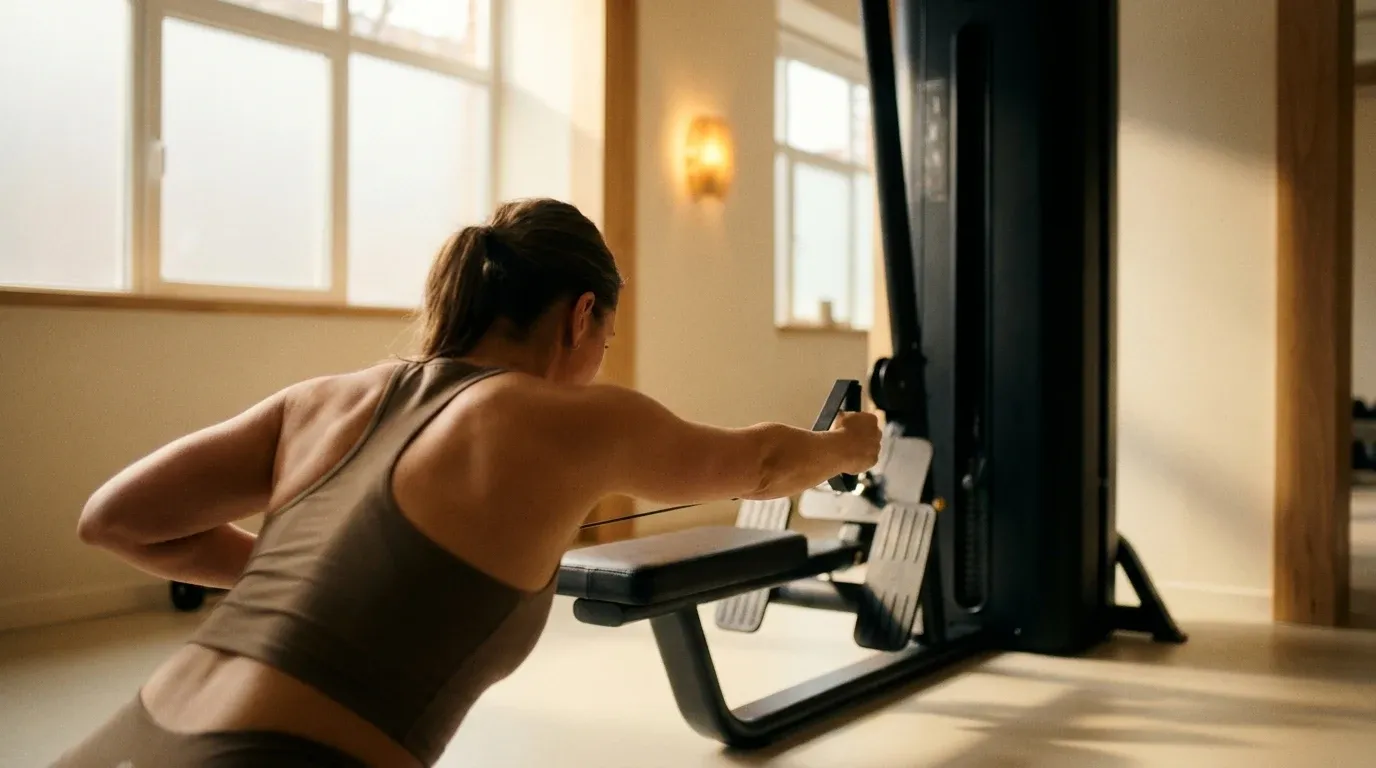
The home gym market has been quietly maturing for years. First came connected cardio. Then came smart mirrors and subscription-based fitness classes. Now, strength training is getting its own AI layer. The question worth asking before you spend serious money: does the intelligence actually change your training, or does it mostly change your invoice?
AEKE's S1 Pro, launching November 2026, is one of the more complete attempts to answer that question. It combines physical resistance hardware with AI coaching, personalized workout plans, and real-time load recommendations. It's not alone in this space, but it represents where the category is heading. And that's exactly why it's worth examining carefully.
What the Smart Home Gym Category Actually Looks Like Now
The global smart home gym market was valued at roughly $9.5 billion in 2023 and is projected to exceed $20 billion by 2030, according to multiple market research estimates. That growth isn't coming from connected bikes anymore. It's coming from strength-specific hardware that integrates sensors, adaptive programming, and increasingly, conversational AI coaching.
Products like Tonal, Tempo, and now the AEKE S1 Pro represent a different category than a Peloton. They're not selling motivation through live classes. They're selling structured, progressive overload. The pitch is simple: get the programming benefits of working with a trainer, without the scheduling friction or the $80-to-$150 per session cost.
That's a credible value proposition. But the actual capabilities of AI coaching vary considerably depending on what sensors the hardware includes and how the software interprets the data it captures.
What AI Coaching Can Actually Do Well
To be fair to these systems, there are several things AI genuinely does better than most self-directed gym-goers. Load progression is the most obvious one. Left to their own devices, most people either add weight too fast and get hurt, or stay comfortable and stop progressing. AI-driven load recommendations that factor in your recent session data, rest intervals, and historical performance curves can meaningfully improve this.
Data logging is another area where AI earns its keep. Remembering exactly what you lifted, in what order, at what tempo, three weeks ago is not something human memory does reliably. A system that tracks this automatically and surfaces patterns over time is genuinely useful. If your squat has plateaued for six weeks while your press is climbing, you need to know that. The machine notices. You might not.
Personalized program design, within constraints, is also improving. Modern AI can synthesize your training history, your stated goals, your available equipment, and your recovery data into a weekly structure that's more coherent than what most people build for themselves. It won't replace a great coach, but it will consistently outperform no plan at all.
And consistency compounds. If you're training alone and traveling frequently, having a system that adapts your program to your available equipment each week. and keeps your progression intact across time zones. is not a small thing. Recovery and performance are also influenced by factors you might not think to optimize. For instance, everyday movement counts as much as your workout when it comes to long-term fitness outcomes. A smart system that acknowledges this, rather than treating gym sessions as isolated events, is ahead of most traditional programming.
What AI Still Can't Do
Here's where the marketing tends to outpace the reality. Current AI coaching systems, including the most advanced ones, cannot assess your bar path in real time. They can't see that your left knee is caving on the third rep of your squat, or that you're compensating on a dumbbell press because your left shoulder is slightly impinged. Without precise computer vision integrated with enough camera angles and processing power to actually interpret movement quality, this limitation is structural, not temporary.
Verbal cueing in the moment is another gap. A skilled coach doesn't just notice a fault. They know which cue, delivered at which point in the movement, will fix it for you specifically. "Push the floor away" works for some lifters. "Spread the floor" works for others. "Drive your knees out" is what a third person needs to hear. AI systems currently deliver cues from a library. They don't adapt those cues to what you've responded to before.
Daily readiness is a subtler problem. Good coaches read the room. They notice when you came in flat, when your sleep was clearly poor, when you're emotionally off. They adjust your session accordingly, often without you asking. AI systems can approximate this if they have access to biometric data from a wearable, but the interpretation is still blunt. A heart rate variability dip triggers a deload suggestion. A coach might push you anyway, knowing you respond well to being challenged when you feel low. That nuance isn't there yet.
This matters especially for intermediate and advanced lifters. If you've been training for less than two years and you don't have persistent injuries, AI coaching covers a large portion of what you need. If you've been training seriously for five or more years, the ceiling on what AI can offer you drops significantly.
The Real Cost Equation
Price is where these products generate the most polarized reactions. Expect AI-integrated home gym hardware to sit in the $2,500-to-$4,500 range for the unit itself, with monthly subscription fees for AI features typically running $30 to $60 per month. That's a substantial upfront cost.
But compare it honestly. A gym membership in a major US city runs $60 to $150 per month. Personal training sessions, if you're working with a qualified trainer two to three times a week, cost $400 to $600 per month minimum. If you've been paying for personal training and you're a beginner-to-intermediate lifter who trains consistently, the math on a smart home gym can work over a two to three year window.
The honest caveat: the people who get the most value from personal trainers are often the people who need live, responsive feedback the most. If you're buying a smart home gym specifically to replace coaching you genuinely needed, that's a trade-off worth acknowledging.
Who This Technology Actually Makes Sense For
The clearest use case is someone who trains alone, wants structured progressive programming, and doesn't have easy access to a gym or a trainer. This includes people who travel regularly for work, people in locations without quality training facilities, and people whose schedules make gym visits unreliable.
It also makes sense for self-directed lifters who already understand basic movement patterns and just want better data infrastructure around their training. If you know what a hip hinge should feel like, you don't need an AI to teach you. You might benefit from one that tells you when to add five pounds.
It's less clearly suited for beginners with significant movement dysfunction, anyone coming back from injury who needs live feedback on compensation patterns, or advanced lifters chasing competition-level performance. For those groups, spending the same money on a qualified coach. even remotely via video coaching sessions. is likely to produce better results.
It's also worth remembering that physical performance doesn't happen in isolation. Nutrition, recovery, and supplementation all interact with your training response. If you're investing in smarter training infrastructure, your dietary habits deserve the same scrutiny. Understanding what actually works, like whether an all-in-one stack combining creatine, HMB, and electrolytes delivers on its promises, is part of building a coherent performance system rather than optimizing one variable in isolation.
Similarly, cognitive function affects how well you train. Research increasingly supports the idea that creatine benefits extend to brain function, not just muscular performance. A smart training setup that ignores the fundamentals of recovery and nutrition is only solving part of the problem.
The Honest Verdict
AI-powered home gyms are not hype. They're also not magic. They represent a genuine step forward in making structured, progressive strength training accessible to people who don't have easy access to good coaching or reliable gym time.
What they don't do is replace the observational intelligence of a skilled coach. They log your data, suggest your load, and keep your program coherent. They don't see your movement. They don't read your state. They don't adapt to the full complexity of a human body in real time.
If you go in with accurate expectations, and if your profile fits the use case, a system like the AEKE S1 Pro represents a credible investment. If you're expecting AI to fully replace the experience of working with a great trainer, you'll be disappointed. The gap there is real, and it's not closing as fast as the marketing suggests.
The smart home gym category is maturing. It's just not mature enough yet to replace every reason you might want a human in the room.