
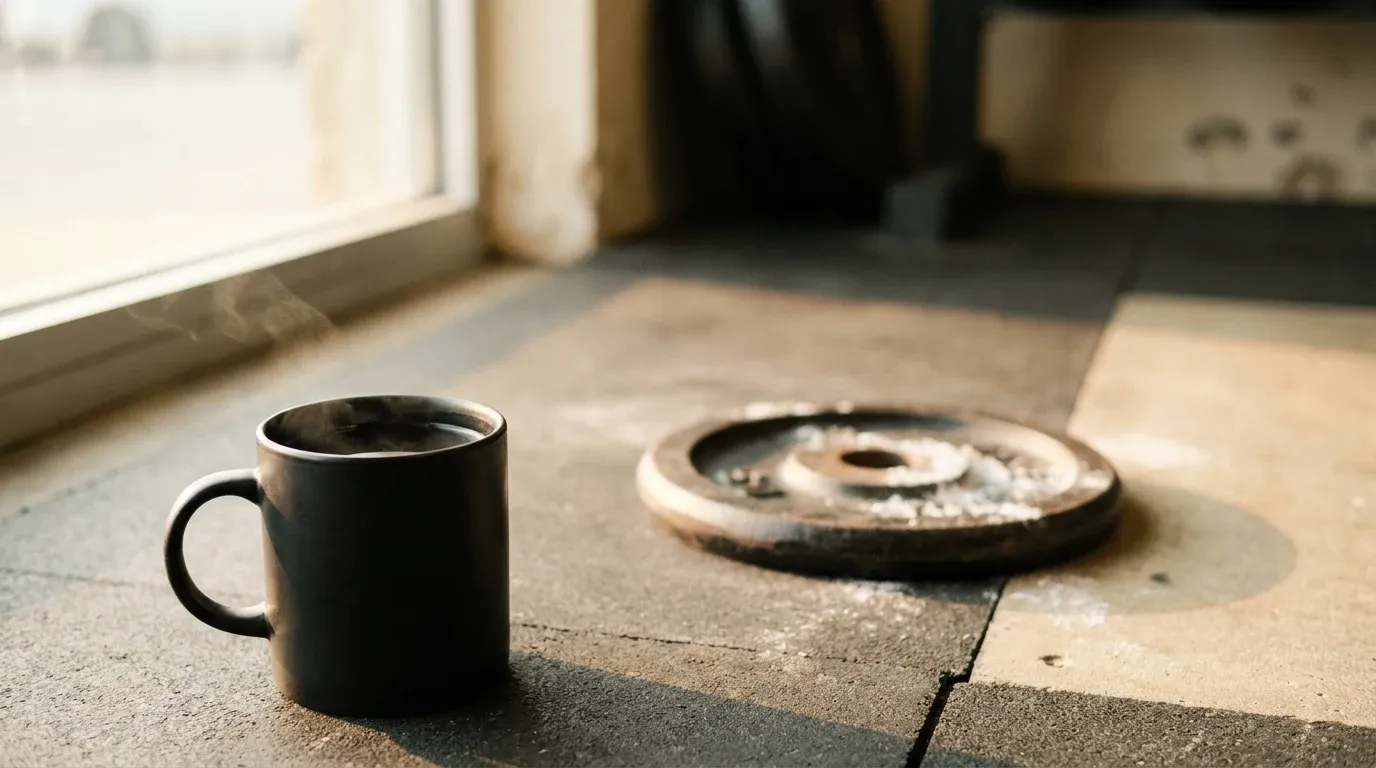
If you've been spending $40 or more a month on pre-workout supplements, there's a good chance you're paying for something a $12 bag of ground coffee already delivers. The research on black coffee and exercise performance has grown substantially in recent years, and the picture it paints is more useful than most gym-goers realize.
This isn't a story about caffeine being "good for you" in vague terms. It's about specific, measurable effects that show up in the gym before they show up on a scale or in a body composition scan. Here's what the evidence actually says, and how to use it.
More Than a Fat-Burning Boost
The conversation around coffee and fitness has long defaulted to fat oxidation. Yes, caffeine increases the rate at which your body mobilizes and burns fat during exercise. That part is well-established. But framing coffee purely as a fat-loss tool undersells what's happening at a physiological level.
Recent meta-analyses confirm that caffeine, consumed through black coffee, improves muscular endurance, peak power output, and time-to-exhaustion across a range of exercise types. Studies involving resistance training show meaningful increases in total volume lifted when caffeine is consumed beforehand. Aerobic performance data tells a similar story, with improvements in time-trial performance consistently appearing in the literature.
What's notable is the breadth. The benefits aren't confined to one type of athlete or one style of training. Strength athletes, endurance athletes, and recreational gym-goers all appear to respond. And black coffee, as opposed to caffeine isolate in pill or powder form, delivers these effects while also providing antioxidants and other bioactive compounds that may support recovery and reduce exercise-induced inflammation.
The Performance Effects Come First
Here's something practically important that often gets lost: the acute performance benefits of caffeine appear well before any fat loss metrics shift. You're not going to notice a change in body composition after one cup of black coffee before a Monday lift. But you may notice you pushed harder, recovered faster between sets, and felt less like stopping mid-session.
That distinction matters for how you think about using coffee as a training tool. It's not a long-term supplement you take and wait to see results from after weeks of use. It's an acute performance enhancer with immediate, session-level effects. Think of it the way you'd think about sleep or hydration. It changes what you're capable of on a given day.
Research consistently shows that caffeine reduces the perception of effort during exercise. The same workload feels lighter. That's not a placebo response. The mechanism involves caffeine blocking adenosine receptors in the brain, which are responsible for signaling fatigue. With those receptors blocked, your central nervous system doesn't receive the same "slow down" signal at a given intensity. You can sustain more output before discomfort forces you to back off.
This is also why caffeine has relevance beyond just physical performance. How Lifting Weights Actually Makes You Smarter is part of a broader conversation about training and brain function, and caffeine's effect on focus and mental sharpness during exercise fits squarely into that picture.
Focus, Effort Perception, and Output Without the Additives
Walk through the supplement aisle at any sporting goods store and you'll find pre-workout products packed with ingredient lists that run 20 lines long. Beta-alanine, citrulline, BCAAs, artificial sweeteners, proprietary blends. Some of these have real evidence behind them. Many don't. And as ingredient testing doesn't always predict real-world results, what's on the label doesn't guarantee what you get in performance.
Black coffee sidesteps that problem entirely. There's one primary active compound doing the heavy lifting: caffeine. The dose is predictable if you're consistent with your brewing method. And the cognitive effects are well-documented.
Studies on attention, reaction time, and working memory all show improvement following caffeine consumption. For training, that translates to sharper focus during technically demanding movements, better mind-muscle connection during resistance work, and reduced distraction. If you've ever had a session where you were mentally checked out from the start, you know how much that costs you in quality reps.
The output gains aren't subtle either. Research has found that caffeine can increase strength performance by roughly 3 to 7 percent in some protocols, with larger effects observed in upper body exercises. For someone training consistently, that's a meaningful edge that compounds over time through accumulated volume.
Timing and Dosage: Where Most People Get It Wrong
The research is clear that timing matters more than most people account for. Caffeine's peak plasma concentration typically occurs 45 to 60 minutes after consumption. That means you need to plan your coffee intake accordingly. Drinking a cup while you're already lacing up your shoes at the gym means most of the session passes before caffeine is doing its best work.
The practical target is to finish your coffee roughly 45 to 60 minutes before your training session starts. That positions peak caffeine availability to coincide with the main body of your workout rather than the warm-up or the drive over.
On dosage, the performance research clusters around 3 to 6 milligrams of caffeine per kilogram of bodyweight. For a 180-pound (82 kg) person, that's approximately 245 to 490 milligrams. A standard 8-ounce cup of black coffee contains roughly 80 to 100 milligrams of caffeine. So for most people, one to two cups is the relevant range, with two cups or slightly more being appropriate for heavier individuals or those with higher caffeine tolerance.
Going significantly beyond that doesn't appear to increase performance further, and it does increase the likelihood of adverse effects: jitteriness, elevated heart rate, and GI discomfort during training. More is not better past a certain threshold.
One more timing variable worth noting: late-day training. If your sessions run into the evening, high-dose caffeine consumption can interfere with sleep onset and quality. The research on caffeine's half-life (approximately 5 to 6 hours in most adults, longer in some) suggests that a 5pm coffee could still be affecting your sleep at 11pm. Poor sleep erodes recovery and undoes training adaptation. If you're navigating insomnia or disrupted sleep patterns, this tradeoff becomes especially relevant. Treating insomnia isn't just about sleep anymore, and performance-affecting habits like late caffeine intake deserve a place in that conversation.
Who Benefits Most, and What the Limits Are
Individual response to caffeine varies considerably. Genetics play a role in how quickly you metabolize it, which affects both the duration of its effects and your sensitivity to side effects. Regular, high-volume coffee drinkers tend to develop some tolerance, meaning they may experience blunted performance benefits compared to those who cycle their intake or consume less caffeine overall.
Some practitioners recommend periodically reducing caffeine intake for several days before a key training block or competition to restore sensitivity. The research on this approach is mixed, but the logic is sound. If your baseline consumption is already four or five cups a day, one pre-workout cup is unlikely to deliver a meaningful additional stimulus.
There are also contexts where adding more caffeine-dependent tools to your training stack requires some thought. If you're also experimenting with recovery methods like cold exposure, the interactions matter. Cold plunge after training is one area where the performance and recovery tradeoffs are still being worked out in the literature, and stacking multiple physiological interventions without understanding their interactions is a common mistake.
Similarly, if your training involves complex movement patterns where mobility and coordination are limiting factors, no amount of caffeine-driven motivation compensates for physical preparation. Mobility vs Flexibility: What Coaches Actually Need to Know is worth understanding separately from your pre-workout protocol. These are different tools addressing different problems.
The Practical Case for Black Coffee as a Pre-Workout
The appeal here isn't novelty. It's practicality. Black coffee costs a fraction of any commercial pre-workout product. It requires no mixing, no proprietary blend, no ingredient label scrutiny. It delivers caffeine in a form humans have consumed for centuries, with a long-term safety profile that most synthetic supplements can't match.
The performance research is consistent enough that many sports nutrition guidelines now include caffeine as one of the few supplements with strong evidence behind it. Black coffee is simply the most accessible, lowest-cost delivery vehicle for that compound.
What it isn't is magic. It doesn't substitute for progressive programming, adequate sleep, proper nutrition, or recovery. It makes a well-structured training session more productive. That's the right frame. Use it as a tool within a complete approach, time it correctly, dose it appropriately, and don't let it cannibalize your sleep. Do those things, and the evidence suggests you'll lift more, last longer, and work harder without spending another dollar on a pre-workout tub that may or may not deliver what it promises.