
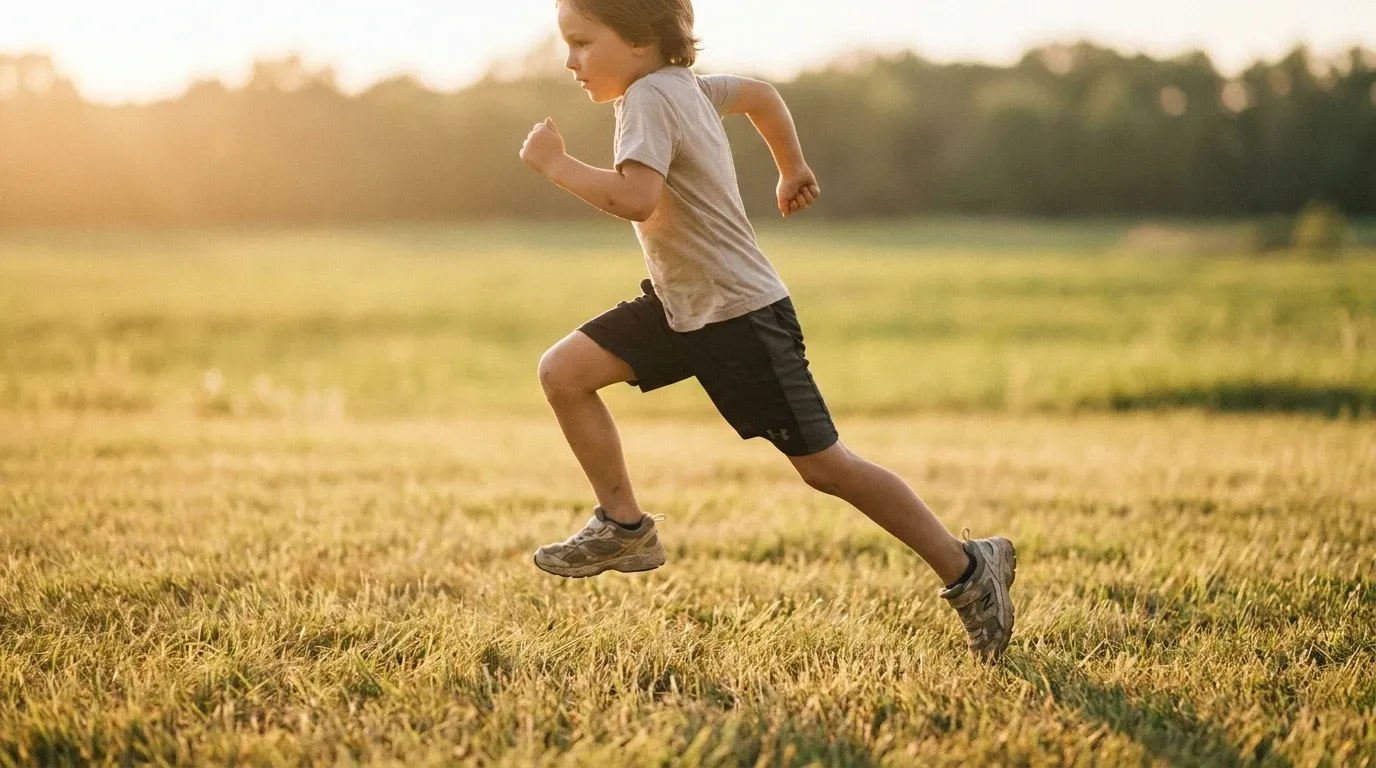
The conversation around childhood fitness has long centered on physical outcomes. Healthy weight, strong bones, better cardiovascular markers. But a major longitudinal study published in 2026 reframes the stakes entirely. Cardiorespiratory fitness in childhood doesn't just shape the body you'll live in. It shapes the mind you'll navigate adulthood with.
The findings are striking enough to change how parents, schools, and pediatric health professionals think about physical activity. And they arrive at a moment when adult depression rates are at historic highs across English-speaking countries.
What the Research Actually Found
The 2026 study tracked thousands of participants from childhood into their late 30s and 40s, measuring cardiorespiratory fitness levels early in life and then assessing depression outcomes decades later. The results showed a clear, statistically significant pattern.
Women with higher cardiorespiratory fitness in childhood had a 20% lower risk of developing depression as adults. Men showed an 11% lower risk. That's not a marginal signal. In a condition as prevalent and debilitating as depression, a 20% risk reduction is the kind of number that typically drives public health policy.
Importantly, the relationship held even after researchers controlled for socioeconomic factors, adult lifestyle habits, and other variables that commonly confound mental health research. The protective effect wasn't explained away by other influences. Childhood fitness appeared to carry its own independent weight.
Why the Effect Lasts Decades
One of the most compelling aspects of this research is durability. The participants weren't assessed in early adulthood, close enough to childhood that the connection would feel obvious. These were people in their late 30s and 40s. The fitness habits, or lack of them, formed 25 to 30 years earlier were still exerting measurable influence on their mental health.
The biological mechanisms likely involve several overlapping pathways. Cardiorespiratory fitness in youth supports healthy development of the hypothalamic-pituitary-adrenal (HPA) axis, which governs how the body responds to stress. Fit children tend to develop more regulated stress response systems, meaning they're less physiologically reactive to adversity as adults.
Aerobic exercise also promotes neuroplasticity and the production of brain-derived neurotrophic factor (BDNF), a protein closely linked to mood regulation and resilience. Research consistently shows that exercise produces measurable changes at the cellular and molecular level, including in brain tissue. When this happens during critical developmental windows in childhood, the effects may be longer-lasting than those achieved through exercise initiated in adulthood.
There's also a behavioral dimension. Children who are physically active tend to develop stronger social connections through sport and group activity, better sleep quality, and greater self-efficacy. Each of these is independently associated with lower depression risk across the lifespan.
The Gender Gap in the Data
The difference between women (20% risk reduction) and men (11%) warrants attention. Researchers haven't fully explained the gap, but several factors are likely at play.
Depression affects women at roughly twice the rate of men across most high-income countries, which means the baseline risk being modified is higher to begin with. Girls who are physically fit in childhood may also benefit from a stronger buffer against the hormonal and social stressors that disproportionately affect women during adolescence and early adulthood, a period that often marks the onset of depressive episodes.
It's also worth noting that physical activity levels among girls tend to drop more sharply than among boys during adolescence. A childhood spent being active may partially counteract that later decline, sustaining some of the neurobiological benefits into adulthood even when structured exercise habits become inconsistent.
Fitness as a Modifiable Variable. That's the Critical Part.
Depression research often points to risk factors that are difficult or impossible to change. Genetics, early trauma, socioeconomic hardship. What makes this finding particularly actionable is that cardiorespiratory fitness in childhood is modifiable. It's something parents, schools, and communities can directly influence right now.
You don't need expensive equipment or elite athletic programs to improve a child's cardiorespiratory fitness. The evidence points to consistent, moderate-to-vigorous aerobic activity as the key variable. Running, swimming, cycling, organized sports, active play. The kind of movement that raises the heart rate and sustains it for meaningful periods.
Current guidelines from major health bodies recommend at least 60 minutes of moderate-to-vigorous physical activity per day for children aged 6 to 17. Most children in the US, UK, Canada, and Australia fall significantly short of that target. The 2026 study adds a powerful new argument for closing that gap, one grounded not in future athletic performance but in long-term mental health protection.
What This Means for Schools and Parents
Physical education programs in schools have been cut, consolidated, or deprioritized in many districts over the past two decades, typically under pressure from academic testing schedules and budget constraints. The argument has often been framed as a trade-off: time spent in gym class is time not spent on math or literacy.
That framing doesn't survive contact with longitudinal data like this. A child who develops strong cardiorespiratory fitness is statistically more likely to reach adulthood with a lower risk of one of the most disabling and economically costly conditions in the developed world. Depression is the leading cause of disability globally according to the World Health Organization. The math argues for more PE, not less.
For parents, the implications are similarly direct. Building active habits early, before adolescence erodes motivation and screen time fills available hours, matters in ways that extend far beyond childhood health. You're not just helping your child avoid obesity or build athletic skill. You're potentially reducing their lifetime risk of a serious mental illness.
If you're navigating how to build your own fitness back after a gap, the research on early habits also underscores how important it is to model physical activity for your kids. Returning to regular exercise after having a child isn't just about your own recovery. It shapes the movement environment your child grows up in.
The Sleep Connection Adds Another Layer
Depression and sleep disruption are tightly linked, and physical activity sits at the center of both. Children who are more physically active tend to sleep better, and better sleep is one of the most reliable buffers against anxiety and depression. Even short daily exercise sessions have been shown to improve sleep depth and quality, a finding that applies across age groups.
When you're thinking about the full picture of childhood fitness, cardiorespiratory health, sleep quality, stress regulation, and mood stability aren't separate tracks. They're interconnected systems. Improving one tends to improve the others.
What About Adults Who Weren't Fit as Kids?
If you're reading this as an adult who wasn't particularly active in childhood, the study isn't a verdict on your mental health future. It describes population-level risk, not individual destiny. Depression is influenced by dozens of variables, and the fitness habits you build at any age carry real protective value.
The research on adult exercise and depression is robust and consistent. Regular aerobic activity reduces depressive symptoms comparably to antidepressant medication in some populations, particularly for mild to moderate depression. Building a sustainable fitness practice in your 30s, 40s, or beyond still matters enormously. Training smart as you move through your adult decades remains one of the most evidence-backed investments in your long-term mental and physical health.
The 2026 study doesn't close the door on adult intervention. It opens an earlier window and argues for starting the protective work sooner, ideally in the first decade of life.
The Bigger Picture
What this research ultimately does is reposition childhood fitness from a nice-to-have into something closer to a public health imperative. The standard arguments for getting kids moving, lower obesity rates, better cardiovascular health, stronger bones, are well established. But they haven't moved the needle on school PE funding or national activity rates with any real consistency.
Mental health is different. In the current cultural moment, with youth and adult mental health crises driving urgent policy conversations across the US, UK, Canada, and Australia, the idea that a measurable share of adult depression could be prevented through consistent childhood physical activity carries significant weight.
It also fits within a broader picture of how lifestyle factors accumulate over a lifetime. Emerging research on diet, longevity, and disease-free years consistently points in the same direction. The choices made earliest in life, and the habits instilled during childhood, have the longest runway to compound into either resilience or risk.
Cardiorespiratory fitness in childhood is modifiable. The evidence says it's protective. The only real question is what we're willing to do with that information.