
Gyms are catching up. Orangetheory has begun formally training its coaches on GLP-1 physiology, acknowledging what any honest trainer already knows: a growing share of clients are on semaglutide or tirzepatide, and standard program templates weren't built for them. The science behind why that matters isn't complicated, but it does require some real adjustments to how you train and eat.
Here's the core problem. GLP-1 receptor agonists work, in part, by dramatically suppressing appetite. That's the point. But when you're eating significantly less, you're also at serious risk of losing muscle alongside fat. And unlike fat loss, muscle loss isn't something you can easily reverse later.
Why Muscle Loss Is the Hidden Cost of GLP-1 Medications
Clinical trials on semaglutide and tirzepatide consistently report that somewhere between 25% and 40% of total weight lost comes from lean mass rather than fat. That's a meaningful number. For someone losing 30 pounds, that could mean 8 to 12 pounds of muscle gone with the fat.
The mechanism is straightforward. GLP-1 medications suppress appetite so aggressively that many users struggle to eat enough total food, let alone enough protein. When your body is in a deep caloric deficit without adequate protein, it turns to muscle tissue as a fuel source. The result is a process called sarcopenic obesity in reverse: you lose weight, but your body composition shifts in a direction that leaves you weaker, slower, and metabolically worse off.
This risk is amplified for anyone over 40, where baseline muscle protein synthesis is already slower. If you're in that group, the stakes are even higher. Toned Arms After 50: What Science Actually Says covers the underlying physiology in detail, and the same principles apply whether you're on a GLP-1 or not.
Resistance Training Is the Primary Lever
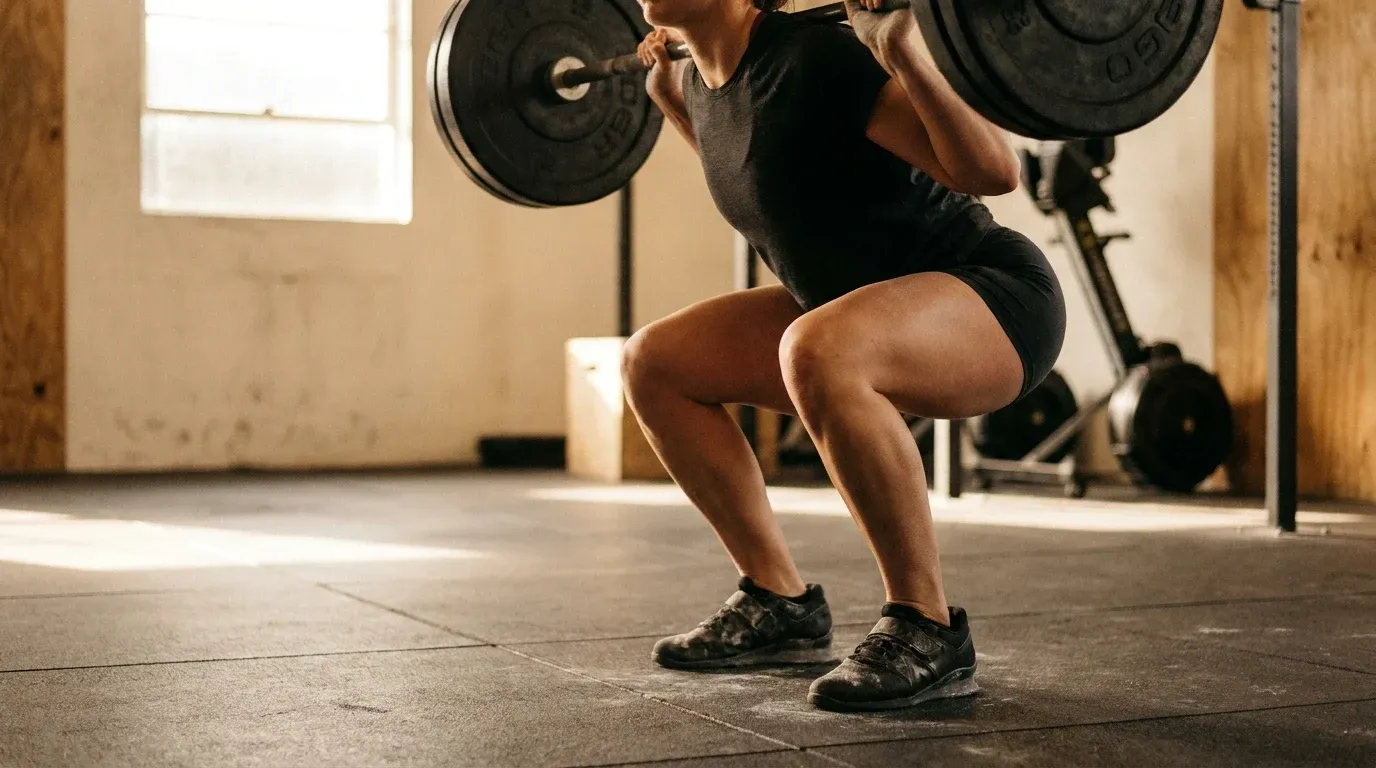
No supplement, no protein shake, no clever meal timing strategy will protect your muscle mass on a GLP-1 as effectively as lifting heavy things consistently. The research on this is unusually clear. Resistance training directly stimulates muscle protein synthesis and signals the body to preserve lean tissue even during caloric restriction.
A 2022 randomized trial found that participants combining semaglutide with structured resistance training preserved significantly more lean mass than those doing cardio or no exercise. The difference wasn't marginal. The lifting group held on to muscle at roughly twice the rate of the cardio group over a 16-week period.
What does "structured resistance training" mean in practice? It means compound movements. Squats, deadlifts, rows, presses. It means progressive overload: attempting to lift more, or do more reps, or reduce rest time over time. And it means showing up at least two to three times per week, not just when you feel energetic.
If you've been doing mostly cardio or group fitness classes, this is the moment to recalibrate. That doesn't mean abandoning everything else. It means making lifting your anchor and building everything else around it.
Protein: Total Daily Intake Isn't Enough
Most fitness advice focuses on hitting a daily protein target. Around 0.7 to 1 gram per pound of bodyweight is the standard recommendation for active individuals. That target still matters. But when you're on a GLP-1 and your appetite is suppressed, there's a second variable that often gets ignored: how that protein is distributed across your meals.
Research on muscle protein synthesis shows that the body can only use a certain amount of protein per feeding window to stimulate muscle repair and growth. That ceiling is roughly 35 to 40 grams of high-quality protein per meal for most adults. Eating 150 grams of protein in two large meals won't produce the same anabolic effect as spreading that same 150 grams across four or five meals.
This matters enormously on a GLP-1 because the medication often compresses your eating into fewer, smaller meals. You might physically be unable to eat a large dinner. That means you need to actively plan each smaller meal to hit that 35 to 40 gram threshold. A Greek yogurt snack won't cut it. You need protein-dense foods at every eating occasion: eggs, chicken, fish, cottage cheese, lean red meat, or quality protein supplements.
The practical strategy is to eat protein first at every meal, before vegetables or carbs. When your appetite gives out quickly, you want the most important macronutrient to have already landed.
Adjusting Volume and Frequency When Your Calories Drop
Here's something that experienced lifters on GLP-1 medications often discover the hard way: a training program that worked well at 2,500 calories a day can wreck you at 1,600. Recovery capacity is directly tied to caloric intake. Your body repairs muscle tissue, replenishes glycogen, and reduces inflammation partly through the energy and nutrients you consume. When those inputs drop sharply, your ability to absorb training stress drops with them.
This doesn't mean training less hard. It means training smarter about volume and recovery. Some adjustments worth considering:
- Reduce total weekly sets per muscle group. If you were running 15 to 20 sets per week for major muscle groups, consider pulling back to 10 to 12 and focusing on intensity rather than volume.
- Prioritize sleep and recovery aggressively. Inadequate sleep dramatically reduces muscle protein synthesis and increases cortisol, which accelerates muscle breakdown. Irregular sleep schedules compound this problem in ways most people underestimate.
- Be cautious with high-intensity conditioning work. Metabolic conditioning and high-rep circuits are recovery-expensive. If you're already in a deep caloric deficit, stacking aggressive cardio on top of heavy lifting may push your body toward muscle loss rather than fat loss.
- Keep explosive or power-based work intentional. Some athletes want to maintain speed and power output even while cutting. That's achievable, but it requires careful programming. How to Add Explosive Work to Your Lifting Routine outlines how to layer that in without overwhelming your recovery system.
The goal is to give your muscles a clear reason to stay while not demanding more from your body than your caloric intake can support. That balance shifts as your medication dose changes, so treat your program as a living document.
Pre- and Post-Workout Nutrition on a Suppressed Appetite
Workout nutrition is another area where standard advice breaks down for GLP-1 users. Most active people are told to eat a moderate meal one to two hours before training. But if your appetite is suppressed and nausea is a side effect you're managing, forcing a full pre-workout meal may not be realistic.
The minimum viable strategy is to get some protein in before training, even if it's small. Twenty grams of whey protein in water or a small serving of cottage cheese is enough to blunt muscle breakdown during the session. Post-workout, the same principle applies: prioritize protein over everything else within an hour of finishing your lift.
If you're managing nausea, timing your medication carefully in relation to your workouts can help. Many users find that training a few hours after their injection window, once acute nausea has passed, makes it easier to eat around workouts. Work with your prescribing clinician to find that window.
It's also worth noting that not all GLP-1 access is equal. The recent changes around compounded GLP-1 availability have shifted how many people access these medications, which affects consistency of dosing and therefore consistency of side effect patterns.
The Long-Term Picture
GLP-1 medications are not short-term tools for most users. Many people stay on them for years, and the muscle preservation question doesn't go away after the initial weight loss phase. It becomes an ongoing management challenge.
The same fundamentals apply throughout: lift consistently, distribute protein across meals, monitor your recovery capacity, and adjust volume when your caloric intake is at its lowest. As your weight stabilizes and you potentially taper your dose, your appetite will gradually return and you'll have more room to push training volume back up.
For older adults especially, this is not a minor concern. Muscle mass is one of the strongest predictors of long-term health, independence, and metabolic function. The relationship between sarcopenia, nutrition, and exercise becomes even more critical when you're combining aging with significant caloric restriction.
The good news is that GLP-1 medications and serious strength training are not at odds. Used together with intention, they can produce fat loss with preserved or even improved body composition. But that outcome doesn't happen automatically. It requires treating your training and your nutrition as seriously as you treat the medication itself.