
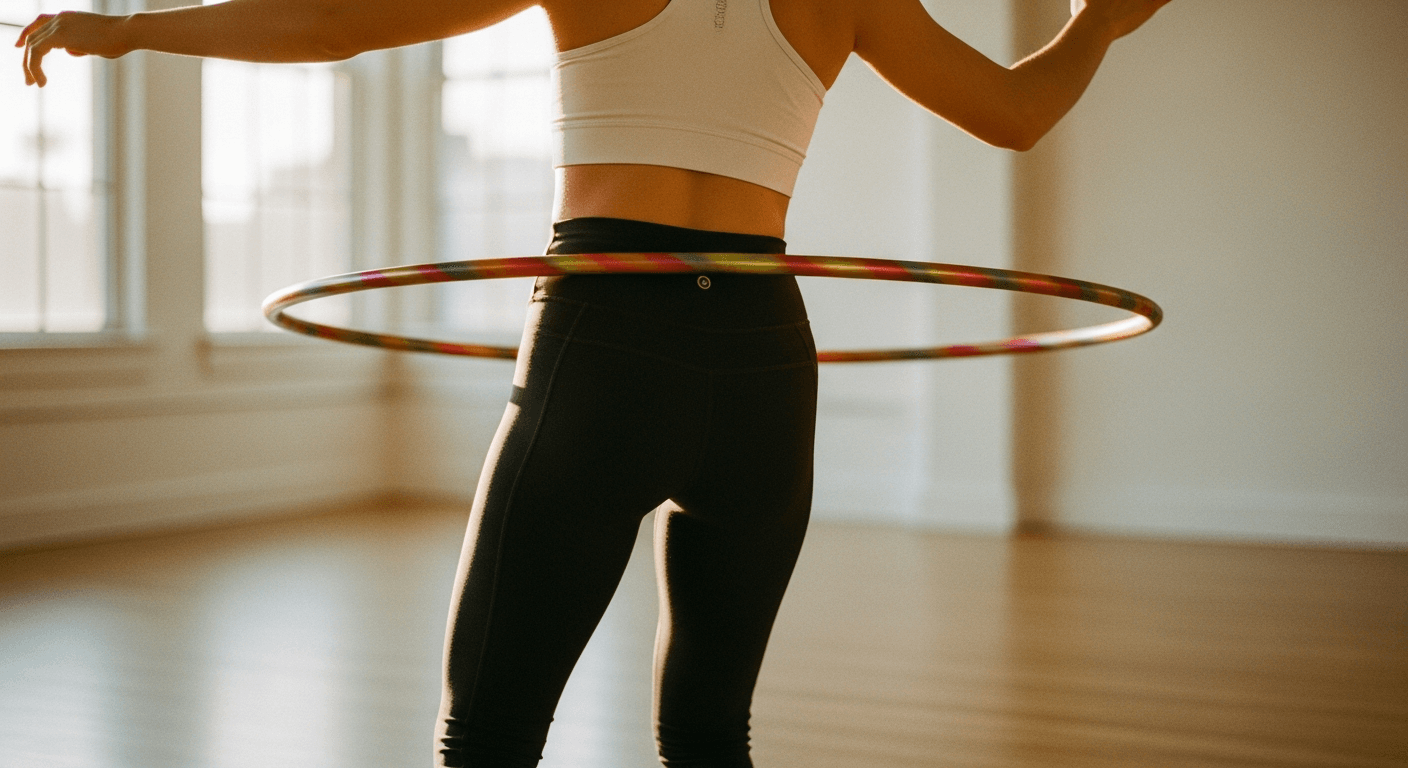
Hula hooping has spent decades being dismissed as a childhood pastime or a quirky fitness trend. That reputation is now harder to defend. Research published by the American Council on Exercise (ACE) on April 19, 2026, confirms that 30 minutes of hula hooping burns up to 210 calories while delivering measurable cardiovascular and muscular benefits. The numbers put it squarely in the same conversation as cycling, brisk walking, and low-impact aerobics.
This isn't about nostalgia. It's about a simple, low-cost movement pattern that produces real physiological results. Here's what the research actually shows, and why it matters for how you structure your workouts.
What the ACE Research Measured
The ACE study tracked participants performing continuous weighted hula hooping sessions and measured heart rate, oxygen consumption, and caloric expenditure throughout. The findings placed average calorie burn at around 165 to 210 calories per 30-minute session, with the higher end reflecting greater intensity, heavier hoops, and more experienced participants who maintained consistent rhythm without dropping the hoop.
Heart rate data during sessions averaged between 84 and 151 beats per minute, which falls within the moderate-to-vigorous aerobic zone. That range is consistent with what you'd expect from a standard group fitness class or a steady-state cardio session on an elliptical. The physiological response is genuine, not inflated.
The study specifically used weighted hoops rather than lightweight children's versions. Most adult fitness hoops weigh between one and two kilograms (roughly 2 to 5 pounds), and that added resistance is a significant factor in both caloric output and muscle engagement. A standard plastic hoop from a toy store won't deliver the same results.
Why the Movement Pattern Works
What makes hula hooping effective as a workout is the coordination demand it places on your body. To keep the hoop in motion, you're not simply swaying. You're producing a continuous, rhythmic shift of weight between your hips while keeping your core braced, your legs grounded, and your upper body relatively stable. That's a more complex motor task than it looks.
The muscles doing most of the work include the obliques, transverse abdominis, glutes, hip flexors, and quadriceps. Because all of these are activated simultaneously and must stay engaged for the duration of the session, hula hooping functions as a sustained aerobic exercise with a meaningful core-strengthening component built in. You're not isolating a single muscle group. You're training movement.
This is particularly relevant for people looking to address the physical consequences of extended sitting. Sedentary living is damaging joints earlier than most people realize, and exercises that restore hip mobility and strengthen the muscles around the lumbar spine have direct preventive value. Hula hooping checks both boxes without requiring equipment beyond a single hoop.
The Variables That Determine How Many Calories You Burn
The 210-calorie figure is a ceiling, not a guarantee. Your actual burn depends on several factors, and understanding them helps you use hula hooping more strategically rather than treating it as a fixed output.
- Intensity: Faster hip movement and more deliberate engagement of the core and glutes increase oxygen demand and caloric expenditure. A session where you're barely keeping the hoop up burns significantly less than one where you're maintaining strong, controlled rhythm throughout.
- Duration: Like any aerobic activity, total caloric burn scales with time. A 20-minute session will yield less than 30 minutes at the same effort level. Extending sessions gradually as your coordination improves is a straightforward way to increase output.
- Hoop weight: Heavier hoops require more muscular effort to keep in motion, raising the metabolic cost of each rotation. This is why fitness-specific weighted hoops produce meaningfully different results than toy store versions.
- Body composition and fitness level: Heavier individuals and those with more muscle mass tend to burn more calories during the same activity. As fitness improves, the same session becomes more efficient, which may require progressive overload through longer duration or increased hoop weight.
- Skill level: Beginners spend energy catching dropped hoops and restarting. Continuous motion is what drives cardiovascular response, so the caloric benefit increases substantially as you develop coordination and can sustain the movement without interruption.
Core Strength and Coordination: The Secondary Benefits
Calorie burn tends to get the headline, but the ACE findings on muscle engagement are equally significant. Participants showed measurable improvements in core endurance and dynamic balance over the course of the study period. These are functional outcomes, not cosmetic ones. A stronger core reduces injury risk, improves posture, and supports performance in other physical activities.
Balance and coordination adaptations are also worth highlighting. Hula hooping requires bilateral rhythmic movement that trains proprioception, the body's ability to sense its own position in space. That's the same quality you're developing during agility drills, yoga practice, or any activity that demands spatial awareness. It deteriorates with inactivity and improves with consistent practice.
For older adults or those returning to exercise after a sedentary period, these neuromuscular benefits can be just as meaningful as cardiovascular improvement. Building strength and functional capacity after 50 depends heavily on consistency with low-barrier movements, and hula hooping's accessibility makes it a realistic option for a broader range of fitness levels.
How It Compares to Other Cardio Options
To put the numbers in context: 30 minutes of brisk walking burns approximately 150 calories for an average adult. Moderate cycling sits around 200 to 250 calories. Low-impact aerobics lands near 200. Hula hooping at the upper end of the ACE range is competitive with all of these, and it has a lower barrier to entry than most.
You don't need a gym membership, specialized equipment, or a specific schedule. A weighted hoop typically costs between $25 and $60 in the US market, making it one of the most affordable fitness tools available. That matters in a broader fitness landscape where cost and access remain real obstacles for many people.
It's also worth considering how hula hooping fits into a varied training week. Short, frequent sessions consistently deliver meaningful health benefits, and hula hooping adapts well to that format. A 15-minute session on a rest day, a 30-minute block as a standalone workout, or a warm-up sequence before strength training all represent viable applications.
The Practical Case for Taking It Seriously
The fitness industry has a long history of cycling through trends that promise results without evidence. Hula hooping doesn't need that framing. The ACE research treats it as a legitimate modality and measures it against the same physiological standards applied to other forms of aerobic exercise. It earns its place on those terms.
What's also notable is how well hula hooping aligns with broader shifts in how people are approaching movement in 2026. There's increasing interest in workouts that are sustainable over time, require minimal investment, and don't demand recovery days the way high-intensity training does. Recovery has become central to how serious athletes and casual exercisers alike think about training, and low-impact activities that still produce measurable output are gaining real traction.
If you're looking for a way to add cardio volume without adding joint stress, or you need a movement option that's practical enough to do at home without much space, hula hooping now has the research to back the choice. The 210-calorie figure isn't a marketing claim. It's a measured outcome from a controlled study. That's a different kind of endorsement.
How to Start Without Wasting Time
The most common mistake beginners make is starting with a hoop that's too light. A heavier hoop moves more slowly, giving you more time to react and maintain motion. Start with a hoop that reaches somewhere between your waist and chest when standing upright. That size and weight combination is the standard recommendation for adult beginners.
Begin with 10-minute sessions and focus on continuous motion rather than duration. Once you can complete a full 10 minutes without dropping the hoop more than once or twice, extend the session. Add variety by shifting your stance, moving the hoop up toward your waist and ribcage, or incorporating arm movements to increase total body demand.
Track your heart rate during sessions. If you're staying in the moderate aerobic zone (roughly 50 to 70 percent of your maximum heart rate), you're getting a legitimate cardiovascular stimulus. If your heart rate isn't elevating, increase your speed and engagement rather than just going through the motions.
The research is clear. The barrier is low. The only remaining variable is whether you decide to take it seriously.