
If you've been told to do more cardio to manage your blood pressure, here's something worth knowing: research published October 2, 2026 confirms that isometric exercise training (IET) on its own, performed just twice a week, produces clinically meaningful reductions in systolic blood pressure. No treadmill required.
This isn't about swapping out your current routine. It's about adding a short, targeted protocol that takes less than 20 minutes per session and works whether you're already lifting or just getting started.
What Isometric Exercise Training Actually Is
Isometric exercise involves contracting a muscle without changing its length. You're not moving through a range of motion. You're holding a position under tension. Think of a wall sit, a plank, or a hand grip hold. The muscle fires, the joint stays still, and the contraction is sustained for a set period of time.
This is different from the dynamic contractions that make up most resistance training and cardio. And that difference turns out to matter quite a bit for blood pressure specifically.
The protocol studied involves holding each exercise for around two minutes, cycling through a few sets with short rest periods. Total time per session: typically under 20 minutes. Frequency: two sessions per week.
The Blood Pressure Data
The 2026 findings quantify what earlier research had only hinted at. Isometric exercise training as a standalone protocol produces significant reductions in systolic blood pressure, the top number in a reading, after a consistent multi-week intervention at just two sessions per week.
To put that in context: a reduction of even 4 to 5 mmHg in systolic blood pressure is considered clinically meaningful by cardiovascular guidelines. It's roughly equivalent to the effect of some first-line antihypertensive medications at low doses. Getting that from a 20-minute twice-weekly exercise protocol is notable.
The mechanism isn't fully resolved, but researchers point to sustained muscular tension triggering a post-exercise drop in vascular resistance, along with adaptations in arterial stiffness over time. The isometric hold appears to train the vasculature in a way that dynamic movement doesn't replicate as efficiently.
The Exercises Involved
The three most studied isometric exercises for blood pressure reduction are:
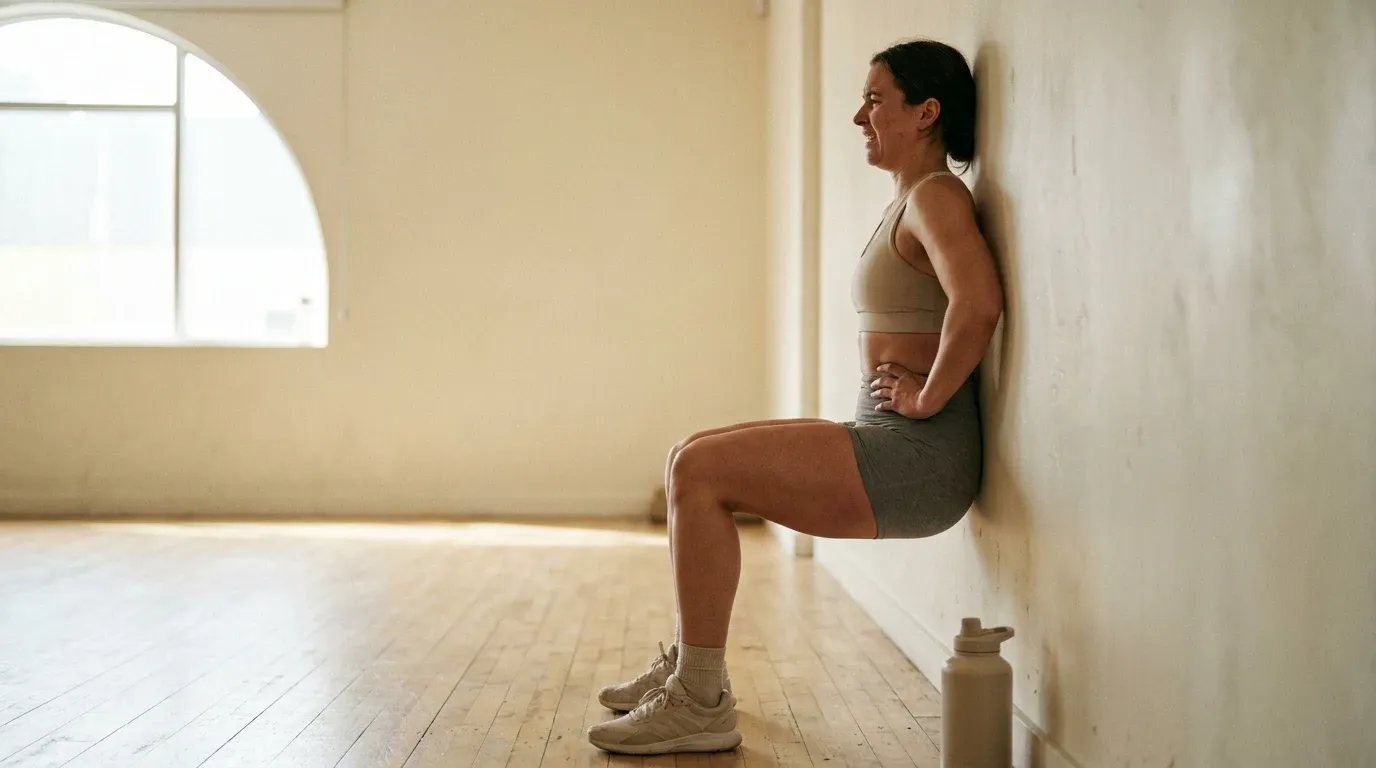
- Wall sits: Back flat against a wall, thighs parallel to the floor, held for 60 to 120 seconds per set. Primarily targets the quads and glutes while generating sustained lower-body tension.
- Planks: Standard forearm or high plank held for 60 to 120 seconds. Engages the core, shoulders, and stabilizers throughout the hold.
- Hand grip holds: Using a grip dynamometer or a firm ball, squeezing at a moderate percentage of your maximum effort and holding for 1 to 2 minutes. One of the most studied IET methods for hypertension specifically.
None of these require a gym membership. A wall and a timer are enough to run the full protocol. That accessibility is a significant part of why researchers and clinicians are paying attention.
Why This Matters for People Who Struggle With Cardio
Aerobic exercise is still the most widely recommended lifestyle intervention for hypertension. But adherence to traditional cardio, running, cycling, sustained aerobic sessions, is a persistent problem. Time constraints, joint issues, low motivation, and physical discomfort all reduce long-term compliance.
Isometric training doesn't ask you to sustain elevated heart rate for 30 to 45 minutes. It asks you to hold a position. For a large portion of the population managing blood pressure, that's a far more realistic ask.
This is particularly relevant if you're already doing strength training and want a cardiovascular benefit without adding a second modality that competes with your recovery. If you're curious how much resistance training alone can move the needle on longevity and systemic health, The Surprising Longevity Benefit of Lifting Weights lays out the current evidence clearly.
Does It Replace Strength Training?
No. And that distinction is important.
Isometric exercise training is not optimized for building muscle mass, improving movement quality, or developing functional strength. Dynamic resistance training, squats, deadlifts, presses, rows, drives those adaptations. IET doesn't replace that stimulus.
What the research establishes is that IET complements your existing program. Think of it as a targeted add-on with a specific cardiovascular output, not a substitute for lifting. You can tack two wall sit and plank sessions onto a week that already includes three strength training days without meaningful interference.
If you're currently training just once a week and wondering whether that's enough to maintain muscle, One Lifting Session a Week: Is That Really Enough? addresses that question with current evidence on minimum effective dose for muscle retention.
How to Structure the Protocol
Here's a simple IET structure based on the studied format:
- Frequency: 2 sessions per week, with at least one full day between sessions.
- Duration per set: 60 to 120 seconds per hold.
- Sets: 3 to 4 sets per exercise.
- Rest between sets: 1 to 2 minutes.
- Exercises per session: 2 to 3 (e.g., wall sit, plank, grip hold).
- Total session time: 15 to 20 minutes.
Intensity matters. A wall sit where you're barely feeling it won't produce the same vascular stimulus as one where you're genuinely working to maintain position. You're aiming for moderate to high effort within the isometric hold, not a passive stretch.
Don't rush the holds to get them done. The duration of the sustained contraction is where the cardiovascular benefit is generated. Cutting holds short reduces the signal.
Who Should Pay Attention to This
This protocol is particularly relevant for:
- Adults with prehypertension or stage 1 hypertension looking for lifestyle-based interventions before or alongside medication.
- Strength training regulars who want to add a cardiovascular benefit without programming a full cardio block.
- People with limited time who can realistically commit to two 20-minute sessions per week but not daily aerobic training.
- Individuals with joint limitations, knee issues, plantar fasciitis, lower back problems, that make sustained cardio painful or impractical.
It's also worth noting that blood pressure management doesn't operate in isolation. What you eat plays a meaningful role alongside what you do in the gym. Eating More Pulses Cuts Cardiometabolic Disease Risk is worth reading if you're building a comprehensive cardiometabolic strategy around exercise and diet together.
A Note on Blood Pressure Measurement and Context
One practical issue: blood pressure can be elevated immediately after isometric exercise, particularly during the hold itself. This is normal and expected. The blood pressure benefit shows up in resting measurements taken hours later and accumulates over weeks of consistent training.
If you're monitoring your own blood pressure at home, measure it before your session, not immediately after. And if you've been diagnosed with hypertension and are currently on medication, talk to your doctor before starting any new exercise protocol. The combination of medication and exercise-induced blood pressure reduction can occasionally lead to readings that are lower than intended.
Recovery between sessions also matters. Isometric holds create muscular fatigue that's real even if it doesn't feel like a hard workout. Post-Workout Recovery: The Basics Still Beat the Gadgets covers what actually moves the needle on recovery without overcomplicating it.
The Bottom Line
Isometric exercise training isn't new. But having specific, quantified data confirming that two sessions per week of wall sits, planks, and grip holds produces meaningful systolic blood pressure reductions changes how practitioners and coaches should think about programming for cardiovascular health.
You don't need to overhaul your routine. You need to add two short sessions. That's a low barrier for a significant potential benefit, particularly for the millions of adults managing blood pressure through lifestyle first.
If you're already training, this fits. If you're not yet training, this is an accessible entry point with documented cardiovascular impact. Either way, the evidence now gives you a concrete protocol rather than a vague recommendation to "exercise more."