
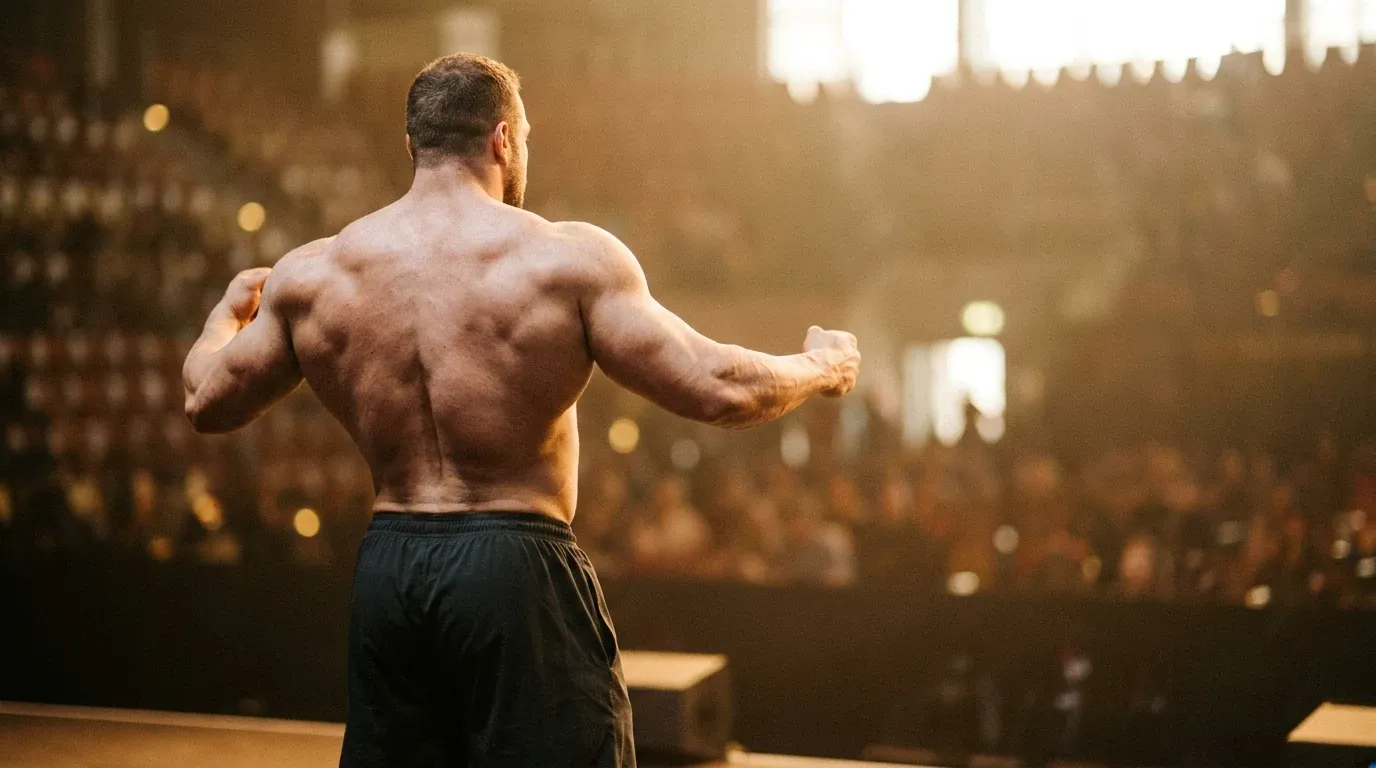
Las Vegas delivered another defining night for competitive bodybuilding. At the 2026 Mister Olympia, held at the Las Vegas Convention Center, Nick Walker claimed the Open division title in what judges and analysts are already calling one of the most decisive victories in recent memory. The result closes a chapter on years of near-misses and repositions Walker as the face of professional bodybuilding heading into next season.
Here's everything that happened, division by division, and what it means for the sport right now.
Nick Walker Takes the Open: What the Judges Saw
Walker brought a package that addressed every criticism that had cost him in previous years. His conditioning was sharper than his 2024 and 2025 appearances, his symmetry had visibly improved, and his stage presentation was confident without tipping into overreach. The judges scored him ahead of the field in both prejudging and finals.
The closest challengers were Hunter Labrada, who placed second with a highly competitive physique that earned significant crowd support, and Samson Dauda, who finished third after a strong showing in the mass rounds. Dauda's width and density remained elite, but Walker's overall balance was the deciding factor on the scorecards.
Walker's win is notable because it arrives at a moment when the Open division has faced ongoing debate about what the ideal physique actually looks like. His combination of size and condition without sacrificing structural proportion gave the judges a clear answer. That standard will now anchor how competitors prepare for 2027.
Full Results Across All 12 Divisions
The 2026 Olympia featured 12 divisions, each with its own competitive narrative. Below are the confirmed top placings across the full card.
- Open Bodybuilding: 1. Nick Walker, 2. Hunter Labrada, 3. Samson Dauda, 4. Andrew Jacked, 5. Michal Krizo
- Classic Physique: 1. Urs Kalecinski, 2. Ramon Rocha Queiroz, 3. Chris Bumstead (competing in a guest/exhibition capacity post-retirement)
- Men's Physique: 1. Ryan Terry, 2. Erin Banks, 3. Brandon Hendrickson
- 212 Division: 1. Shaun Clarida, 2. Angel Calderon Frias, 3. Keone Pearson
- Women's Bodybuilding: 1. Andrea Shaw, 2. Brigita Brezovac, 3. Helle Trevino
- Figure: 1. Cydney Gillon, 2. Jessica Reyes Padilla, 3. Lana Goodson
- Bikini: 1. Maureen Blanquisco, 2. Ashley Kaltwasser, 3. Jennifer Dorie
- Wellness: 1. Francielle Mattos, 2. Sunny Andrews, 3. Alexia Padovani
- Women's Physique: 1. Sarah Villegas, 2. Natalia Coelho, 3. Antoinette Thompson
- Fitness: 1. Missy Truscott, 2. Whitney Jones, 3. Jaclyn Baker
- Masters Men's Bodybuilding (45+): 1. Dexter Jackson, 2. Mark Dugdale, 3. Victor Martinez
- Wheelchair: 1. Harold Kelley, 2. Aleksei Shabunya, 3. Clifton Aiken
Several of these results carry storylines that will define the off-season conversation. Shaun Clarida's repeat at 212 confirms his position as the dominant force in that category. Cydney Gillon's Figure win extended her streak to an extraordinary level. And Dexter Jackson's Masters title, at an age that defies reasonable athletic expectation, adds another chapter to one of the sport's longest careers.
What Walker's Win Means for the 2027 Season
When a new Olympia champion is crowned, the competitive math changes immediately. Every Open competitor now has a defined target. Walker's conditioning and balance set the benchmark, and the athletes who finished behind him will spend the off-season identifying where they fell short on the scorecard.
Labrada's second-place finish positions him as the most likely challenger in 2027. He was close enough that a moderate improvement in conditioning could flip the result. Dauda's third-place finish will likely prompt a structural reassessment of his presentation, given that his raw mass is arguably unmatched in the division.
For Walker himself, the win comes with its own pressure. First-time Olympia champions have a mixed record when defending. The off-season choices he makes now, from training adjustments to recovery protocols, will determine whether 2026 is the start of a reign or a one-year window. What a Sleep Study Reveals About Your Heart and Lungs is exactly the kind of research elite competitors are paying attention to as recovery science moves closer to the center of competitive preparation.
The broader landscape is also shifting. The Open division has spent several years wrestling with questions about extreme size versus aesthetic proportion. Walker's win suggests the judges are rewarding balance. That signal will filter down through the entire professional qualifier circuit, shaping how coaches and athletes approach the 2027 prep cycle.
The Science Behind Elite Competitive Recovery
What separates the top five at the Olympia from everyone else isn't just genetics or training volume. Recovery quality at that level is treated as a competitive variable in its own right. Sleep architecture, nutrition timing, and supplementation protocols are all managed with a precision that most recreational athletes never apply.
There's also growing scrutiny around what athletes are putting in their bodies between seasons. Peptides Sold Online: The Risk Athletes Keep Ignoring outlines why the unregulated market for recovery compounds carries real consequences, even for professionals who believe they're operating within sanctioned limits.
On the nutrition side, compounds like urolithin A are drawing attention for their role in cellular recovery and mitochondrial function. Urolithin A: The Pomegranate Compound Fixing Hearts covers the emerging research in detail, and it's the kind of marginal gain conversation that serious competitors are starting to have with their teams.
Recovery after training blocks also remains a point of active debate. The evidence on cold water immersion, for example, is more complicated than the popular recovery culture suggests. Cold Immersion After Lifting: The Tradeoff You're Missing breaks down why timing and context matter more than the protocol itself.
What This Olympia Tells You About the Sport
The 2026 Mister Olympia isn't just a results sheet. It's a statement about where competitive bodybuilding is heading. The judging criteria, the division structures, and the athletes who won all point in a consistent direction: balance and condition are being weighted more heavily than raw mass alone.
That's a meaningful shift if you're following the sport closely. It changes who has a realistic path to the top five, which body types coaches should be developing, and how qualifiers will be judged throughout the season. The ripple effect from a single Olympia result extends further than most fans realize.
For recreational athletes who follow the Olympia for inspiration rather than competition, Walker's journey also carries a practical message. He didn't win by doing something exotic. He won by addressing his weaknesses systematically over multiple seasons, improving in areas the judges had specifically identified, and executing at the moment it counted. That's a process that scales.
The 2027 Olympia cycle begins now. The qualifiers will start appearing on the calendar within months, and the athletes who finished just outside the top placements at this year's show are already planning their response. Walker holds the Sandow. What he does with the off-season will tell you everything about whether this is the beginning of a dynasty or the peak of a climb.
Follow keedia for continuing coverage of competitive bodybuilding, recovery science, and the nutrition research shaping how elite athletes train.