
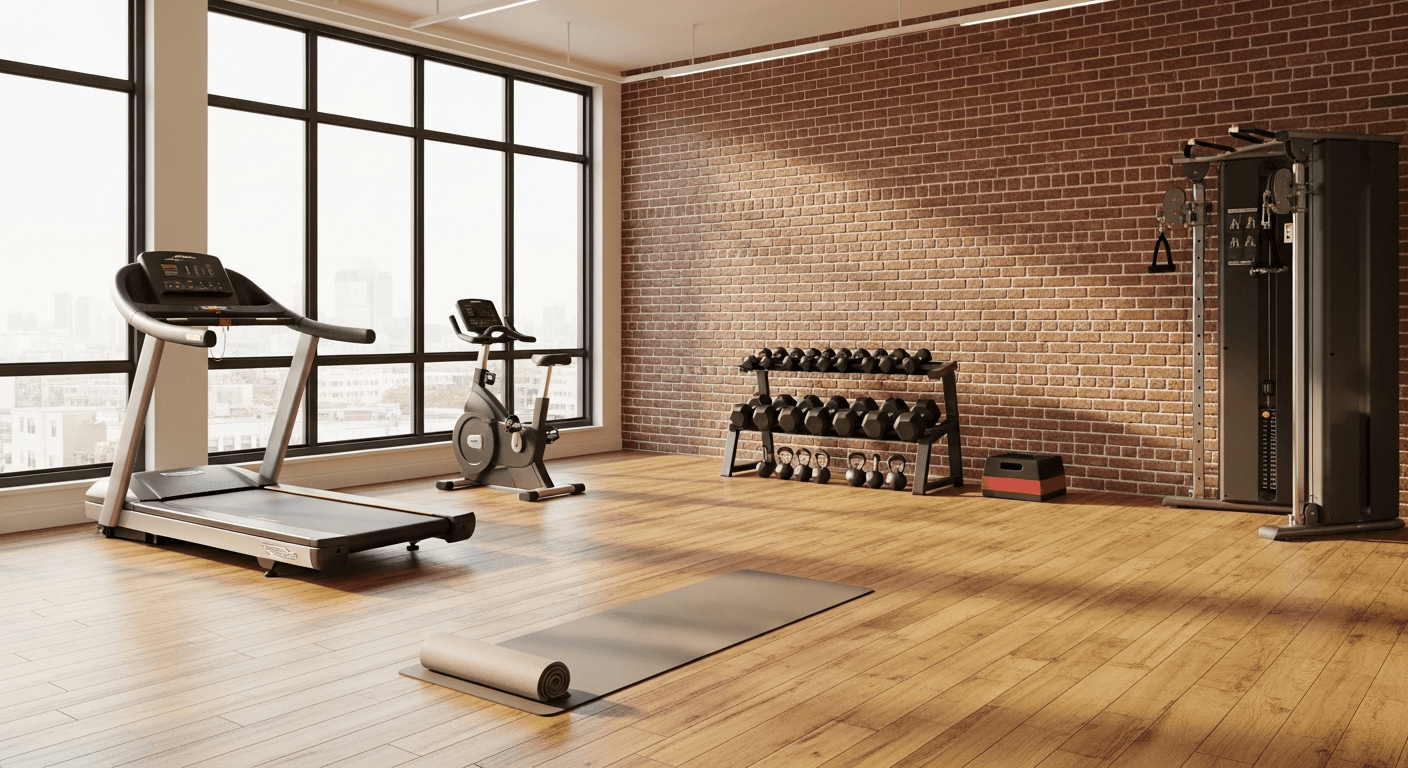
If you've ever shown up to a commercial gym only to wait ten minutes for a squat rack, you already understand the problem SOLO60 is solving. The on-demand private gym brand announced its latest round of location expansions on April 21, 2026, adding new facilities that let members book an entire gym space exclusively for themselves. No wait times. No unsolicited advice from strangers. No shared equipment.
It's a model that was once considered a niche luxury. Increasingly, it looks like the future of fitness.
What SOLO60 Actually Offers
The concept is straightforward. You book a private gym slot, usually in 60-minute increments, and for that hour the entire space is yours. SOLO60 locations are fully equipped, covering strength, cardio, and functional training setups. There's no staff circling the floor, no music you didn't choose, and no one occupying the machine you need.
Pricing sits at a premium compared to standard gym memberships. Depending on the location and booking frequency, sessions typically run in the range of $40 to $80 per slot, with membership plans reducing the per-session cost for regular users. That's a meaningful jump from the $30 to $50 monthly fee most commercial gyms charge, but the comparison isn't quite apples to apples. You're not paying for access to a shared space. You're paying for an experience that removes every common friction point of gym training.
The April 2026 expansion added multiple new locations across urban markets, with the brand signaling further growth through the back half of the year. SOLO60 has positioned itself to meet demand in high-density cities where gym crowding is most acute and where consumers are most willing to pay for convenience and privacy.
Why the Market Is Ready for This
The timing isn't accidental. Post-pandemic gym behavior shifted in ways that stuck. Surveys across the US and UK consistently show that gym-goers who returned to commercial facilities after 2020 came back with different priorities. Privacy, hygiene, and flexibility ranked higher than they had before. Price sensitivity, while still a factor, became less dominant for a segment of the market that had grown accustomed to working out alone at home.
That segment didn't disappear when gyms reopened. It evolved. Many people discovered that solo training, free from social pressure and environmental distraction, produced better results and felt more sustainable. The question became whether the gym industry would build infrastructure to serve that preference rather than simply waiting for habits to revert.
SOLO60's expansion is one concrete answer to that question. But it's not operating in a vacuum. The broader fitness industry is seeing a parallel surge in demand for personalized training environments, from high-end boutique studios that cap class sizes aggressively to private personal training facilities that never open to the general public.
The Strength Training Surge Is Driving Demand
One factor accelerating this trend is the shift in what people actually want from their workouts. Strength training has become the dominant fitness goal across age groups and demographics in 2026, as detailed in why strength became the top fitness goal of 2026. When your primary objective is progressive overload on compound movements, access to specific equipment at specific times matters enormously. A crowded gym actively undermines that goal.
Private gym formats remove that constraint entirely. You plan your session, you book the space, and you execute without improvising around who's using what. For serious trainees, that reliability is worth paying for.
This is especially relevant for older adults who have returned to structured training with clear performance goals. Research consistently shows that strength work is critical for maintaining muscle mass, bone density, and functional capacity through middle age and beyond. If you're someone working through a structured program as outlined in getting stronger after 50 and the habits that change everything, having guaranteed access to the right equipment at the right time isn't a luxury. It's a practical necessity.
What the Premium Price Point Signals
There's a temptation to view SOLO60's model as inherently exclusionary. At $40 to $80 per session, it isn't accessible to everyone. That's true, and it's worth acknowledging directly. But the pricing also tells you something about how a meaningful portion of the fitness market has changed its relationship with what it considers worth spending money on.
Consumer research from 2024 and 2025 showed that spending on premium wellness experiences, including private fitness, outpaced growth in standard gym membership revenue across the US market. People were paying more for less, in terms of square footage and equipment variety, but gaining something harder to quantify: the experience of training on their own terms.
That shift mirrors what's happening in adjacent wellness categories. Consumers who are serious about their results, whether they're focused on the real health benefits of brief, intense workouts or building a sustainable long-term training practice, are increasingly willing to invest in environments that support those goals rather than compromise them.
The traditional gym model was built around volume: get as many members as possible, knowing most of them won't show up regularly. The private gym model inverts that entirely. It's built around the member who actually shows up, consistently, and wants conditions that match their commitment level.
Who Is Actually Using These Spaces
SOLO60's user base skews toward professionals in their 30s and 40s, a demographic with disposable income, time constraints, and a preference for efficiency over socialization. But the profile is broader than that stereotype suggests.
Athletes recovering from injury use private gym formats to train without self-consciousness during rehabilitation. Parents of young children book early-morning slots that no shared facility would accommodate with the same reliability. Older adults, particularly women navigating a fitness industry that has historically given them poor guidance, find private environments less intimidating and more conducive to focused work. The conversation around strength training myths that trainers still tell women over 50 often comes back to the same root issue: women have been underserved by conventional gym culture, and private formats offer a different entry point entirely.
The common thread across these users isn't wealth. It's a specific relationship with training. They're not there to be seen. They're there to work.
What This Means for the Broader Fitness Industry
SOLO60's expansion is a signal that the market is large enough to sustain premium private gym models at scale. That has implications for how the industry thinks about space, staffing, and competition.
Commercial gyms have already been losing members at the upper end of the spending spectrum to boutique studios for years. Private gym formats represent a further pull on that segment. The response from larger operators has been predictable: add premium zones, offer private training packages, and create semi-private workout areas within existing facilities. None of those solutions fully replicate what a genuinely private booking provides, but they reflect an awareness that the market has moved.
The franchising potential here is also significant. SOLO60's model is operationally leaner than a traditional gym in some respects. Fewer staff are needed when the space is locked to one user at a time. Equipment wear is easier to track and manage. The booking infrastructure, once built, scales relatively cleanly. If the unit economics hold up across new locations, the expansion pace could accelerate considerably.
That said, real estate costs remain the central challenge. Private gym locations require enough space to be functional without the volume of members that a conventional gym uses to justify its rent. In high-cost urban markets, that's a meaningful constraint. How SOLO60 navigates that tension as it grows will determine whether this becomes a dominant model or a well-executed niche.
The Bigger Picture
The fitness industry doesn't change in straight lines. Trends layer on top of each other in ways that are only obvious in retrospect. What SOLO60's continued growth makes visible is a consumer who has thought carefully about what they actually need from a gym. Not a social hub. Not a cheap monthly commitment they'll forget to cancel. A reliable, controlled environment where they can do the work they came to do.
Whether that consumer represents 5% of the market or 20% remains to be seen. But they're spending, they're consistent, and they're telling the industry exactly what they want. SOLO60's expansion is evidence that at least one operator is listening.