
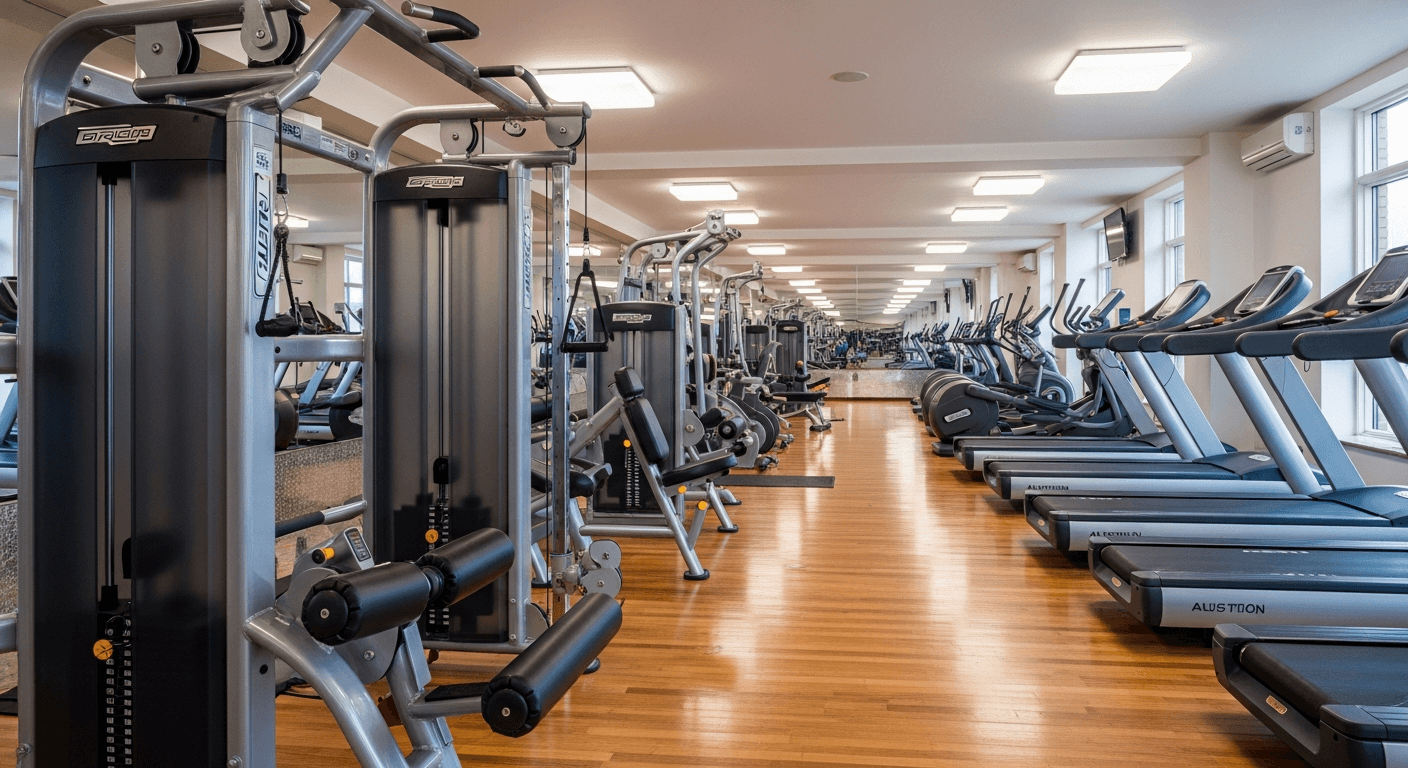
Gym equipment is no longer just hardware. With a new multi-year agreement between Technogym and Google Cloud, the machines you train on are about to get significantly smarter. The partnership brings generative AI directly into Technogym's coaching tools and business software, marking one of the most significant moves yet in the convergence of big tech and fitness infrastructure.
For gym-goers, the change will feel personal. For gym operators, it could reshape how entire facilities are run. Here's what's actually happening and why it matters.
What the Technogym and Google Cloud Deal Actually Does
At the center of the partnership is Technogym's AI Coach, the brand's personalized training engine that recommends programs, adjusts intensity, and tracks progress across sessions. By integrating Google's generative AI models into this platform, Technogym says it can deliver a level of program customization that wasn't previously possible at scale.
Rather than relying on static algorithms that follow preset rules, generative AI can synthesize a much wider set of inputs: your training history, recovery metrics, stated goals, even contextual data like how frequently you're showing up. The result is a training program that adapts in real time rather than resetting every few weeks when you remember to update your preferences manually.
This matters especially for populations where one-size-fits-all programming consistently falls short. Research has long shown that training needs shift significantly with age, hormonal status, and injury history. If you've read about the habits that change everything for getting stronger after 50, you know that generic programming is one of the biggest obstacles to long-term progress for older adults. AI-driven personalization is a direct answer to that gap.
The AI Assistant Built for Gym Operators
The second major component of the deal is the Technogym AI Assistant, which is aimed not at members but at the people running the facilities. Using Google Cloud infrastructure, this tool is designed to help gym operators manage business operations more efficiently.
That includes things like equipment maintenance scheduling, member retention analysis, class programming recommendations, and usage pattern tracking. In a market where gym margins are tight and member churn is a persistent challenge, those operational insights have real financial value.
Consider what a mid-sized gym operator currently deals with: manually reviewing which machines are underused, guessing at peak hours, and relying on gut instinct to figure out why members stop coming. The AI Assistant is positioned to replace that guesswork with data-driven recommendations surfaced automatically.
For franchises and multi-location gym groups, the scalability of a cloud-based AI layer is particularly appealing. Decisions that once required a dedicated analytics team can be automated and standardized across dozens of sites simultaneously.
Why Big Tech Is Moving Into Fitness Hardware
The Technogym-Google deal doesn't exist in a vacuum. It's part of a broader pattern where cloud and AI companies are embedding themselves into physical fitness products and platforms. Apple has its own fitness ecosystem tied to the Apple Watch. Amazon has experimented with health monitoring hardware. Google's investment in Fitbit, though structurally separate from this deal, reflects the same directional pull.
What makes the Technogym partnership notable is that it targets the commercial gym market rather than the consumer wearable space. Technogym equipment is installed in hotels, corporate wellness centers, professional sports facilities, and tens of thousands of commercial gyms worldwide. That reach gives Google Cloud a foothold in physical fitness infrastructure at a scale that consumer hardware alone can't deliver.
From Google's perspective, fitness facilities generate continuous, structured behavioral data. Every rep logged, every session started and abandoned, every equipment preference selected feeds back into a model that can improve over time. That data loop is exactly what makes AI systems more accurate. The partnership gives Google Cloud a steady stream of real-world fitness behavior at institutional scale.
What Personalized AI Training Can and Can't Do
It's worth being clear-eyed about what AI-driven personalization actually delivers today versus what it promises long-term. Current generative AI systems are genuinely good at synthesizing patterns and generating recommendations. They're less reliable when inputs are sparse or when the user's situation is genuinely novel.
A new gym member with no training history, for example, gives the AI very little to work with initially. The quality of the program it generates will improve as it accumulates more data about that individual. In the early weeks, the experience may not feel meaningfully different from a well-designed onboarding flow.
That said, the ceiling is considerably higher than what traditional rule-based systems can achieve. Training science continues to evolve, and there's growing evidence supporting more individualized approaches. For context, strength has become the top fitness goal heading into 2026, and the demand for programming that actually delivers measurable strength outcomes puts pressure on gyms to offer something more sophisticated than generic templates.
AI coaching also can't replace the motivational and relational dimensions of working with a human coach. What it can do is handle the programming logic, track adherence, and surface warnings when training loads look misaligned with recovery. That's a meaningful support layer, even if it's not a complete substitute.
Privacy and Data Questions That Need Answers
Any time biometric and behavioral data flows into a cloud AI system, privacy questions are legitimate. Technogym hasn't published full technical details on how member data is handled under this partnership, which leaves some things unclear.
Key questions for gym operators considering Technogym equipment include: How is member data stored and segmented across facilities? What consent mechanisms are in place? How long is training data retained? Can individual members opt out of AI-driven personalization while still using the equipment?
These aren't hypothetical concerns. Data protection standards vary significantly across the US, UK, Canada, and Australia, and gym operators who adopt AI-integrated platforms carry legal and reputational responsibility for how that data is managed. Asking these questions before signing equipment contracts is practical, not paranoid.
What This Means If You Train in Commercial Gyms
If you're a member at a gym that uses Technogym equipment, this partnership could eventually change your experience in concrete ways. Workout recommendations tailored to your actual behavior rather than a generic profile. Smarter warm-up and cool-down suggestions based on what you've done that week. Alerts when your training load is climbing faster than your recovery data suggests is sustainable.
For people pursuing specific goals like muscle gain, fat loss, or performance, that kind of responsiveness has real value. Brief, intense workouts deliver measurable health benefits, but the programming details matter considerably. AI that adjusts volume and intensity based on your actual recovery status could make shorter sessions considerably more effective.
There's also a potential benefit for people returning to training after a break or injury. Smart progression that accounts for where you're actually starting from, rather than where a template assumes you should be, reduces the injury risk that comes with doing too much too soon.
The Bigger Shift in Fitness Technology
The Technogym-Google Cloud deal signals something beyond a single product upgrade. It reflects a structural shift in how fitness technology is being built and who controls the underlying infrastructure.
Cloud AI companies are no longer content to provide back-end services invisibly. They're becoming active partners in the product experience itself, with their models shaping what recommendations users see and what insights operators receive. That consolidation of influence raises reasonable questions about market dynamics in fitness technology long-term.
For gym owners evaluating equipment investments, the practical reality is that AI integration is becoming a standard expectation rather than a premium feature. Facilities that offer genuinely adaptive, personalized training experiences will have a competitive advantage. Those that don't may find it harder to retain members who increasingly expect the kind of responsiveness they get from consumer fitness apps.
The fitness industry has always sold results. What's changing is the infrastructure behind the promise. Whether AI-driven personalization at scale delivers on that promise consistently is still being tested. But the direction of travel is clear, and the Technogym-Google partnership is one of the clearest signals yet of where commercial fitness is heading.
If you're thinking about how to make your own training more effective regardless of what equipment you have access to, body transformation without supplements is entirely achievable with the right programming and consistency. The technology may be evolving fast, but the fundamentals of adaptation haven't changed.