
If you're in your mid-thirties and feel like your body is changing, you're not imagining it. A landmark longitudinal study spanning nearly five decades has now confirmed what many suspected: measurable declines in both muscular strength and cardiovascular fitness begin around age 35. The data is real, the timeline is clear, and it starts earlier than most people think.
But here's the part that actually matters. The same research shows that people who became physically active later in life still improved their performance by up to 10 percent. That's not a consolation prize. That's evidence that your body remains adaptable, at any age, under the right conditions.
What the Swedish Study Actually Found
Published on May 15, 2026, the study tracked participants over 47 years, making it one of the longest-running longitudinal analyses of physical fitness in human history. Researchers followed the same individuals from early adulthood through their later decades, measuring grip strength, muscular endurance, and aerobic capacity at regular intervals.
The findings were unambiguous. Strength and muscle endurance begin a measurable decline at approximately age 35. This isn't dramatic or sudden. It's gradual at first, which is precisely why it's easy to dismiss. But the trajectory matters. Without intervention, the decline accelerates progressively as you age, compounding over time in ways that become harder to reverse the longer you wait.
Cardiovascular fitness follows a parallel path. VO2 max, the standard measure of aerobic capacity, also begins dropping in the mid-thirties and continues declining unless specific lifestyle behaviors interrupt the pattern. By the time most people notice the difference, they've already lost several years of baseline fitness.
If you want a simple way to benchmark where you stand right now, Grip Strength: Test Your Longevity in 60 Seconds walks you through a quick, evidence-based self-assessment you can do at home.
Why 35 Is the Turning Point
The biology behind this threshold isn't mysterious. Starting in your mid-thirties, the body begins producing less testosterone and growth hormone, both of which are critical for maintaining lean muscle mass. Simultaneously, muscle protein synthesis, the process by which your body repairs and builds muscle tissue, becomes less efficient.
Sarcopenia, the age-related loss of skeletal muscle, is the clinical term for what follows. Without consistent resistance stimulus, adults can lose between 3 and 8 percent of their muscle mass per decade after 30, with the rate increasing after 60. This doesn't just affect how you look or how much you can lift. It directly impacts your metabolism, your bone density, your balance, and your long-term mortality risk.
Research has consistently shown that strength metrics are among the most reliable predictors of healthspan. This Strength Test Predicts How Long You'll Live explains how performance on basic physical tasks correlates with outcomes that go far beyond the gym.
The 47-year Swedish data adds a critical dimension to this picture: it's not just about a single snapshot of fitness, it's about the rate of change over time. The people who maintained even modest levels of physical activity showed significantly slower rates of decline compared to those who remained sedentary, regardless of their starting point.
The 10 Percent Finding Changes the Conversation
The most actionable result from this research isn't the decline itself. It's what happened to the late starters.
Adults who became active later in life, after years or even decades of relative inactivity, still improved measurable physical performance by up to 10 percent. That improvement showed up across multiple fitness markers, including strength, endurance, and functional capacity. The body doesn't stop responding to training just because you waited longer than you should have.
This finding has real implications for how you think about starting. Whether you're 45, 55, or 65, the physiological machinery for adaptation is still operating. It may be slower. It may require more recovery time. But it works. And a 10 percent improvement in strength and fitness at any age translates to meaningful quality-of-life gains, not just numbers on a chart.
Recovery becomes a more strategic variable as you age. Post-Workout Recovery: Timing Changes Everything covers how to structure your recovery to make the most of each training session, which matters more the older you get.
What the Research Says About Starting Resistance Training Now
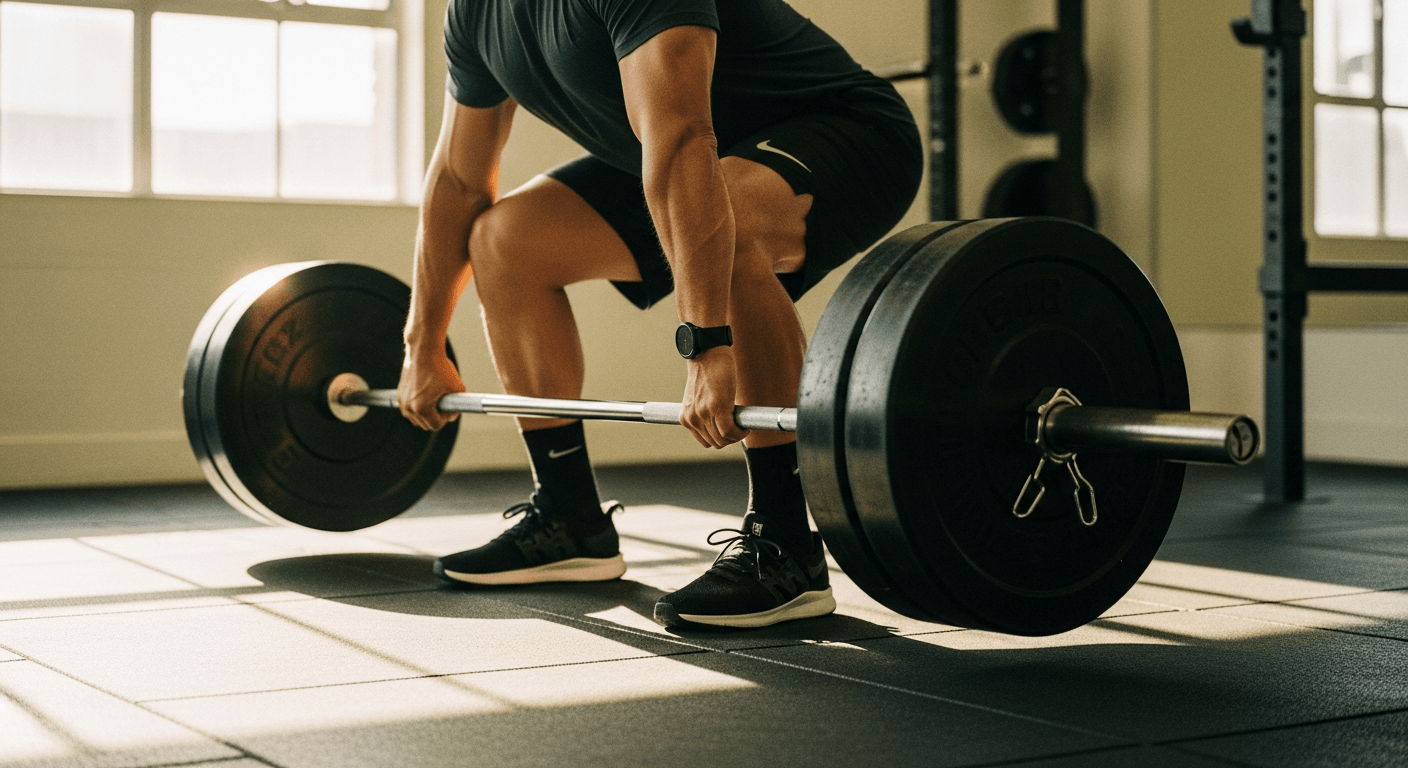
The study's findings strongly support resistance training as the primary intervention against age-related strength decline. Cardio has its place, but it's the preservation of muscle mass that does the heaviest lifting when it comes to long-term physical independence.
Resistance training, which includes free weights, machines, bodyweight exercises, and tools like resistance bands, triggers the same muscle protein synthesis pathways that become less efficient with age. The key is providing consistent, progressive stimulus. That means gradually increasing the challenge over time, not doing the same workout at the same intensity indefinitely.
For older adults or those returning to exercise after a long break, the research recommends two to three sessions per week targeting all major muscle groups. Intensity should be sufficient to produce fatigue within the target rep range, typically 8 to 15 repetitions per set. Rest periods and recovery windows may need to be longer than they were in your twenties, and that's fine. The adaptation still happens.
Some people are experimenting with tools like weighted vests to add resistance to everyday movement. If that's something you're considering, Weighted Vests: Real Gains or Just Extra Strain? offers a detailed breakdown of the evidence and the risks worth knowing before you invest.
Nutrition also plays a role that's hard to separate from training outcomes. Protein intake in particular becomes more important with age, as the body becomes less efficient at synthesizing muscle from dietary protein. Most adults over 40 benefit from consuming between 1.6 and 2.2 grams of protein per kilogram of bodyweight daily, especially on training days. Some research also supports creatine supplementation as a tool for preserving muscle mass and strength in older adults. Is Daily Creatine Actually Safe? What Research Shows covers the current evidence clearly.
The Mental Side of Starting Later
There's a psychological barrier that doesn't show up in longitudinal data but is just as real. A lot of people who are 40, 50, or older feel like it's too late, that the window for meaningful change has closed, and that starting now would only highlight how much ground they've lost.
That belief is both understandable and incorrect.
The Swedish study is one of several large bodies of evidence confirming that the physiology of adaptation doesn't have an expiration date. What does happen with age is that the margin for error shrinks. Poor sleep, chronic stress, and inadequate recovery all compound the challenge in ways that matter more than they did at 25.
If stress and sleep quality are already working against you, that's worth addressing alongside your training. The research on how psychological stress affects physical recovery is increasingly clear, and the strategies overlap more than people realize.
What You Should Do This Week
The research from this 47-year study doesn't require a complicated response. It requires a consistent one. Here's what the evidence supports:
- Start resistance training if you haven't already. Two to three sessions per week is enough to produce measurable results. You don't need a gym membership to begin, though access to progressive resistance will help over time.
- Assess your current baseline. Knowing where you stand gives you something to measure progress against. Simple tests of grip strength and lower-body endurance are validated markers of functional fitness.
- Prioritize protein at every meal. Muscle preservation is partly a nutrition problem, and it's one of the more controllable variables in your daily life.
- Treat recovery as part of training, not a break from it. Sleep, stress management, and adequate rest between sessions are not optional extras. They're the conditions under which adaptation actually occurs.
- Raise intensity gradually. Progressive overload is the mechanism behind strength gains at any age. Staying comfortable is the fastest route to stagnation.
The 47-year Swedish study is one of the most compelling pieces of evidence we have for why fitness can't be postponed indefinitely. But it's equally compelling evidence that the choice to start, even now, produces real outcomes. The decline is real. So is the reversal.
You're not too late. You're just behind schedule. And that's a gap you can close.