
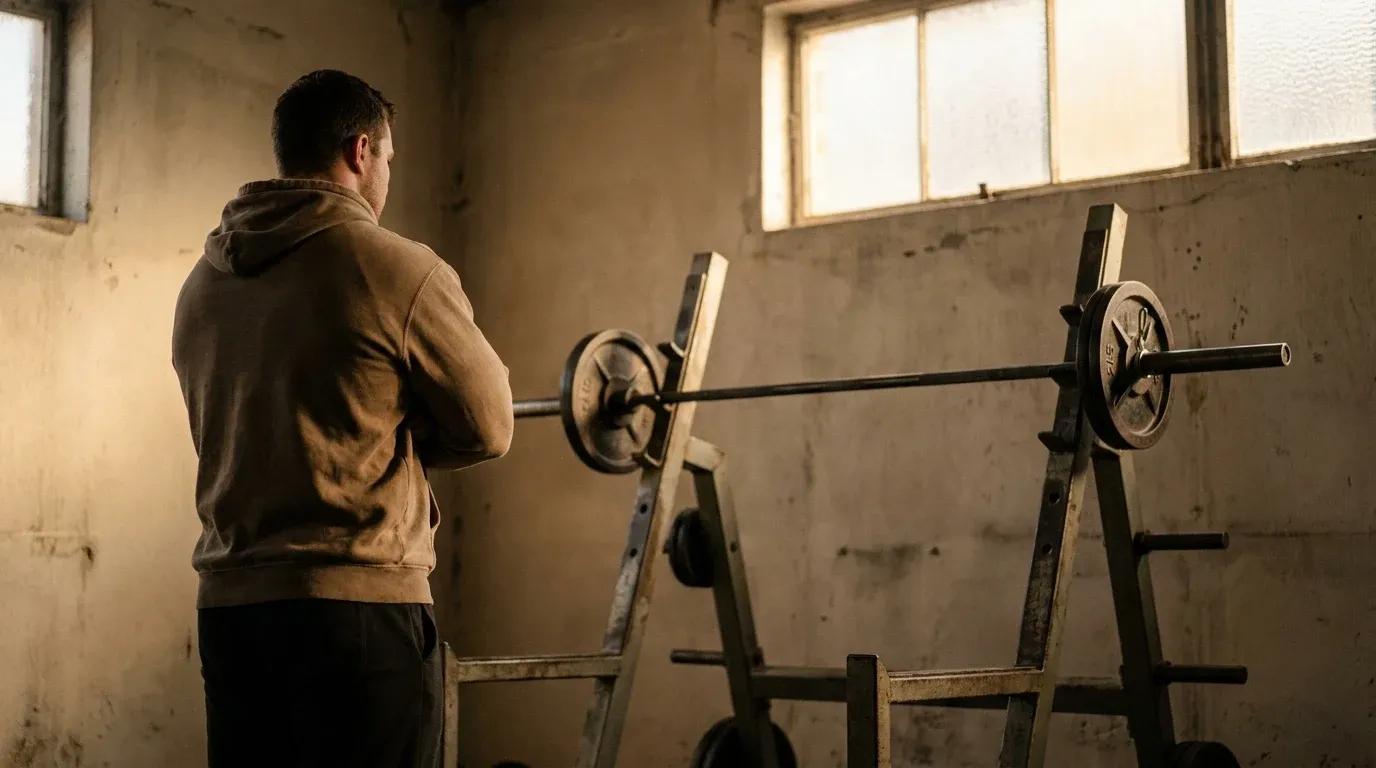
If you've built your identity around the barbell, this might sting a little. Research published in the British Journal of Sports Medicine has identified something that hardcore lifters rarely want to hear: the longevity benefits of strength training plateau at around 120 minutes per week. After that, adding more sessions doesn't extend your life. It just adds more time under the bar.
That's not a knock on serious training. It's a data point that should change how you think about where your effort actually goes.
What the Research Actually Shows
The study, which drew on a large population dataset and has been referenced in Harvard Health reporting, examined the relationship between weekly strength training volume and all-cause mortality. The findings were clear: people who lifted between 90 and 120 minutes per week had significantly lower mortality risk compared to those who did none at all.
The drop in risk was meaningful. Strength training at that volume was associated with a roughly 10 to 20 percent reduction in all-cause mortality and similar reductions in cardiovascular disease risk. That's not a small signal in epidemiological terms.
But here's what the data also showed: beyond that 120-minute weekly threshold, the curve flattens. Lifters logging 3, 4, or 5 hours a week didn't show additional mortality reduction compared to those hitting the 90 to 120 minute sweet spot. The benefit had already been captured.
This Isn't an Excuse to Train Less
Before you screenshot this and send it to your training partner as justification for skipping leg day, let's be precise about what this data does and doesn't say.
It doesn't say extra volume hurts you. For hypertrophy, strength performance, sport-specific goals, and mental health, higher training volumes can absolutely be warranted. If you're training for a powerlifting meet or building muscle mass, the research on longevity isn't the governing variable. Your programming goals are.
What the data does say is this: if longevity and overall health are your primary objectives, spending 6 hours a week lifting when you could be spending 2 hours lifting and the remaining time on sleep, cardio, and recovery is probably a suboptimal trade. The marginal return on extra lifting volume, from a lifespan standpoint, is zero beyond that threshold.
That's the honest read. And it has real implications for how most people train.
The "More Is More" Problem in Lifting Culture
Strength training culture has a volume bias. More sets, more sessions, more frequency. Social media amplifies this. When you see high-level athletes training twice a day, the natural instinct is to equate volume with virtue.
But that mentality often misapplies elite-level logic to general-population goals. A professional bodybuilder or competitive powerlifter is optimizing for performance and aesthetics within a context that includes coaching, structured recovery, nutrition periodization, and in some cases pharmacological support. The calculus is entirely different.
For the person training 5 to 6 days a week on top of a full-time job, variable sleep, and a moderately managed diet, the limiting factor probably isn't training volume. It's recovery capacity. And that's where the research gets interesting.
Where the Marginal Gains Actually Live
If you're already training 3 or more hours of strength work per week, the longevity data suggests your next best investment isn't another lifting session. Here's where the evidence points instead.
Sleep quality. Sleep is the single most underrated performance and longevity variable in most people's lives. Poor sleep increases cortisol, impairs muscle protein synthesis, elevates inflammatory markers, and compromises cardiovascular function. If you're training hard but sleeping 5 to 6 hours a night, you're fighting yourself. Improving sleep duration and quality will likely do more for your long-term health than a fourth or fifth lifting session ever could. And if you use a wearable to monitor recovery, what your sleep tracker can actually tell you about apnea is worth understanding before drawing conclusions from your nightly data.
Aerobic work. The same body of research that identifies the strength training sweet spot shows that cardiovascular exercise has a separate and additive mortality benefit. Combining strength work with moderate aerobic training, even 150 minutes of moderate-intensity cardio per week, produces better longevity outcomes than either modality alone. If your current weekly plan is 4 lifting sessions and zero cardio, adding two 20-minute runs will almost certainly move the needle further than a fifth lifting day.
Structured recovery. Most high-frequency lifters underinvest here. Sleep, nutrition timing, mobility work, and stress management all affect how well you absorb training stimulus. 5 simple recovery habits that actually work outlines practical approaches that don't require expensive equipment or significant time investment. The return on these habits compounds over months and years in ways that extra sets simply don't.
Nutrition fundamentals. Training 5 days a week on a poorly structured diet is a losing equation. Protein targets, micronutrient coverage, and caloric alignment with your goals have outsized influence on both performance and health outcomes. If your diet is inconsistent, simple diet changes that actually move the needle is a better use of your optimization energy than programming another training block.
A Practical Reframe for High-Frequency Lifters
If you're currently training strength 5 or 6 days a week, this research doesn't mean you need to gut your program. But it does suggest a reallocation conversation worth having.
Start by auditing where your 120 minutes of effective strength training actually sits. Two focused, well-structured 60-minute sessions, or three 40-minute sessions, can deliver the full longevity benefit identified in the research. Everything beyond that is serving performance or psychological goals, which are legitimate. But be honest about which ones you're actually chasing.
If you're training beyond that threshold and your sleep is under 7 hours, your cardio is minimal, and your recovery is unstructured, you've got a clear priority mismatch. You're stacking training stimulus on top of an insufficient recovery base and calling it dedication. The research suggests it's actually inefficiency.
The people who benefit most from this reframe are often intermediate lifters who've been training for 3 to 7 years. They're consistent enough to have real volume, but operating without elite-level recovery infrastructure. Swapping one lifting session per week for structured sleep improvement and 30 minutes of cardio is a trade the longevity data would endorse.
What This Doesn't Replace
None of this replaces individualized assessment. Population-level research identifies averages and thresholds, but your personal response to training volume, your recovery capacity, your age, and your health history all matter. If you're unsure how to apply this to your specific situation, 11 signs you actually need a personal trainer can help you figure out whether working with a coach is the right next step.
The data also doesn't resolve every question. Sleep quality issues like undiagnosed sleep apnea can sabotage recovery in ways that no amount of training optimization fixes. If your sleep data looks inconsistent or your recovery scores are chronically poor, that's worth investigating independently of your training program.
The Bottom Line
The research is clear enough to act on. Strength training has a real, meaningful longevity benefit. That benefit is largely captured within 90 to 120 minutes of weekly lifting. Beyond that threshold, the marginal longevity return on additional lifting volume is effectively zero.
That's not a reason to stop training hard. It's a reason to be strategic about where your effort goes once you've cleared that threshold. Sleep, aerobic conditioning, and recovery aren't soft supplements to a real training program. According to the data, they're where the next gains actually live.
The lifters who will thrive long-term aren't necessarily the ones training the most. They're the ones training smartly enough to still be moving well at 60, 70, and beyond. That's the real goal, and the research is starting to show exactly how to get there.