
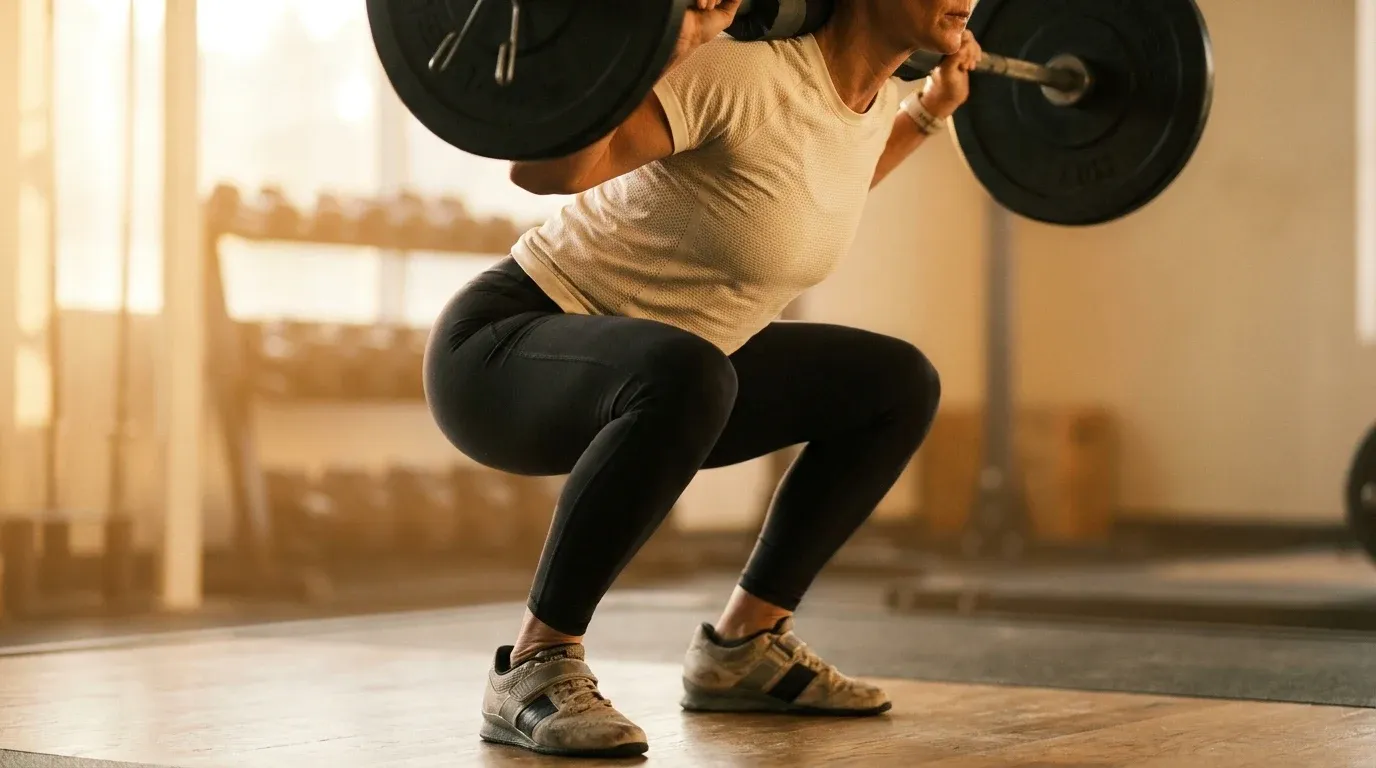
The conversation around women's health has long defaulted to one prescription: do more cardio. Run more, cycle more, walk more. And while aerobic exercise carries real benefits, emerging research is reframing what actually moves the needle on how long women live, and how well. The answer, increasingly, points to the weight room.
Resistance training is no longer just an option for women who want a certain aesthetic. It's becoming one of the most evidence-backed tools for extending healthspan, reducing all-cause mortality risk, and protecting the body against the specific physiological changes that come with aging in a female body.
What the Research Is Actually Saying
A growing body of evidence is drawing a clearer line between resistance training and longevity outcomes for women specifically. Studies tracking thousands of women over decades consistently find that those who engage in regular muscle-strengthening activity show significantly lower risks of cardiovascular disease, type 2 diabetes, and all-cause mortality compared to those who do aerobic exercise alone.
One large-scale analysis published in the British Journal of Sports Medicine found that strength training was associated with a 19% reduction in all-cause mortality risk. For women, the protective effects were particularly pronounced, partly because baseline muscle mass and bone density decline faster after menopause than at any other life stage.
This isn't about lifting heavy for vanity. It's about building biological reserves that protect you when your body's hormonal environment shifts, and it will.
Bone Density: The Silent Benefit Nobody Talks About Enough
Osteoporosis affects an estimated 200 million women worldwide, and fractures from bone loss are one of the leading causes of disability and loss of independence in older women. The standard advice is to get enough calcium and vitamin D. That's necessary but nowhere near sufficient.
Resistance training is one of the few interventions proven to actively stimulate bone formation. When you place mechanical load on the skeleton through lifting, you trigger osteoblast activity. That's the cellular process that builds new bone tissue. No amount of walking produces the same stimulus.
The earlier you start, the better. But research also shows meaningful improvements in bone mineral density in women who begin resistance training in their 50s and 60s, which dismantles the idea that it's ever too late to start.
Muscle as a Metabolic Reserve
Here's something that rarely gets framed clearly: muscle isn't just about strength. It's your body's primary site for glucose disposal, which means it plays a central role in metabolic health. More muscle mass means better insulin sensitivity, more efficient energy use, and a higher resting metabolic rate.
As women age, they naturally lose muscle mass through a process called sarcopenia, which accelerates after menopause. Cardio exercise doesn't prevent this. It burns calories during the session but does little to preserve or build the muscle tissue that acts as a long-term metabolic buffer.
Women who lift consistently maintain more muscle mass as they age. That muscle acts as a reserve. It's what keeps metabolism functioning, helps regulate blood sugar, and reduces the risk of frailty. GLP-1 Users: Why Food Quality Beats Calorie Counting touches on a related issue: when weight loss happens without adequate protein and resistance training, muscle loss often follows, and the downstream metabolic costs are significant.
Sarcopenia isn't just a fitness problem. It's a mortality risk factor. Studies link low muscle mass in midlife to higher rates of cardiovascular events, metabolic disease, and falls-related deaths. Resistance training is the most effective tool for slowing it down.
Women's Physiology Makes This Especially Relevant
Women don't respond to aging the same way men do. Estrogen plays a protective role in both bone density and muscle maintenance, which is why the hormonal shift of perimenopause and menopause triggers an accelerated decline in both. The window between 35 and 55 is particularly critical.
What's also becoming clearer is that women who build strong nutritional foundations alongside training see compounding benefits. Iron is one piece of that. The Lifter's Guide to Iron: Why Women Need to Pay Attention outlines how iron deficiency, which is significantly more common in women, can blunt training adaptations and leave you feeling like you're not making progress even when your program is solid.
Similarly, the nutritional science specific to women has historically been underfunded and underrepresented in research. Sports Nutrition for Women: The Gaps Nobody Talks About covers how most dietary recommendations have been extrapolated from male subjects, leaving women without the targeted guidance their physiology actually requires.
Challenging the Cardio Default
The idea that cardio is the foundational health tool for women is deeply embedded. It shows up in how gyms are marketed, how fitness media covers women's health, and how many clinicians still give advice. But it's increasingly at odds with where the science is pointing.
This doesn't mean cardio is bad. Cardiovascular fitness matters for heart health, respiratory function, and mental wellbeing. But positioning it as the primary lever for longevity, while treating strength training as optional or secondary, is a framework that doesn't hold up anymore.
A 2022 study tracking over 400,000 adults found that women who met muscle-strengthening guidelines (at least two sessions per week) had a 30% lower risk of cardiovascular disease-related death compared to those who met only aerobic guidelines. The cardio group had better outcomes than sedentary participants, but the strength training group had the best outcomes across nearly every metric.
That's a meaningful signal. And it's the kind of data that should shift how women think about their weekly training structure, not just their monthly fitness goals.
Recovery and Sleep Are Part of the Equation
Building a consistent lifting practice requires more than just showing up to the gym. Recovery quality directly determines how well your muscles adapt and rebuild between sessions. This is where many women, especially those managing high-stress schedules, leave results on the table.
Sleep is arguably the most underutilized recovery tool available. Research consistently shows that poor sleep undermines muscle protein synthesis, disrupts cortisol regulation, and impairs the hormonal environment needed for training adaptations. Sleep Is Your Most Underused Performance Tool breaks down exactly how this works and why prioritizing sleep hygiene is inseparable from any serious training plan.
Recovery isn't passive. It's where the gains from resistance training are actually locked in. Without adequate sleep, protein intake, and stress management, you can be consistent in the gym and still underperform your potential.
How to Structure a Longevity-Focused Lifting Practice
You don't need to be an athlete or lift five days a week for resistance training to shift your long-term health trajectory. Research suggests that two to three sessions per week of structured resistance training is enough to generate significant protective effects for most women.
What matters more than frequency is consistency over time and progressive overload, gradually increasing the challenge placed on your muscles so they continue adapting. Here's what a sustainable starting framework looks like:
- Compound movements first. Squats, deadlifts, rows, and presses recruit the most muscle mass and produce the strongest systemic stimulus.
- Train across a range of rep schemes. Lower reps with heavier loads build strength. Higher reps with moderate loads build muscle endurance. Both matter for long-term function.
- Prioritize protein. Research supports a target of 1.6 to 2.2 grams of protein per kilogram of body weight for women engaged in regular resistance training, particularly in midlife and beyond.
- Track progress, not just effort. Keeping a simple training log helps you apply progressive overload systematically rather than training hard without a direction.
- Be consistent over months, not perfect over weeks. The longevity benefits of resistance training accumulate over years. Showing up imperfectly beats not showing up at all.
The Weight Room Is a Long-Term Investment
Framing the weight room as a longevity investment changes how you evaluate the effort. You're not just training for how you look or feel this month. You're building bone density that will protect you from fractures at 70. You're preserving muscle mass that will keep your metabolism functioning at 65. You're reducing cardiovascular and metabolic disease risk over decades.
That framing also reframes the cost-benefit of starting. You don't need a perfect program or an expensive gym membership to begin. A barbell, some space, and a consistent schedule are enough to generate real, measurable changes in your body's long-term health trajectory.
The research is pointing in one direction. For women who want to extend not just their lifespan but the quality of those years, resistance training isn't supplementary to the plan. It is the plan.