
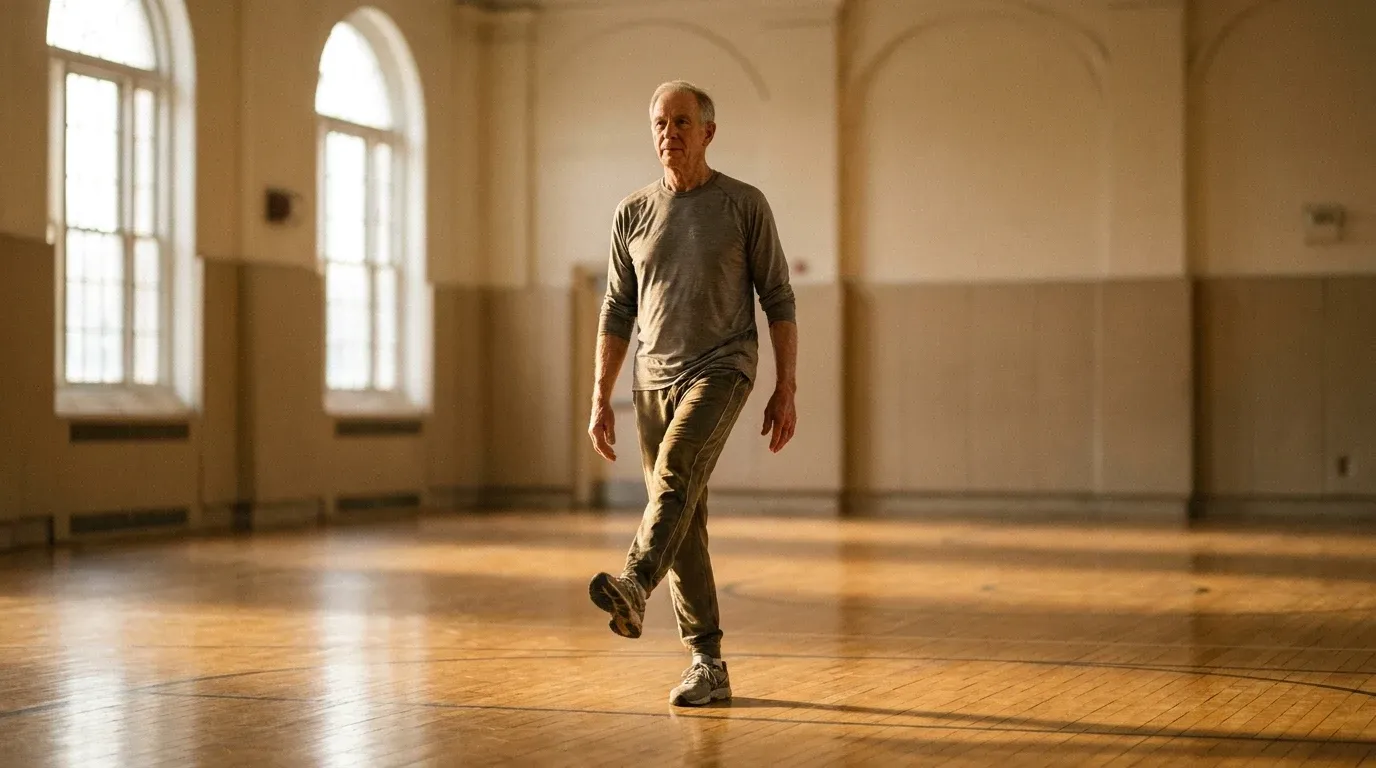
What if your biological age was a score you could train to improve, track over time, and compete on? That's no longer a hypothetical. The Super Age Games, held in New York, recently put that idea in front of a live audience and a field of real athletes. And the sport they were playing wasn't pickleball or masters swimming. It was aging itself.
The event tested participants across a battery of longevity markers: grip strength, single-leg balance, cardiovascular capacity, explosive power, and mobility. These aren't gym vanity metrics. They're the same biomarkers that research consistently links to mortality risk, cognitive decline, and independence in later life. What made the Super Age Games different is that it reframed them as performance targets rather than clinical checkpoints.
What the Super Age Games Actually Measured
The competition structure centered on physical capacities that most people over 50 are quietly losing without realizing it. Grip dynamometry scores. VO2 max estimates. Reactive balance tasks. Sit-to-stand velocity. Each of these has a robust body of evidence connecting it to how well your body is aging at a cellular and systemic level.
Grip strength, for instance, has been shown in large longitudinal studies to predict all-cause mortality more reliably than blood pressure in middle-aged and older adults. VO2 max decline accelerates after 45, and research consistently identifies it as one of the strongest predictors of long-term health outcomes. The Super Age Games didn't invent these metrics. It put them on a scoreboard.
That shift matters more than it might seem. When performance has a number attached to it, training behavior changes. Athletes start optimizing. They ask different questions. Not "am I healthy?" but "can I improve my score?"
Biological Age as a Competitive Category
The concept of biological age, which measures how your body functions relative to your chronological years, has moved steadily from academic research into consumer fitness culture over the past decade. Wearables now estimate it. Clinics sell panels to test it. But the Super Age Games represent something new: treating biological age improvement as a sport in its own right, complete with training protocols, competitive events, and measurable performance gains.
This isn't just semantics. Framing longevity as athletic pursuit changes who shows up, how they train, and how seriously they take the process. Masters athletes have always existed, but they typically compete in traditional sports, running, swimming, weightlifting, with age categories carved out of youth-designed formats. The Super Age Games inverted that model. Here, the sport is the aging process itself, and the goal is to perform better on the markers that predict how long and how well you'll live.
It's a cultural signal worth paying attention to. As a consistent daily routine cuts pain and depression after 60, the emerging longevity athlete is building structured programs around biological outcomes, not just fitness aesthetics or recreational enjoyment.
The Multi-Modal Formula That Science Backs
If the Super Age Games has a training curriculum behind it, it looks something like this: resistance training, explosive movement, and aerobic capacity, combined and periodized across a weekly schedule. Each element targets a different mechanism of biological aging, and the evidence for combining all three is stronger than for any single modality alone.
Resistance training preserves and rebuilds lean muscle mass, which begins declining at roughly 1 percent per year after age 30 if left unchallenged. Sarcopenia, the clinical term for that muscle loss, is directly linked to falls, metabolic decline, and reduced independence. Strength training reverses it. That's not marketing. That's physiology.
Explosive or power training, often overlooked in older adult programming, targets fast-twitch muscle fibers that deteriorate faster than slow-twitch fibers with age. These fibers govern reactive balance and fall prevention, the exact scenarios where older adults sustain life-altering injuries. Incorporating plyometrics, medicine ball throws, or jump variations into your training doesn't require being young. It requires being intentional. How to add explosive work to your lifting routine is a practical starting point if that's new territory for you.
Aerobic capacity rounds out the formula. VO2 max training, whether through zone 2 steady-state work or high-intensity intervals, improves mitochondrial density, cardiac output, and metabolic efficiency. Studies show that even modest gains in VO2 max translate to significantly reduced risk of cardiovascular disease, the leading cause of death globally. The good news: you don't need massive training volumes to see results. 4 minutes a day is enough if you're over 65, according to research that found brief, intense effort can produce meaningful cardiovascular adaptations in older adults.
Why Nutrition Can't Stay Off the Scoreboard
Training is only part of what moves longevity markers. The Super Age Games exists in a broader ecosystem where nutrition, sleep, and recovery are increasingly understood as performance variables rather than lifestyle choices.
Protein intake is the most urgent nutritional lever for anyone training for biological age improvement. Older adults require more dietary protein per kilogram of body weight than younger adults to achieve the same muscle protein synthesis response. Most people eating standard Western diets fall short of that threshold, particularly in the absence of deliberate planning. If you're serious about preserving or rebuilding lean mass, understanding the science behind that matters. Toned arms after 50: what science actually says breaks down the muscle-protein relationship in direct terms.
Sleep is another variable the longevity athlete ignores at real cost. Deep sleep stages drive growth hormone release, cellular repair, and the glymphatic clearance of metabolic waste from the brain. That process degrades with age, which has downstream effects on recovery quality, cognitive function, and inflammation levels. The implications of that decline are worth understanding before you assume poor recovery is just a fact of getting older.
A New Consumer Segment Is Forming
The fitness industry has long segmented its audience by sport, goal, or demographic. Runners. Weightlifters. Yogis. Weekend warriors. What's emerging now is something that doesn't fit neatly into any of those categories: the longevity athlete. Someone who trains not for a race, a physique, or a recreational activity, but to perform better on the metrics that predict how they age.
This segment is growing fast. The global longevity wellness market is projected to reach hundreds of billions of dollars within this decade, with fitness programming, wearable biometrics, and clinical testing driving significant consumer spending. In the US market, premium longevity clinics offering VO2 max testing, DEXA scans, and performance-based health panels typically run between $500 and $3,000 per comprehensive assessment, and demand is outpacing supply in major metropolitan areas.
Gym operators, online coaches, and fitness brands are beginning to notice. Programming designed around longevity markers, rather than weight loss or sport performance, is appearing across digital platforms targeting adults over 50. The challenge is quality. Much of what gets labeled "longevity training" lacks the multi-modal structure the evidence actually supports. Online workouts over 60: the missing ingredient addresses exactly that gap, specifically the role that nutrition and progressive overload play together when training older adults remotely.
The Super Age Games didn't create this trend. But it crystallized something that was building underneath the surface of fitness culture for years: the idea that how you age is not fixed, that it responds to training inputs, and that it can be measured, improved, and yes, competed on.
What This Means for How You Train Now
You don't need to enter a competition to take the longevity athlete framework seriously. What the Super Age Games model offers is a different way of thinking about your training priorities.
Instead of organizing your week around aesthetic goals or sport-specific performance, you build around biological age markers. That means:
- Strength training at least twice weekly, with progressive overload and an emphasis on compound movements that challenge grip, leg drive, and posterior chain strength.
- At least one explosive movement session per week, even if that's as simple as controlled jump squats, medicine ball slams, or box step-ups with power intent.
- Dedicated aerobic work, mixing low-intensity steady-state sessions with at least one higher-intensity interval session per week to maintain and improve VO2 max.
- Protein targets above standard recommendations, with most longevity-focused sports medicine research suggesting 1.6 to 2.2 grams per kilogram of body weight for older active adults.
- Balance and mobility work integrated into warmups or cooldowns, not treated as optional extras. Single-leg stability is one of the most predictive markers of fall risk and functional independence.
None of this is complicated in principle. The difficulty is consistency and the willingness to treat these variables as seriously as an athlete treats their sport. That's the real shift the Super Age Games is pushing into mainstream fitness culture.
Biological age isn't fixed. It's a performance metric. And that changes everything about how you should approach training after 40, 50, 60, and beyond.