
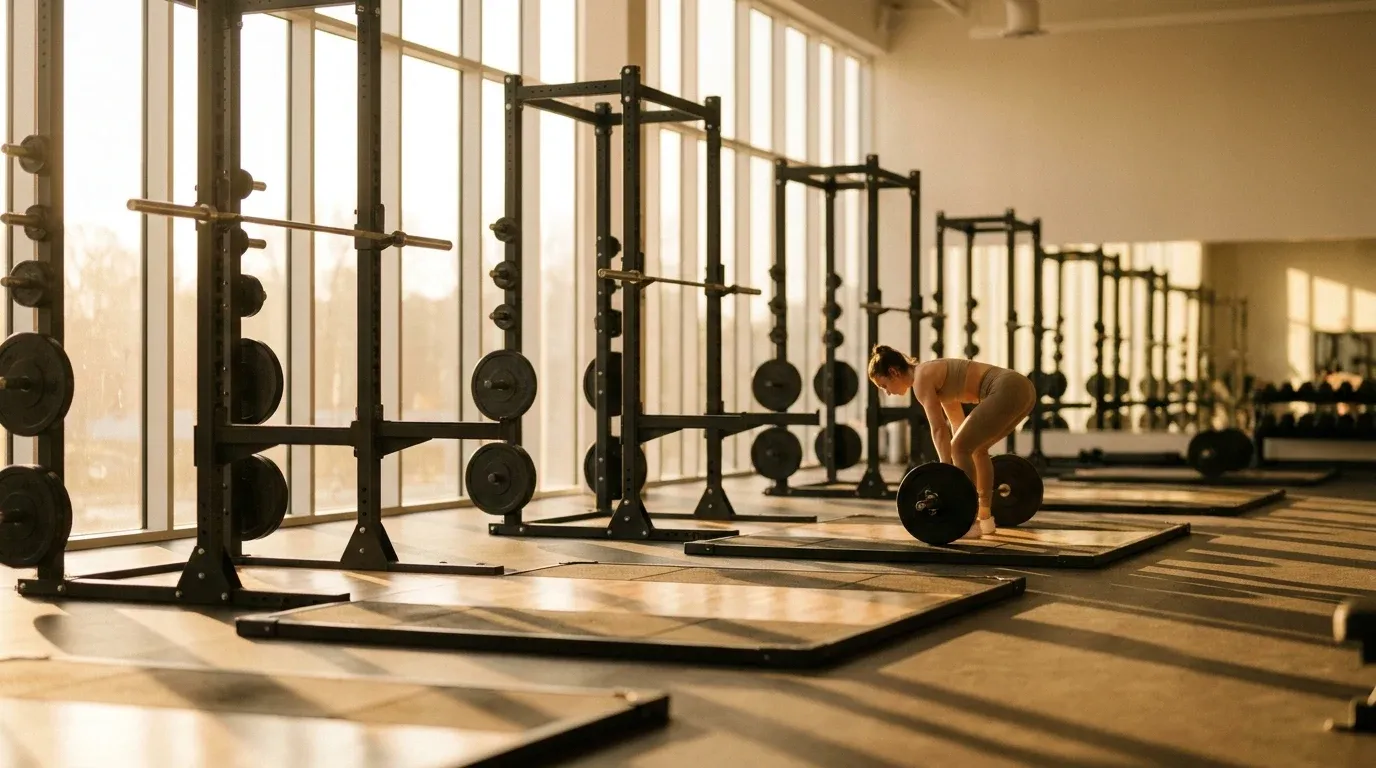
VASA Fitness has made a call that most gym operators are still dancing around: strength training isn't a section of the gym anymore. It's the main event. Starting with every new club built in 2026 and beyond, VASA is redesigning its floor plans from the ground up to center dedicated 'Strong' zones and functional performance racks at the heart of the experience.
That's a significant commitment. It signals not just a product update, but a full repositioning of what a commercial gym is supposed to be. And given where the fitness industry is heading, it might be the smartest structural bet a mid-market chain has made in years.
What's Actually Changing on the Floor
The redesign isn't a cosmetic refresh. VASA's new club blueprint allocates prime square footage to what the brand calls 'Strong' areas. Think dedicated free weight zones, squat racks, barbells, and functional rigs that give members room to actually train, not just exist in a crowded space while waiting for a bench.
Functional performance racks are a key part of this. These aren't standard rack-and-cable setups. They're designed to support compound movement patterns, allow multiple users to train simultaneously, and integrate accessories for pull-ups, dips, landmine exercises, and loaded carries. The goal is a club that can serve a serious lifter without alienating a first-timer.
For members who've felt squeezed out of traditional gyms during peak hours, this is a meaningful shift. Dedicated zones with intentional traffic flow mean less bottlenecking, fewer awkward half-circuits, and more room to build a real program.
Cardio and HIIT Still Have a Seat at the Table
Going all-in on strength doesn't mean VASA is abandoning cardio. The redesign also includes performance cardio amenities, updated equipment that goes well beyond rows of treadmills. Rowers, ski ergs, air bikes, and sled tracks are part of the picture. Equipment that supports interval work and conditions the whole body rather than just logging steady-state miles.
HIIT classes are staying in the programming lineup too. VASA is positioning strength and high-intensity work as complementary, not competing. That's consistent with what the science actually supports. Research consistently shows that combining resistance training with interval-style cardio produces superior outcomes for body composition, cardiovascular health, and metabolic function compared to either modality alone.
If you've been curious about why short, intense efforts deliver outsized returns, the science on why sprints trigger a bigger cellular response than long cardio helps explain why high-intensity work earns its place in any well-designed gym experience.
The key here is that VASA isn't cutting cardio. It's curating it. The brand is removing the filler and keeping what actually produces results for members who train with intention.
Why This Reflects a Real Industry Shift
VASA's redesign doesn't exist in a vacuum. It's a response to data that's been building across the fitness industry for several years. Strength training has moved from a niche pursuit to the dominant reason people join gyms.
According to the International Health, Racquet and Sportsclub Association (IHRSA), strength and functional fitness areas are now among the top three features members cite when choosing a gym. In consumer surveys across the US and UK markets, free weight access consistently ranks higher than pool availability, group fitness variety, or even location convenience when people are selecting a membership.
This isn't a trend driven by one demographic. Strength training adoption is growing across age groups. Younger members are coming in with barbell literacy they developed through platforms like YouTube and fitness-focused social media. Older members are increasingly aware of the science linking strength training to longevity, and they're training accordingly.
The gym operators still treating strength as a corner section of the floor are building clubs for a member profile that's becoming less representative of who's actually walking through the door.
What This Means for You as a Member
If you're already a VASA member or considering joining, here's what the redesign practically delivers. More rack availability. Better programmed space for compound lifts. Performance cardio equipment that matches the intensity of the training zones around it. And HIIT class formats that complement a strength-focused schedule rather than duplicate it.
For members who've felt like their gym was designed for someone else, this is worth paying attention to. The layout of a facility shapes your behavior whether you notice it or not. When squat racks are centrally located and well-lit, when the floor plan gives you space to move, you train differently. Better, usually.
It's also worth thinking about how you structure your own program around these changes. If you're building a strength-primary routine and complementing it with interval work, your nutrition timing matters more than most people realize. Getting carbohydrate intake right around training is one of the more practical levers you have for performance and recovery.
For members training outside the gym or supplementing with home sessions, having a consistent strategy matters just as much. The principles behind home workouts that actually make you stick to consistency apply regardless of whether your primary training happens in a commercial gym or your living room.
The Business Logic Behind the Bet
VASA is a mid-market chain. It's not competing with boutique studios at $40 per class, and it's not racing to the bottom against $10-a-month no-frills operators. It's sitting in the $30 to $50 per month range where the real membership volume lives, and it needs a clear reason for members to choose it over competitors in that same bracket.
Strength infrastructure is expensive to build. Commercial-grade racks, functional rigs, and reinforced flooring cost significantly more per square foot than rows of cardio machines. But it also creates switching friction. Members who've built their routine around specific equipment, developed familiarity with a particular rack setup, and found a community in a strength zone don't cancel memberships casually. Retention is where gym economics are actually won or lost.
The boutique strength studio model, which has grown significantly in the US market over the last five years, charges $150 to $250 per month and still maintains waitlists in major metros. VASA is essentially offering a version of that experience at a fraction of the price. That's a positioning argument that's easy for members to understand and hard for competitors to immediately replicate.
The Broader Signal for the Industry
VASA isn't alone in this direction, but it's one of the first mid-market operators to commit to it architecturally rather than just adding a few extra racks and calling it a rebrand. That's the meaningful distinction.
When you redesign new builds from the floor plan up, you're not reacting to a trend. You're making a capital-backed statement about where member behavior is going and building infrastructure to serve it for a decade. That's different from installing a turf strip next to the ellipticals and promoting it as a functional zone.
Other chains are watching. If VASA's 2026 builds drive stronger acquisition and retention metrics than their older club formats, the blueprint will spread. Strength-first floor plans could become the standard for new commercial gym construction in the same way that smoothie bars and group fitness studios became standard amenities in the 2010s.
For members who prioritize lifting, that's genuinely good news. The market is organizing itself around your preferences. And for members who've been strength training for longevity, performance, or body composition, the evidence supporting that focus continues to build. The functional core work that supports strength training matters at every age, and gym infrastructure that takes that seriously makes it easier to train the way the science actually recommends.
The Risk Worth Naming
No strategic bet is without downside, and VASA's is no exception. Committing floor space to dedicated strength zones means less flexibility for other uses. If member preferences shift again, retrofitting is costly. There's also the question of experience design. A well-equipped strength zone that's poorly staffed, inadequately coached, or poorly maintained delivers a fraction of its potential value.
The equipment is the easy part. The harder work is building the coaching culture and member education that makes those racks meaningful to someone who walks in for the first time and doesn't know where to start. That's a people problem, not an architecture problem, and it's one VASA will need to solve alongside its floor plan redesign.
But the direction is right. Strength training is no longer the niche section of the gym. It's the anchor product. And VASA is building its clubs like it believes that. Whether the execution matches the vision will determine if this bet pays off.