
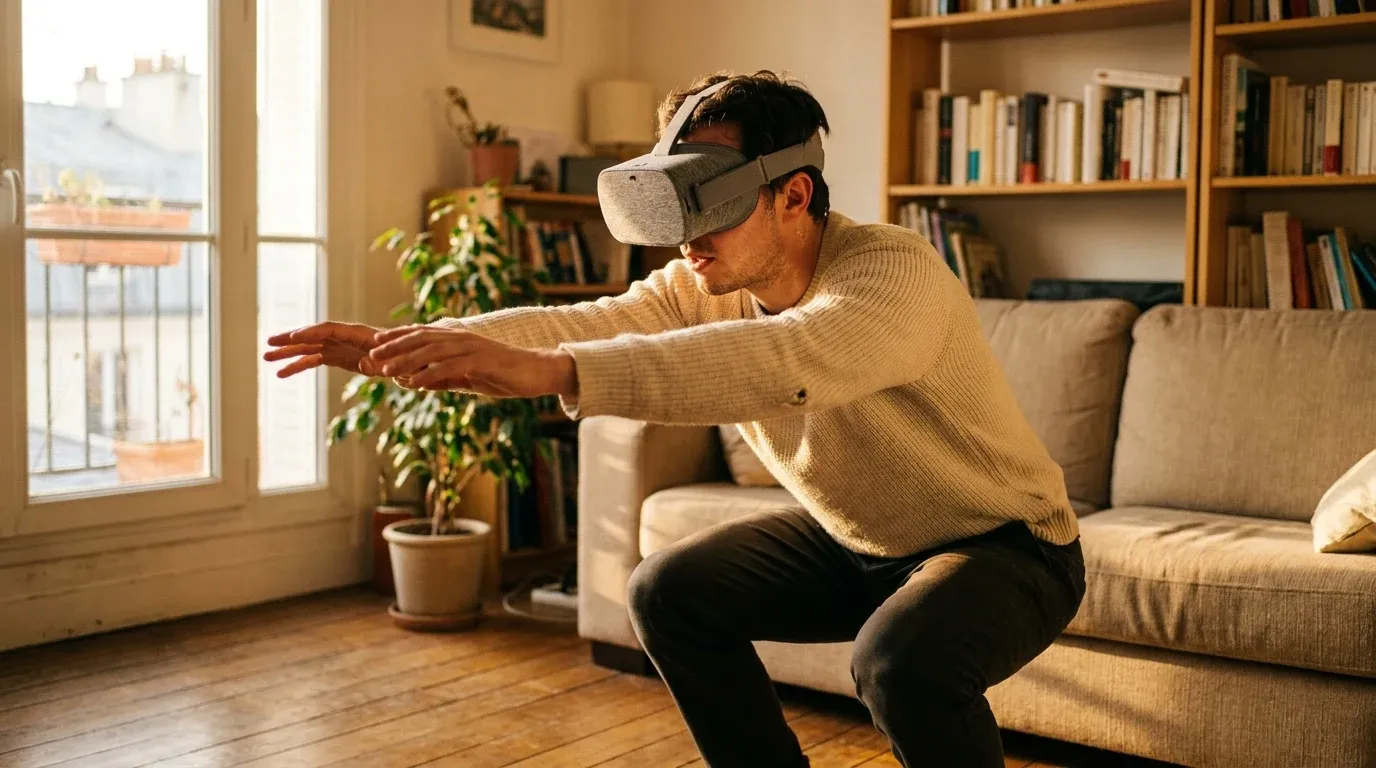
For years, virtual reality fitness carried the same reputation as a novelty gift you use twice and shelve. That's changed. In 2026, the platforms have matured, the programming has deepened, and the sweat is very real. The question worth asking now isn't whether VR workouts are fun. It's whether they actually build fitness.
The honest answer is: it depends on what you're training for. And the nuance is more interesting than either the hype or the skepticism suggests.
VR Fitness Has Moved Well Beyond the Dance Game
The early VR fitness market was largely cardio-focused rhythm games. Beat Saber got people moving. Supernatural made it feel like a workout. But structured programming, the kind with progressive overload, periodization, and measurable performance targets, was mostly absent.
That's no longer the case. Platforms like Meta Fitness, Les Mills XR, and a growing tier of subscription services now offer structured HIIT programs, full-body conditioning circuits, and even resistance-based sessions that use peripheral equipment like weighted gloves, resistance bands, and adjustable cable attachments designed to work within the VR environment. Weekly programming is built to ramp in intensity over time, mirroring how a well-designed gym plan would operate.
If you've been following how the broader industry is shifting toward structured strength formats, this mirrors what's happening in physical gyms too. VASA Fitness Goes All-In on Strength: Smart Move? covers how traditional gym chains are responding to the same demand for more intentional programming.
The programming infrastructure now exists in VR. The real debate is about outcomes.
Engagement Numbers Are Genuinely Hard to Ignore
One of the most consistent findings in fitness tech research is that people actually finish VR workouts. Session completion rates for VR platforms hover around 85 to 90 percent in recent platform-reported data, compared to completion rates for traditional gym programs, which often fall below 60 percent when self-directed.
That gap matters more than it might seem. The best workout program is the one you actually do. Adherence is the variable that determines long-term fitness outcomes more than almost anything else, including the precise workout format you choose.
The immersive environment reduces perceived exertion. When you're focused on hitting targets or reacting to movement cues inside a virtual world, you're less aware of discomfort. Research from fitness tech labs has consistently shown that participants rate VR sessions as less difficult than equivalent heart rate data would suggest. You're working harder than you think you are, and that's a feature, not a flaw.
The Caloric Burn Is Real, With Some Context
Active VR sessions, meaning platform titles that require full-body movement rather than seated or controller-only interaction, produce caloric expenditure comparable to moderate-intensity traditional exercise. Studies published in recent fitness technology research have measured energy expenditure in the range of 7 to 9 METs for high-intensity VR titles, placing them firmly in the same category as cycling, aerobics classes, and brisk rowing.
For cardio development and general fitness maintenance, that's meaningful. If your goal is cardiovascular health, stress reduction, and consistent movement, a well-designed VR workout delivers what it promises. And the psychological upside isn't trivial. Movement-based stress relief and mood regulation from exercise apply regardless of whether the resistance is virtual or physical.
That said, caloric burn data should be treated as directional, not precise. Headset-based heart rate monitoring has improved significantly, but it still trails the accuracy of chest strap sensors. If you're optimizing nutrition around training, don't rely solely on the platform's calorie readout.
The Resistance Problem Is Real and Unsolved
Here's where the honest assessment has to get specific. VR cannot replicate mechanical load. Full stop.
Hypertrophy, the process of building muscle, requires progressive mechanical tension applied to muscle tissue through resistance. Bodyweight movements create some of that tension. Weighted peripheral attachments add more. But the ceiling is low, and no amount of immersive programming can change the underlying physics. You cannot yet load a squat, a deadlift, or a bench press to meaningful hypertrophy thresholds inside a headset without external equipment that essentially makes the VR component incidental.
If building strength and muscle mass is your primary goal, the data on resistance training volume remains decisive. The Ideal Weekly Lifting Dose: 140,000-Person Study outlines what research at scale shows about how much lifting you actually need. VR doesn't yet get you there for strength-specific adaptation.
This isn't a minor limitation. It's a structural one. The platforms know it, which is why the more sophisticated ones are pairing VR sessions with companion strength programs done on conventional equipment. That hybrid model is the most honest framing: VR handles your cardio and conditioning, iron handles your load.
Who VR Fitness Actually Works For
The strongest use cases for VR fitness in 2026 are people who struggle with motivation in traditional gym environments, those managing time constraints, and those who need variety to stay consistent. If the gym feels like a chore, VR changes the experience enough to shift that. Consistency built through enjoyment compounds over time in ways that occasionally grinding through a workout you hate does not.
It also works well as active recovery. A low-intensity VR session on a rest day keeps blood moving without accumulating meaningful fatigue. Think of it the way you'd think about a walk or a mobility session. The concept of managing training load carefully, knowing when to pull back, is something Deload Week: When You Need One and How to Do It Right covers in depth. VR can slot into that rotation naturally.
For older adults, the low-impact, high-engagement nature of VR fitness has particular value. The cognitive engagement involved in reactive VR sessions, tracking targets, processing spatial cues, coordinating movement, adds a layer of neurological stimulation that conventional treadmill cardio doesn't offer. If you're curious about the broader relationship between mental engagement and physical resilience, Why Older Adults Handle Stress Better Than You Think offers a useful lens on how cognitive and physical health intersect across age groups.
What to Watch Out For
A few practical cautions worth keeping in mind before you build your training around VR:
- Overuse without structural load: High-frequency VR cardio without resistance training can push you toward a caloric deficit without the muscle stimulus needed to preserve lean mass. This is especially relevant if you're in a cutting phase. Watch your fueling. Overtraining Without Rest Is Quietly Wrecking Your Progress is worth reading if you're stacking sessions without adequate recovery built in.
- Hardware cost: Quality VR headsets capable of running serious fitness platforms start around $300 to $500, with premium options pushing toward $700 or more. Monthly subscription costs for structured programming typically run $10 to $30. It's comparable to a mid-tier gym membership, but the upfront hardware investment is real.
- Motion sickness: A small percentage of users experience vestibular discomfort, particularly in sessions with rapid directional movement. Most people adapt within a few sessions, but it's a factor to account for early on.
- Space requirements: Active VR fitness requires a cleared area of at least 6 by 6 feet. That's not a problem for most, but it's a real constraint in smaller living spaces.
The Honest Verdict
VR fitness in 2026 is not a gimmick. It's also not a complete fitness solution on its own. What it is, when used correctly, is a genuinely effective tool for cardiovascular conditioning, consistent movement habits, and engagement-driven adherence that traditional formats often fail to produce.
If you're trying to build serious strength or maximize hypertrophy, VR is a supplement to your program, not the foundation. If you're trying to stay active, manage your cardiovascular health, and actually look forward to your workouts, it's one of the more credible options the fitness tech space has produced.
The platforms that will matter long-term are the ones combining immersive cardio with honest programming design, not overselling what the technology can do. For now, the smart move is to use VR for what it's genuinely good at, and pick up a barbell for the rest.