
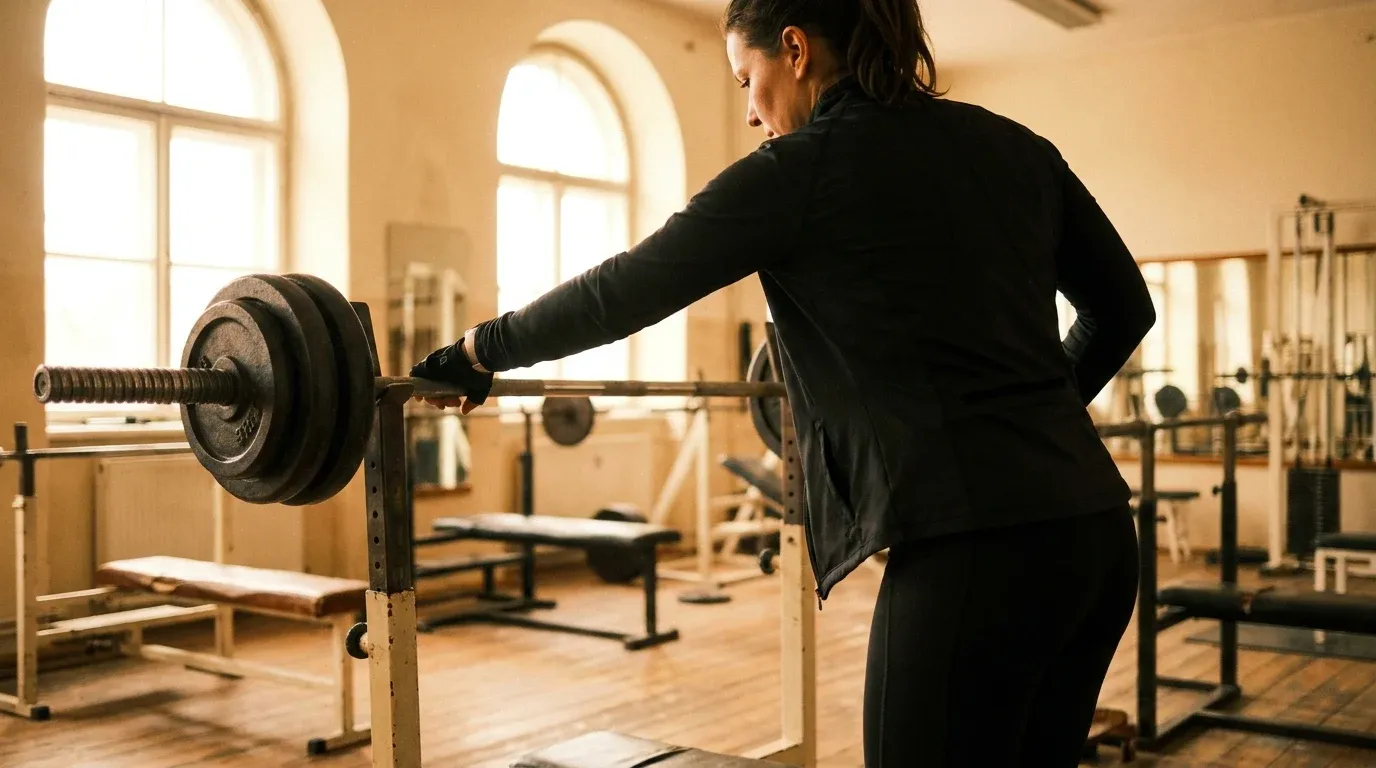
Walk into most commercial gyms on any given morning and the pattern is familiar. The cardio floor is mixed. The group fitness studio skews female. The free weight area is dominated by men. That split isn't accidental, and it isn't about preference. It reflects a structural problem that researchers, clinicians, and coaches are increasingly determined to solve.
Medical guidance has shifted significantly over the past decade. Resistance training is no longer considered optional for women's long-term health. It's now a clinical priority, recommended by sports medicine physicians, endocrinologists, and primary care doctors alike. The gap between what the science recommends and what actually happens on gym floors is wide, and it's costing women real health outcomes.
What the Medical Evidence Actually Says
The case for women lifting weights isn't about aesthetics. It's about survival statistics. Women are disproportionately affected by osteoporosis, with estimates suggesting they account for roughly 80% of osteoporosis diagnoses in the US. Resistance training is one of the most effective interventions known to build and preserve bone density, particularly during the years approaching menopause when estrogen-driven bone protection begins to decline.
Beyond bone health, regular strength training improves insulin sensitivity, reduces visceral fat, and supports cardiovascular function. Research published in major journals consistently links muscle mass in mid-life and older women to lower rates of metabolic disease and greater functional independence later in life. One recent study found that 12 months of structured exercise slows biological aging at the cellular level, a finding with clear implications for women navigating perimenopause and beyond.
Longevity researchers now treat muscle mass as a vital sign. Grip strength, lean mass, and the ability to perform loaded movements are predictive of all-cause mortality in ways that resting cardio metrics alone are not. For women, who statistically live longer but spend more years managing chronic conditions, this matters enormously.
Yet participation rates remain low. Studies across North America and the UK consistently show that women engage in resistance training at significantly lower rates than men, with some surveys putting the gap at 20 to 30 percentage points. The question isn't whether women should lift. It's why so many don't.
It's Not a Motivation Problem
When researchers actually ask women about weight training, the data is clarifying. Interest is not the barrier. A large-scale survey by the Physical Activity Council found that women report wanting to strength train at rates comparable to men. What stops them is a combination of environmental discomfort, inadequate education, and a gym culture that has historically been designed around male bodies and male training norms.
The weight room as a physical space often signals exclusion. Equipment is frequently sized for larger frames. Mirrors are positioned for performance, not instruction. The social dynamics around free weight areas, including unsolicited advice from strangers and an atmosphere where beginners feel watched and judged, disproportionately affect women. This isn't anecdotal. Qualitative research published in sport and exercise psychology journals repeatedly identifies social physique anxiety and feelings of intimidation as primary reasons women avoid or discontinue strength training.
Lack of education compounds the problem. Most women were not taught how to lift in school physical education programs. Group fitness and cardio-based exercise have historically been marketed to women as the appropriate category of movement, while strength training was positioned as masculine, niche, or risky. That framing built a knowledge gap that now functions as a real access barrier. If you don't know how to use a rack, load a bar, or execute a hip hinge safely, walking into the free weight area feels like entering a room where everyone else speaks a language you don't.
The Structural Fixes That Actually Work
The good news is that none of these barriers are fixed. They're design problems, and design problems have design solutions. Gyms, coaches, and programming creators are starting to treat this seriously, and early evidence suggests that targeted interventions move the needle.
Gym floor design matters more than most operators realize. Facilities that have reconfigured their free weight areas to reduce the sense of performance pressure, replacing stadium-style mirror walls with more neutral setups, breaking large open lifting areas into smaller zones, and positioning beginner-friendly equipment at accessible entry points, report higher engagement from women who previously avoided those spaces. The layout of a gym is a form of communication, and many current designs communicate that free weights aren't for everyone.
Women-only lifting areas reduce the access gap. This remains a contested topic in some fitness circles, but the participation data is fairly consistent. Facilities that offer dedicated women's strength areas see higher rates of first-time entry into resistance training among female members. The goal isn't permanent segregation. It's a transitional environment that removes social anxiety long enough for women to build the competence and confidence to train anywhere. Many women who start in dedicated areas migrate to the main floor within months.
Coach education on inclusive cueing is a significant lever. How trainers communicate technique is not neutral. Traditional strength coaching language was developed largely by and for male athletes. Cues that work for one body type or biomechanical pattern don't automatically transfer. A growing number of strength coaches are now updating their language to reflect the anatomical diversity of their clients. For practical examples of how this translates in real sessions, the breakdown in Hip Thrust Technique: The Coaching Cues That Actually Work illustrates how small shifts in instruction language produce significantly better movement outcomes across different body types.
Beginner programming needs to be visible and accessible. One of the clearest findings from retention research is that women who start strength training with a structured, progressive program are significantly more likely to continue than those who enter the weight room without a plan. The problem is that beginner-friendly strength programs are often buried in fitness apps behind paid tiers, written in jargon, or designed with an assumed baseline of knowledge that beginners don't have. Free, clearly explained entry-level programs distributed through gyms, primary care offices, and community health networks would close a real gap.
It's also worth noting that supplementation research is becoming more relevant to this conversation. Creatine's effects on muscle tissue have now been documented even in the absence of training, which has particular implications for older women managing sarcopenia or preparing to begin a strength program after a period of inactivity. This doesn't replace training, but it signals that the tools available to support women's strength development are broader than commonly understood.
What the Fitness Industry Gets Wrong
Part of the problem is how the industry has historically marketed strength to women. The messaging has oscillated between two poles. Either strength training is packaged as a tool for aesthetic transformation, "tone up," "sculpt," "lean out," language that reduces a clinically important practice to its cosmetic side effects. Or it's marketed as extreme, associated with competitive powerlifting or bodybuilding, formats that have no relevance to most women's goals.
Neither framing serves women who simply want to move better, live longer, and feel stronger in their daily lives. The medical framing, honest about bone density, metabolic function, and aging, is largely absent from mainstream fitness marketing because it's less emotionally charged than transformation narratives. That needs to change.
There's also a consistency issue that gets underappreciated. Women who do start lifting often drop off not because they dislike it, but because their programs weren't built for the reality of their schedules, energy levels, or life phases. Research consistently shows that training consistency produces better long-term outcomes than intensity, which means programs designed for sustainable integration into real lives, not peak performance cycles, are actually better medicine. The fitness industry's tendency to reward intensity over regularity has historically served motivated athletes better than the general population it's supposed to serve.
Where Responsibility Actually Sits
Fixing this doesn't fall on individual women. That framing misidentifies the problem. If barriers are structural, then solutions have to be structural too. Gym operators need to audit their spaces. Coaching certifications need to update their curricula. Health systems need to connect clinical recommendations to actual resources. Fitness media needs to normalize strength training as a health behavior, not a physique project.
The shift is happening, but slowly. The women who are already lifting are its most visible advocates, and their influence matters. But systemic change requires the institutions involved, gyms, medical practices, schools, and the fitness industry itself, to do the structural work that individual inspiration can't do alone.
The weight room was built by certain people, for certain people. It can be rebuilt for everyone. The evidence on why it should be is already overwhelming. The question now is how fast the people who design, run, and teach in these spaces are willing to move.