
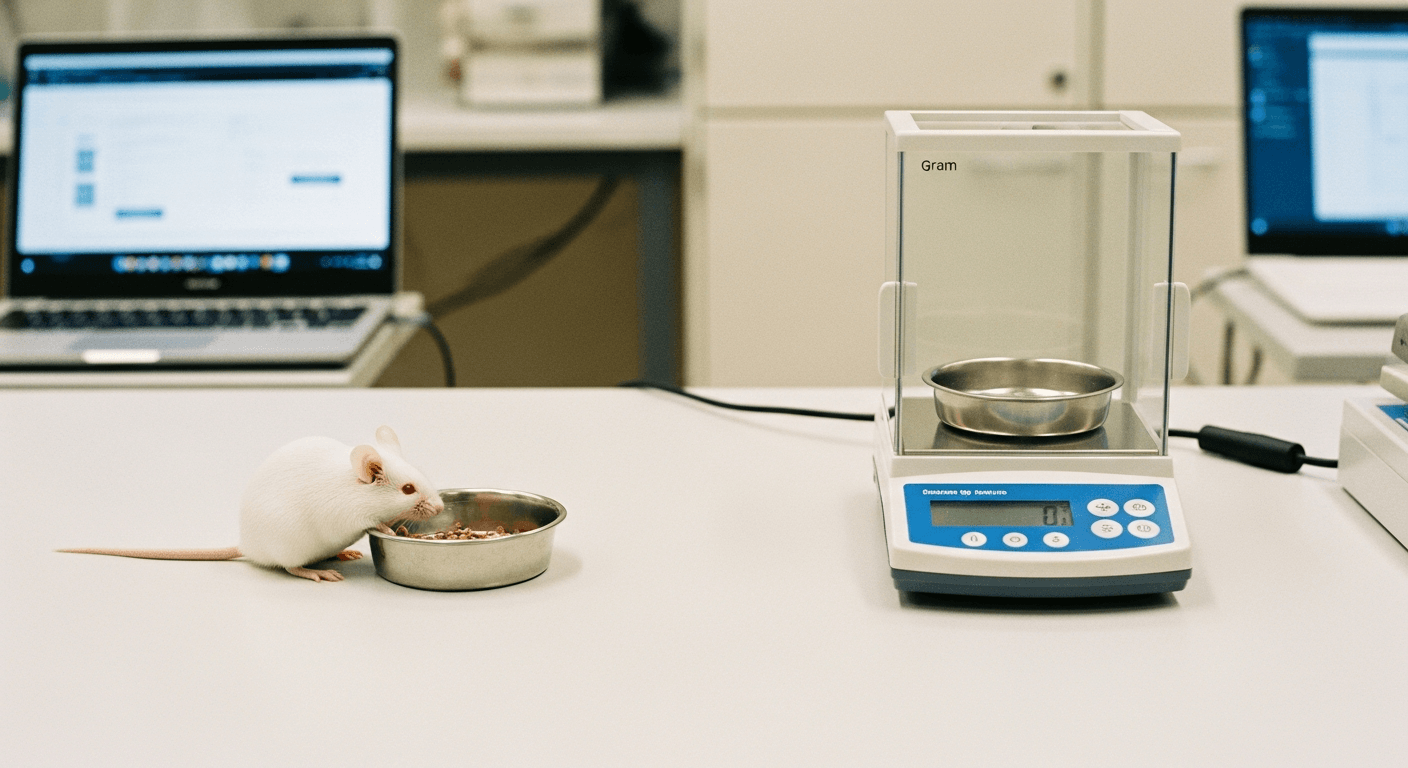
You've seen the headlines. Coffee prevents cancer. Coffee causes cancer. Red meat shortens your life. Red meat is fine in moderation. Omega-3s are essential. Omega-3 supplements don't do much at all. The whiplash is real, and it erodes trust in nutrition science as a whole.
A significant part of that contradiction isn't coming from bad science or media spin. It's coming from something far more basic: the mice and rats used to generate foundational nutrition data are often eating completely different diets from one lab to the next. And that problem is finally getting serious institutional attention.
What the American Society for Nutrition Is Doing About It
At NUTRITION 2026, the American Society for Nutrition (ASN) is convening a dedicated task force with one clear mandate: develop standardized dietary guidelines for laboratory animals used in nutrition research. This isn't a minor procedural update. It's a structural reform targeting one of the quietest, most persistent sources of error in the entire research pipeline.
The task force will work to establish consistent nutritional protocols across research institutions. That means specifying what lab animals eat, how much, how often, and under what conditions, so that a study conducted in Boston produces results that can actually be compared to a study conducted in Sydney or London.
Right now, that comparability largely doesn't exist. And the consequences reach far beyond academic journals.
The Hidden Variable That's Been Corrupting the Data
When researchers run nutrition experiments on animals, those animals are already eating something. The baseline diet matters enormously. A mouse on a high-fat chow to simulate obesity is a very different test subject than a mouse on a standard purified diet, even if both are labeled "control" in two different studies.
The problem is that commercial lab animal diets vary widely in macronutrient composition, fiber content, micronutrient levels, and even contaminants. Two labs can both claim to be using a "standard" diet while feeding their animals foods with meaningfully different nutritional profiles. When those studies try to test the same variable, say the effect of a specific antioxidant or amino acid, the background diet becomes a confounding variable that neither study accounts for.
This is compounded by the fact that reproducibility in nutrition research is already a known challenge. A 2023 analysis found that fewer than half of nutritional findings in preclinical studies could be reliably replicated. Inconsistent animal diets are a primary suspect in that failure rate.
If you've ever wondered why new supplements keep making bold promises that evaporate once large human trials are run, this is a significant part of the answer. The animal data that inspires those claims is often generated under conditions that no one has standardized.
Why This Matters More Than You Think
Here's the pipeline that most people don't realize they're downstream of. A study in rodents shows that compound X dramatically reduces inflammation. A supplement company funds further preclinical research. Marketing material appears. Influencers cite "research-backed" benefits. You buy a product. Human trials, if they ever happen, show marginal or null effects. Everyone moves on to the next compound.
That cycle exists because animal data is treated as predictive when it's often not. And when the animal data itself is inconsistent across studies, the problem compounds. Researchers can't agree on what the baseline even is.
This directly affects how consumers interpret nutrition science. When headlines contradict each other, the rational response is to either trust nothing or to trust whoever is most confident. Neither outcome serves your health. It's worth noting that even well-researched compounds like creatine get overclaimed once the marketing machine picks up what the data actually shows selectively.
The Reproducibility Crisis Has a Dietary Root
Reproducibility has been a major conversation in science for over a decade. Psychology had its replication crisis. Biomedicine has grappled with it extensively. Nutrition science has its own version, and it's arguably more consequential because it touches daily decisions made by billions of people.
The ASN task force is essentially targeting a structural cause rather than a symptom. By standardizing what research animals eat, scientists create a more consistent baseline from which to measure interventions. That doesn't eliminate all sources of variability, but it removes one of the largest uncontrolled variables in the system.
This kind of reform has precedent. Standardizing cell culture conditions in biomedical research improved reproducibility significantly in those fields. Standardizing surgical procedures in animal models improved the reliability of pharmaceutical testing. Dietary standardization in nutritional animal research is the logical next step.
What Standardized Animal Nutrition Protocols Could Actually Change
The practical implications of this reform, if it gains traction, are significant:
- More comparable studies. When two labs use the same baseline animal diet, their results can be meaningfully compared. Meta-analyses become more reliable because they're combining data that was actually generated under similar conditions.
- Fewer false leads in supplement research. A lot of the noise in the supplement space originates from animal data that was never rigorous enough to justify human trials in the first place. Better animal research means better filtering before claims reach consumers.
- Stronger translation to human outcomes. The gap between "works in mice" and "works in people" is already wide for biological reasons. Reducing dietary variability in animal models at least removes one unnecessary layer of noise from that translation.
- More credible nutrition headlines. When foundational studies are built on consistent methodology, the findings they generate are more robust. That filters up through the media ecosystem over time.
None of this happens overnight. Task forces produce recommendations, recommendations require adoption, adoption takes years. But the fact that ASN is treating this as a formal institutional priority signals that the research community understands the problem has reached a threshold that can't be ignored.
What You Should Do With This Information Right Now
Understanding that a lot of nutrition science has been built on a shaky methodological foundation doesn't mean you should stop paying attention to nutrition. It means you should calibrate your trust more carefully.
A few practical principles that hold up regardless of the animal data problem:
- Prioritize findings from large, long-term human studies. Randomized controlled trials and well-designed cohort studies in human populations are far more reliable than rodent data for predicting what works in your body.
- Be skeptical of single-study supplement claims. If the entire case for a product rests on a handful of preclinical studies, the ASN reform story tells you exactly why that's not enough.
- Focus on nutritional patterns, not compounds. Whole food dietary patterns have the strongest and most consistent evidence base across human research. The case for real food sources over processed supplements gets stronger the more you understand how supplement research actually gets made.
- Don't confuse confidence with evidence. The loudest claims in the nutrition space are often the least well-supported. That's not cynicism, it's pattern recognition.
If you're an active person trying to optimize your nutrition, the fundamentals are still the fundamentals. Adequate protein, micronutrient-dense whole foods, and attention to your own response to what you eat will serve you better than chasing whatever the latest preclinical finding promises. For example, the science around post-workout protein timing is one area where human research is actually solid and practical, precisely because it's been tested extensively in people rather than just animals.
A Reform That's Overdue
The ASN's move toward standardized animal nutrition protocols won't generate viral headlines. It's not the kind of news that trends. But it's exactly the type of systemic correction that makes science more trustworthy over time, and that matters to everyone who relies on nutrition research to make decisions about their health.
The supplement industry operates at over $50 billion annually in the US alone, and a substantial portion of that market is built on preclinical animal data that was never generated under consistent conditions. Consumers deserve research that was built on a foundation rigorous enough to justify the claims made from it.
The NUTRITION 2026 task force won't fix that overnight. But it's the kind of institutional effort that, a decade from now, could mean that fewer contradictory headlines reach you, and that the ones that do are based on something more solid than a mouse study conducted on an unstandardized diet that no other lab could replicate.
That's a reform worth understanding, even if it doesn't come with a before-and-after photo.