
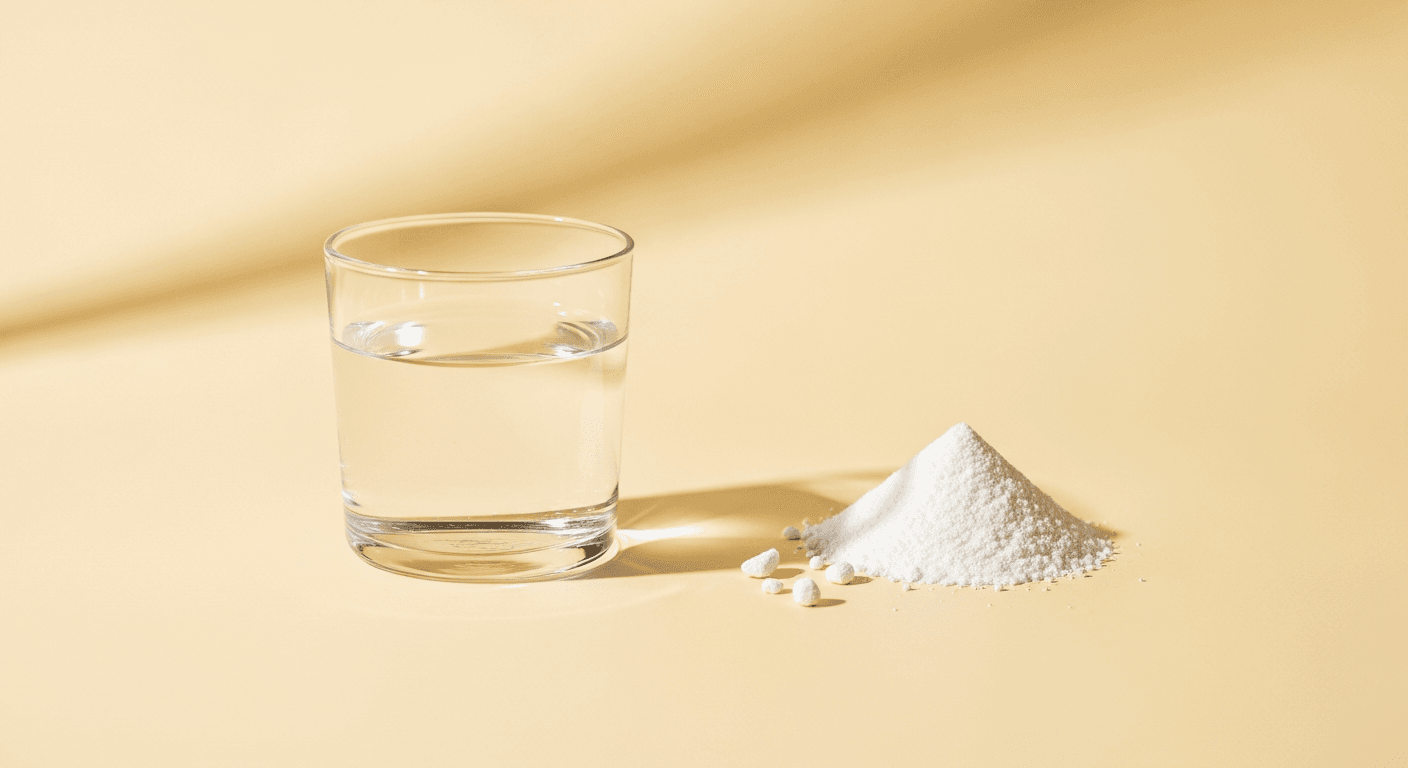
Creatine is one of the most researched supplements in sports nutrition. Its reputation for improving strength and power output is well-earned and backed by decades of controlled studies. But somewhere along the way, creatine picked up a second job it was never qualified for: managing post-exercise inflammation and accelerating recovery.
New research is drawing a sharp line between what creatine actually does and what athletes hope it does. That distinction has real consequences for how you build your supplement stack and where you spend your money.
What the Research Confirms About Performance
The evidence on creatine and physical performance is about as solid as it gets in nutrition science. Creatine monohydrate supplementation consistently increases phosphocreatine stores in muscle tissue, which directly supports the rapid regeneration of ATP during high-intensity efforts. The result is measurable: more power output, more reps at a given load, and better performance across repeated sprint efforts.
A recent systematic review analyzing data across multiple study types confirmed this effect is reliable and reproducible. Resistance-trained athletes, recreational gym-goers, and older adults all show meaningful gains in performance metrics when supplementing with creatine at standard doses (typically 3 to 5 grams per day after an optional loading phase).
If you're training hard and you're not using creatine, you're likely leaving measurable performance on the table. This is one of the rare cases where the supplement marketing largely matches the science.
Where Creatine Falls Short: The Inflammation Problem
Here's where the narrative shifts. The same body of research that confirms creatine's performance benefits finds no consistent evidence that it reduces inflammatory markers following exercise. When researchers measure common markers like interleukin-6 (IL-6), C-reactive protein (CRP), and tumor necrosis factor-alpha (TNF-a) after hard training sessions, creatine supplementation does not reliably move those numbers in a favorable direction.
Some individual studies have shown modest reductions in specific inflammatory markers under specific conditions. But across the broader evidence base, the effect is inconsistent and does not hold up as a generalizable finding. The honest conclusion is that creatine is not an anti-inflammatory agent.
This matters because inflammation following intense exercise is a signal you can't simply suppress without consequences. Acute post-exercise inflammation is part of the adaptive process. What you actually want is for that inflammatory response to resolve efficiently, not to be blunted arbitrarily. Creatine doesn't appear to do either with any reliability.
Why Athletes Got This Wrong
The confusion is understandable. Creatine does help you recover between sets and between training sessions in a functional sense. If you can do more work in a session and feel less depleted afterward, that feels like recovery. But there's a difference between performance recovery (restoring your capacity to train again) and physiological recovery (reducing systemic inflammation, repairing tissue, and returning biomarkers to baseline).
Creatine contributes to the first. It has no reliable claim on the second.
A lot of athletes conflate these two things because the supplement industry has been happy to let them. Recovery is a powerful marketing word. When a product improves your performance and is taken around training time, it's easy to credit it with everything that happens in that window, including the inflammation that resolves on its own.
Understanding this distinction is exactly the kind of thinking covered in Why Supplement Research Is So Confusing and What to Do, which breaks down how marketing language blurs the line between evidence and aspiration in the supplement space.
What Actually Works for Inflammation
If managing post-exercise inflammation is a genuine priority for you, and for many serious athletes it should be, the evidence points toward dietary strategies rather than isolated supplements.
Omega-3 fatty acids (EPA and DHA) have the strongest research support for reducing systemic inflammation in athletes. Tart cherry juice has shown real effects on markers of muscle damage and inflammation in endurance athletes. Adequate sleep is arguably the most underrated recovery tool available, with disrupted sleep shown to significantly elevate inflammatory markers. Polyphenol-rich foods, including berries, leafy greens, and certain fruits, contribute to a lower inflammatory baseline over time.
For a practical breakdown of which foods actually move the needle, Anti-Inflammatory Foods for Athletes: What the Evidence Shows covers the research without the usual overpromising.
Meal timing also plays a role. Getting adequate protein and carbohydrates into your system within a reasonable window after training supports muscle protein synthesis and glycogen replenishment, both of which contribute to how well your body manages the post-exercise inflammatory cascade. How to Time Your Meals Around Your Workouts gives you a framework that's grounded in current evidence.
Rethinking Your Supplement Budget
A quality creatine monohydrate product costs somewhere in the range of $20 to $40 for a month's supply, depending on the brand. That's a reasonable investment for a supplement with proven performance benefits. The problem arises when athletes use that logic to justify skipping genuinely effective recovery strategies.
If you're spending on creatine and expecting it to handle your inflammation load while underinvesting in sleep, diet quality, and training periodization, you're allocating your resources based on a misunderstanding of what the supplement actually does.
This is especially relevant for athletes over 35, where recovery capacity genuinely shifts and the cost of chronic low-grade inflammation compounds over time. The foundation of managing that isn't a supplement. It's structured training, adequate protein, and the dietary anti-inflammatory strategies mentioned above. For context on why recovery becomes a more pressing variable as you age, Muscle Decline After 35: Your Action Plan outlines the physiological shifts and what actually addresses them.
How to Use Creatine Correctly
None of this means you should stop taking creatine. It means you should take it for the right reasons.
Creatine is a performance supplement. Its job is to increase your work capacity during training. More volume at higher intensity, over time, with proper recovery support, produces better adaptations. That's the mechanism. Creatine earns its place in a supplement stack because it consistently delivers on that promise.
- Standard dosing: 3 to 5 grams of creatine monohydrate daily. No need for a loading phase for most people, though loading (20 grams per day for 5 to 7 days) does saturate muscle stores faster.
- Timing: Timing matters less than consistency. Daily intake keeps muscle creatine stores saturated regardless of when you take it.
- Form: Creatine monohydrate remains the gold standard. Fancier, more expensive forms have not outperformed it in head-to-head research.
- Who benefits most: Strength athletes, sprinters, and team sport athletes doing repeated high-intensity efforts see the most consistent gains. Endurance athletes may see smaller benefits, though some research suggests value in training quality improvements.
What creatine does not do is manage your inflammatory load, accelerate tissue repair, or substitute for a recovery-focused diet and sleep hygiene. Those jobs belong to other tools.
Building an Evidence-Based Supplement Stack
The real takeaway here is about how you think about supplementation, not just what you take. Every supplement should have a clear, evidence-supported job description. When a supplement is doing two jobs but only has data for one, you need to fill the second role with something that actually works.
For performance: creatine earns its place. For inflammation: look at omega-3s, dietary polyphenols, sleep, and periodized training load. For muscle support and cost efficiency: whole food protein sources often outperform expensive powders, as covered in Cheap Protein Sources That Actually Work for Athletes.
The athletes who get the most out of their supplement spending are the ones who resist the urge to ask one product to do everything. Creatine is excellent at what it does. That's enough. Stop asking it to be something it's not.