
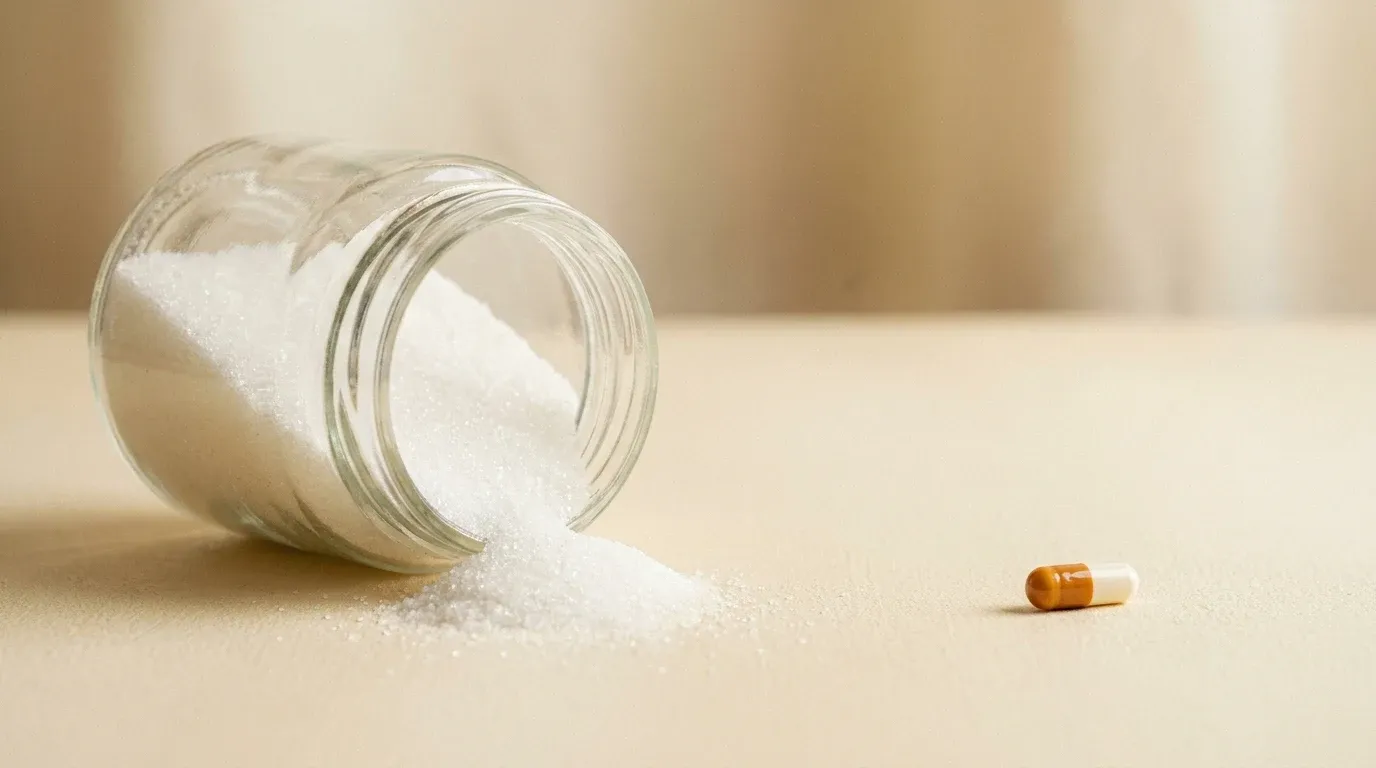
Most people know antibiotics wipe out bacteria indiscriminately. What fewer people realize is that what you eat during a course can significantly change how much damage is done, and how fast you recover. New research is pointing directly at sugar as a compounding factor, one that may be amplifying the microbiome disruption that antibiotics already cause.
If you're an athlete or someone who trains regularly, this isn't just a general health footnote. Gut health is directly tied to how well you absorb protein, manage inflammation, and bounce back from hard training. A disrupted microbiome during an antibiotic course can quietly set back weeks of nutritional and physical progress.
What the Research Is Showing
A growing body of work in gut microbiome research has confirmed that dietary sugar, particularly added sugars and refined carbohydrates, fuels the proliferation of opportunistic bacteria. These are strains that normally stay in check when a healthy microbiome is intact. When antibiotics reduce microbial diversity, the ecosystem becomes vulnerable, and high sugar intake appears to accelerate the colonization of potentially harmful bacterial populations.
Recent findings published in microbiome science journals suggest that individuals consuming higher amounts of added sugars during antibiotic treatment experience a more pronounced and prolonged disruption to their gut bacterial communities. The diversity loss is deeper. The rebound takes longer. And strains associated with inflammation, including certain Enterobacteriaceae species, appear to surge more aggressively in a sugar-rich gut environment.
The mechanism isn't complicated. Antibiotics clear space. Sugar feeds the bacteria best equipped to move in fast and dominate that newly cleared territory. Those fast movers tend not to be the ones you want running your gut.
Why This Matters More If You Train
For most people, a short antibiotic course means a temporary digestive disruption, some bloating, maybe loose stools, and a few weeks of recovery. For athletes, the downstream effects are more significant.
Your gut microbiome plays a direct role in nutrient absorption. When it's compromised, your ability to extract amino acids from protein, absorb key minerals like magnesium and zinc, and regulate post-meal blood sugar becomes less efficient. You're eating the same diet but getting less from it. That matters when you're trying to recover from illness while maintaining any degree of training load.
There's also the inflammation angle. A disrupted gut barrier, sometimes called increased intestinal permeability, allows bacterial byproducts to pass into the bloodstream, which triggers systemic inflammatory signaling. For someone already dealing with the inflammation of illness on top of training stress, that's a meaningful pile-on.
It's also worth noting that the gut-immunity connection is well-established. Roughly 70% of immune activity is clustered around gut-associated lymphoid tissue. When your microbiome is destabilized at exactly the moment your immune system is fighting an infection, you're working with a weakened support system. Protecting microbial diversity during that window isn't optional. It's strategic.
This links to a broader point about nutrition timing and context. Just as what you eat when you start lifting directly shapes your early results, what you eat during an antibiotic course directly shapes your recovery trajectory.
The Sugar-Microbiome Connection in Plain Terms
Your gut microbiome isn't one thing. It's a complex ecosystem of trillions of microorganisms, and different species thrive on different fuel sources. Beneficial bacteria, the strains associated with immune regulation, short-chain fatty acid production, and anti-inflammatory activity, tend to be fiber-fed. They ferment complex carbohydrates and produce compounds like butyrate that help maintain gut barrier integrity.
Harmful or opportunistic bacteria, by contrast, often thrive on simple sugars. When you consume high amounts of glucose, fructose, and refined carbohydrates, you're selectively feeding the wrong populations. Under normal conditions, beneficial bacteria keep those opportunists suppressed. During an antibiotic course, that suppression mechanism is weakened, and sugar intake can tip the balance further in the wrong direction.
Studies tracking gut microbiome composition after antibiotic use have found that dietary patterns during the recovery period are among the strongest predictors of how quickly diversity rebounds. Sugar-heavy diets consistently correlate with slower restoration and higher residual loads of inflammatory bacterial strains.
How Long Does the Window Matter?
The most vulnerable period is during the antibiotic course itself and the two to four weeks immediately following the final dose. This is when the microbiome is at its lowest diversity point and most susceptible to colonization by opportunistic strains.
The good news is that you don't need to make permanent lifestyle overhauls. A targeted, temporary reduction in added sugars during this window appears to be enough to meaningfully reduce the extent of disruption and support faster recovery of beneficial bacterial populations. Think of it as a short course of dietary discipline with a specific, time-limited goal.
For athletes managing complex supplement protocols and nutrition plans, it's also worth staying current on what you're actually consuming. Products marketed as health-supporting can still carry significant sugar loads. As noted in coverage of what the FDA's new stance on gummy supplements means for consumers, many popular gummy-format vitamins and wellness products contain added sugars that can quietly add up over a day.
Practical Swaps: What to Eat Instead
This isn't about going zero-carb or treating your antibiotic course like a detox protocol. It's about selectively reducing added sugars and replacing them with foods that actively support microbiome recovery. Here's a working list:
- Replace sweetened yogurt with plain, unsweetened Greek yogurt. You still get the probiotic benefit without the sugar load. Add berries for flavor rather than jam or honey.
- Swap sports drinks and juice for plain water or electrolyte tablets with no added sugar. Hydration matters during illness. Proper fluid intake also supports nutrient transport, which connects directly to how efficiently your body uses what you eat. The relationship between dehydration and protein absorption is well-documented and especially relevant when your gut is already under stress.
- Choose whole grains over refined carbohydrates. Oats, brown rice, and whole grain bread feed fiber-fermenting bacteria rather than opportunistic strains. Refined white bread and white rice offer minimal prebiotic value.
- Add fermented foods where tolerated. Kefir, sauerkraut, kimchi, and miso introduce live bacterial cultures that may help repopulate beneficial strains. Tolerance varies during antibiotic courses, so start with small amounts.
- Use fruit strategically. Whole fruit contains fiber that buffers the sugar impact. A handful of blueberries or sliced apple delivers sweetness with microbiome-supporting fiber. Fruit juice, by contrast, removes the fiber and concentrates the sugar.
- Prioritize prebiotic-rich vegetables. Garlic, onion, leeks, asparagus, and Jerusalem artichokes are particularly high in inulin and fructooligosaccharides, compounds that selectively feed beneficial bacterial species.
- Reduce or eliminate ultra-processed snack foods. Crackers, granola bars, and packaged cereals marketed as healthy often carry significant added sugar. Read labels during this period.
- Increase soluble fiber intake. Foods like lentils, chickpeas, oats, and flaxseed support butyrate-producing bacteria. Butyrate is a short-chain fatty acid that reinforces gut barrier function, which is under particular pressure during antibiotic treatment.
What About Probiotics?
Probiotic supplementation during and after antibiotic courses is commonly recommended, and the evidence supporting it has grown considerably. However, the timing, strain specificity, and dose all matter more than most people realize. Not all probiotic products deliver meaningful colony counts to the gut, and some research has actually found that certain probiotic protocols can slow the restoration of the native microbiome if applied too aggressively immediately post-antibiotic.
The cleaner takeaway from current research is this: dietary changes to reduce sugar and increase fiber are the most consistently supported intervention for microbiome recovery, and they work in combination with probiotics rather than instead of them. If you're navigating the wider supplement landscape during recovery, the ongoing shifts in what athletes need to know about supplement rules in 2026 are worth factoring into any product decisions you make.
The Bigger Picture for Active People
Antibiotic courses are sometimes unavoidable. Infections happen, and completing a prescribed course is the right call. What's within your control is how you support your body during and after that course, and the evidence is increasingly clear that diet is one of the most powerful levers available.
Cutting added sugars for two to four weeks isn't a significant sacrifice. But failing to do it can extend the microbiome recovery timeline, increase systemic inflammation, and blunt the nutrient absorption that supports your return to full training capacity. For athletes who treat their nutrition with the same seriousness they bring to their training, this is simply part of getting the recovery right.
The same disciplined attention to dietary detail that drives results in training is what protects your foundation when your body is under pressure. As covered in what the sports nutrition boom actually says about your real needs, the basics consistently outperform the complicated. During an antibiotic course, the basics are: cut the sugar, feed your fiber, and give your gut the conditions it needs to rebuild.