
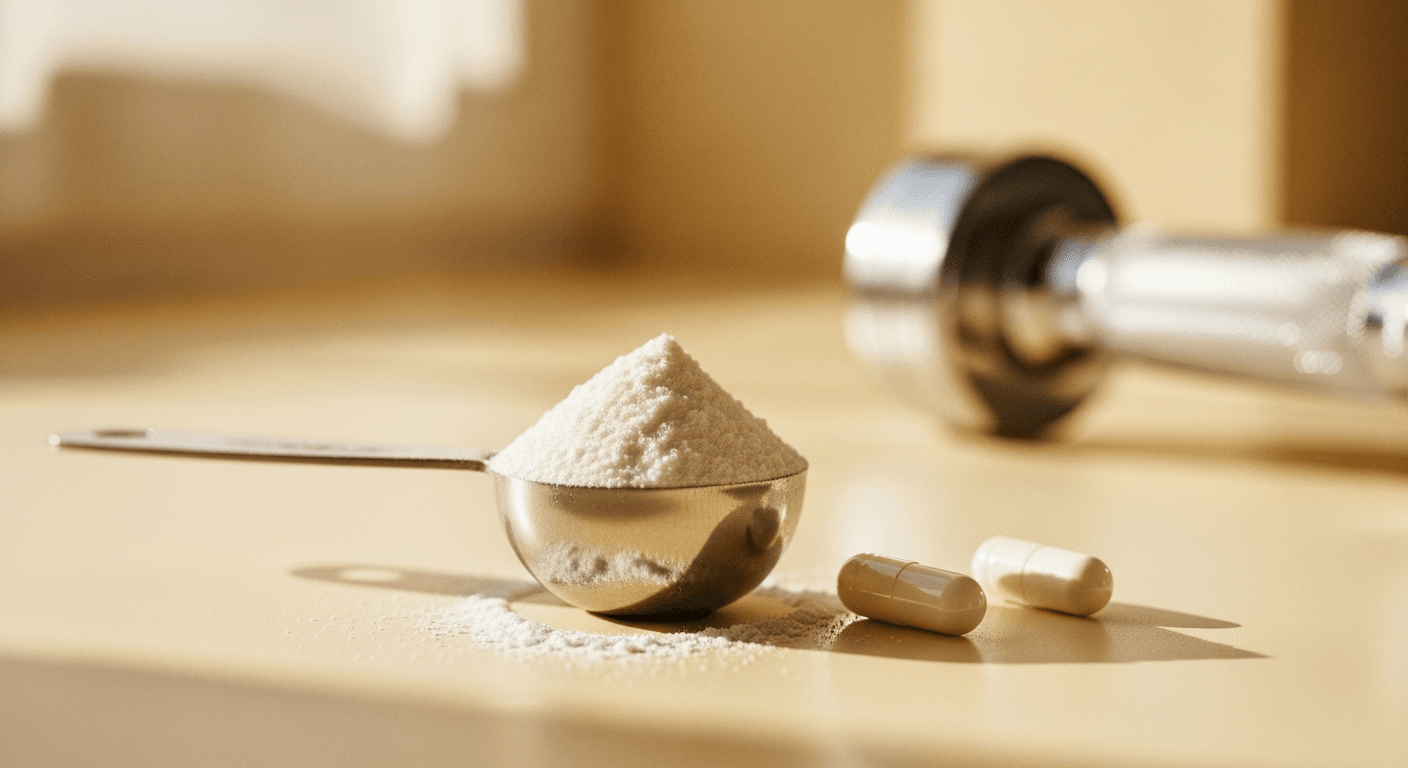
Creatine has spent decades trapped in a very specific image: tubs of powder on weight room shelves, used by athletes chasing bigger lifts. That image is now outdated. A growing body of research, including recent work from Stanford and emerging data from 2026 studies, positions creatine as one of the most broadly useful supplements for healthy aging. That means it's relevant for women in their 40s, men over 60, and anyone who wants to maintain muscle and bone as they get older.
Here's what the evidence actually says, and what you should do with it.
Creatine's Role Beyond the Gym
Most people know creatine as a performance supplement. It increases the availability of phosphocreatine in muscle tissue, which helps your body regenerate ATP during high-intensity effort. That's useful for athletes. But that same energy system operates in nearly every tissue in your body, including bone, brain, and immune cells.
Dr. Michael Fredericson, a sports medicine physician at Stanford University, has been one of the louder clinical voices pushing creatine research beyond the weight room. His work highlights creatine's relevance for bone mineral density, fall prevention in older adults, and what researchers are beginning to call "longevity markers." These include lean muscle retention, mitochondrial function, and inflammatory regulation. None of these are gym-specific outcomes. They're outcomes that affect how well you function in your 60s, 70s, and beyond.
Muscle loss, known clinically as sarcopenia, begins as early as your mid-30s and accelerates significantly after 60. Retaining lean mass isn't about aesthetics at that stage. It's about metabolic health, fall resistance, glucose regulation, and independence. Creatine, combined with even modest resistance training, has been shown in multiple trials to significantly slow this process.
Bone Density: An Underreported Benefit
The bone density research is less well-known than the muscle data, but it's compelling. Several randomized controlled trials have found that creatine supplementation, when paired with resistance exercise, produces greater gains in bone mineral density than exercise alone. The proposed mechanism involves creatine's role in supporting osteoblast activity. those are the cells responsible for building new bone tissue.
This matters most for postmenopausal women, who face accelerated bone loss due to declining estrogen, and for older men whose bone density declines more slowly but still meaningfully. Creatine won't replace estrogen therapy or bisphosphonate medications where those are clinically indicated. But as a low-cost, low-risk adjunct, the evidence is strong enough that more clinicians are starting to recommend it.
If you're already thinking carefully about your long-term health metrics, this kind of supplementation fits naturally alongside the approach outlined in Personalized Nutrition: How to Actually Use Your Blood Work, where tracking specific biomarkers helps you build a targeted health strategy rather than guessing.
Women Are Being Left Out of the Research. That's Changing.
For most of creatine's research history, study populations skewed heavily male, young, and athletic. Women were underrepresented, and older adults were almost entirely absent from early trials. The field is catching up, and the findings are striking.
Women tend to have lower baseline creatine stores than men, partly due to lower dietary intake of creatine-rich foods like red meat and partly due to physiological differences. That means the relative benefit of supplementation can actually be larger in women. Studies specifically looking at perimenopausal and postmenopausal women have found that creatine supplementation supports muscle strength, bone density, and even mood regulation, with some data pointing to benefits for depression symptoms in this population.
There's also emerging evidence that creatine supports cognitive performance, particularly in tasks involving short-term memory and processing speed. Sleep-deprived individuals show some of the most pronounced cognitive benefits, which makes sense given that creatine helps buffer energy demands in the brain during periods of stress. If you're already thinking about cognitive resilience, the connection between sleep quality and brain function is worth understanding. Endless Scrolling Hurts Your Memory. Exercise Fights Back. covers some of the overlapping research on how daily habits shape cognitive capacity.
The Immune System Connection: Cancer-Fighting Pathways
One of the most unexpected findings in recent creatine research involves the immune system. A 2026 study published in a peer-reviewed immunology journal found that creatine may directly energize dendritic cells, which are a critical component of the adaptive immune response. Dendritic cells act as messengers between the innate and adaptive immune systems. When they function well, they're better at identifying cancer cells and coordinating T-cell responses against them.
The research suggests that creatine supplementation may enhance the metabolic fitness of these immune cells, giving them the energy resources they need to mount stronger responses. This is early-stage science. It's not a cancer treatment, and it shouldn't be framed as one. But it does add a meaningful layer to the argument for creatine beyond muscle and bone.
The implication for healthy aging is significant. Immune function declines with age, a process called immunosenescence. Any intervention that supports immune cell metabolism without significant side effects is worth watching closely. Creatine's safety profile, established over more than 30 years of research and clinical use, makes it a reasonable candidate for further investigation in this space.
Practical Dosing for Non-Athletes
If you're not a competitive athlete, you don't need to approach creatine like one. The aggressive "loading phase" protocols common in sports nutrition, where you take 20 grams per day for five to seven days, aren't necessary for healthy aging purposes. They do saturate muscle stores faster, but they also increase the likelihood of gastrointestinal discomfort.
For most adults using creatine for longevity and general health, a maintenance dose of 3 to 5 grams per day is both effective and well-tolerated. Here's a practical breakdown:
- Daily dose: 3 to 5 grams of creatine monohydrate. This is the most researched form. Don't pay extra for "advanced" variants unless there's specific evidence for your situation.
- Timing: Timing matters less than consistency. Post-exercise may offer a slight advantage due to increased blood flow and nutrient uptake, but taking it at any consistent time each day works. With food is fine.
- Loading phase (optional): If you want to saturate stores faster, 20 grams per day split into four doses for five days will do it. Not required for general health use.
- Hydration: Creatine draws water into muscle cells. Drink adequately throughout the day. This is especially relevant in warm weather. Electrolytes in the Heat: What You Actually Need This Summer is a useful companion read if you're active in hot conditions.
- Form: Creatine monohydrate powder is the most cost-effective option. A quality 500g container typically costs between $15 and $30, providing several months of daily use.
What to Watch Out For
Creatine is one of the most studied supplements in existence, with a strong safety record. Kidney concerns that circulated years ago have not been supported by research in healthy individuals. That said, if you have existing kidney disease, consult a physician before starting.
The supplement market is less regulated than the pharmaceutical market, and label accuracy varies widely. Before buying, look for products that carry third-party testing certification from organizations like NSF International, Informed Sport, or USP. This doesn't guarantee perfection, but it meaningfully reduces the risk of contamination or mislabeling. For a deeper look at this issue, Can You Actually Trust What's on Your Supplement Label? breaks down exactly what those certifications mean and what they miss.
Some people experience mild bloating or water retention in the first few weeks. This typically resolves. If you're particularly sensitive, starting at 2 grams per day and building up is a reasonable approach.
Where This Fits in a Broader Health Strategy
Creatine isn't a standalone solution. It works best when it's part of a broader approach that includes resistance training, adequate protein intake, sleep quality, and consistency. Without the stimulus of exercise, the benefits for muscle and bone are reduced.
If you're not sure how to structure a training program that complements supplementation, Simple Diet Changes That Actually Move the Needle covers the nutritional foundation that makes any supplementation strategy more effective.
The evidence on creatine has matured significantly. It's no longer a supplement that belongs only to athletes pushing for performance gains. For women navigating perimenopause, adults over 50 trying to preserve function and independence, and anyone building a long-term health strategy, creatine monohydrate has earned a serious look. The science is there. The cost is low. The downside risk is minimal. That's a combination worth paying attention to.