
You're tracking your protein. You're hitting your calorie targets. You might even be logging your sleep and your heart rate variability. But there's a solid chance you're dramatically under-eating one nutrient that shapes your gut, your joints, your inflammation levels, and your ability to recover. That nutrient is fiber, and most athletes are barely getting half of what they need.
This isn't a problem unique to sedentary people eating processed food. It's often worse in performance-focused populations, precisely because of the dietary choices that seem smart on the surface.
The Numbers Are Worse Than You Think
The average adult consumes somewhere between 15 and 17 grams of fiber per day. The recommended daily intake sits at 25 grams for women and 38 grams for men, with similar guidance from health bodies in the US, UK, Canada, and Australia. That's already a significant gap for the general population.
For athletes on high-protein or low-carbohydrate diets, the situation is often worse. When you're prioritizing chicken breast, whey protein, eggs, and lean meat to hit a 180-gram protein target, there's simply less room on the plate for the foods that contain meaningful fiber. Low-carb and ketogenic protocols cut out grains, legumes, and certain fruits, which are among the most fiber-dense foods available. The result is that some athletes are consuming as little as 8 to 12 grams of fiber daily, which is roughly a third of what their bodies need.
This isn't a minor shortfall. Fiber isn't just roughage. It's a substrate that feeds your gut microbiome, moderates blood sugar, reduces systemic inflammation, and plays a structural role in how your digestive system functions day to day.
The Performance Link Is Clearer Than Most Sports Nutrition Content Admits
A lot of sports nutrition coverage treats fiber as a digestive afterthought. Recent research suggests that's a mistake.
One study examining the effects of daily fiber supplementation found meaningful improvements in both strength output and self-reported joint pain among participants who increased their fiber intake. The mechanism isn't fully mapped, but researchers point to the anti-inflammatory effects of short-chain fatty acids (SCFAs), which are compounds produced when gut bacteria ferment dietary fiber. SCFAs like butyrate help regulate the immune response and reduce the pro-inflammatory signaling that accumulates with hard training.
Joint comfort, in particular, is worth paying attention to. Chronic low-grade inflammation, the kind that builds quietly over months of heavy training, is a primary driver of joint stiffness, reduced range of motion, and the persistent soreness that athletes often normalize. If fiber intake is chronically low, you may be training with an inflammation burden that's quietly capping your performance.
Recovery quality is also tied to this. Rest vs. Movement: How to Read Your Recovery Signals covers the signals worth monitoring, but it's worth noting that the internal environment your gut creates has real influence over how efficiently your body resolves the stress of exercise.
Your Gut Microbiome Is a Performance Organ
The gut microbiome has moved from fringe science to mainstream sports research over the last decade. What's emerging is a picture of the microbiome as something closer to a performance organ than a digestive accessory.
Fiber is the primary fuel source for the beneficial bacterial species that live in your colon. When you eat diverse, fiber-rich foods, you support a more diverse microbial community. That diversity matters because different bacterial strains produce different compounds, regulate different immune pathways, and interact differently with your metabolism.
In exercising populations specifically, greater gut microbiome diversity has been associated with lower inflammatory markers, better nutrient absorption, and improved resilience to the physiological stress of training. Some research suggests that elite endurance athletes have distinct microbial profiles compared to sedentary individuals, though it's not yet clear how much of that is cause versus effect.
What is clear is that you can't support a diverse microbiome without feeding it. And the primary thing it needs is fiber. A high-protein diet that squeezes fiber out of the equation isn't just nutritionally incomplete. It's potentially undermining the gut environment that makes hard training sustainable.
This connects to broader recovery dynamics. How Stress Quietly Spikes Your Blood Sugar explains how cortisol and systemic stress interact with metabolism, and gut dysfunction sits in that same feedback loop.
The Best Fiber Sources for Athletes
Not all fiber sources are equally practical for people with high caloric needs and busy training schedules. Here's what works well in an athletic context.
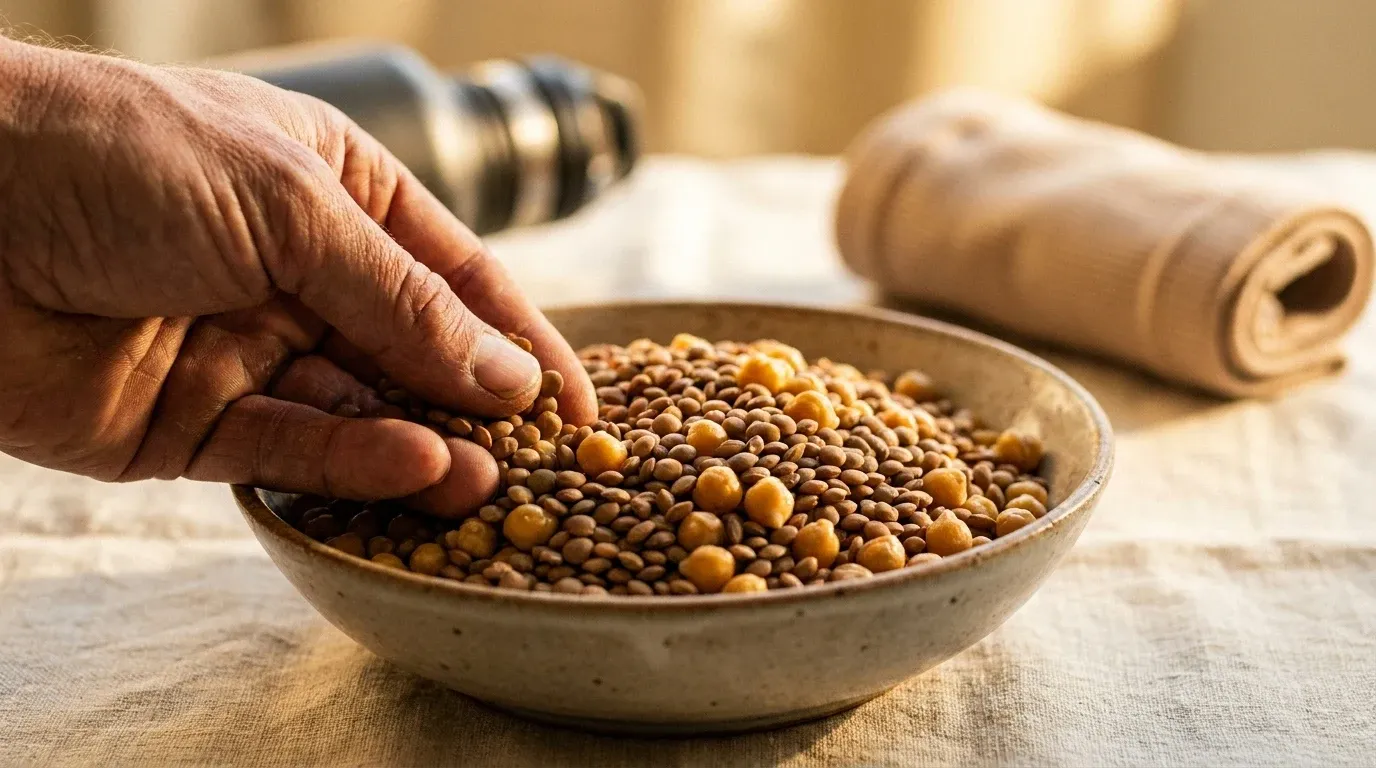
- Lentils: Around 15 grams of fiber per cooked cup, with a solid protein contribution and a low glycemic response. They're inexpensive, easy to batch cook, and work in everything from soups to grain bowls.
- Oats: About 4 grams of fiber per half-cup dry, including beta-glucan, a soluble fiber with well-documented anti-inflammatory and cholesterol-modulating properties. They're a practical pre-training carbohydrate when eaten a few hours before exercise.
- Chia seeds: Nearly 10 grams of fiber per ounce, mostly soluble. They're calorie-efficient relative to their fiber yield and blend easily into smoothies, yogurt, or overnight oats without affecting flavor.
- Skin-on produce: Much of the fiber in apples, potatoes, cucumbers, and similar foods sits in or just beneath the skin. The Parts of Produce You Throw Away Are the Most Nutritious makes the case clearly. Peeling your produce isn't a neutral habit. It's leaving fiber and micronutrients in the trash.
- Legumes broadly: Black beans, chickpeas, edamame, and kidney beans all deliver 10 to 15 grams of fiber per cup alongside meaningful protein. They're one of the most calorie-efficient fiber sources available.
- Berries: Raspberries and blackberries contain around 8 grams of fiber per cup. They're antioxidant-dense, low in sugar relative to other fruits, and easy to add to meals without displacing protein.
These foods aren't obscure or expensive. They're accessible in most grocery stores globally and can be incorporated without overhauling your existing diet structure. The goal isn't to replace your protein strategy. It's to build fiber into what you're already eating.
Timing Your Fiber Intake Around Training
This is where a lot of athletes go wrong when they do start paying attention to fiber. They recognize the gap, increase their intake abruptly, and then eat a large fiber-dense meal one to two hours before a hard session. The result is bloating, cramping, and GI distress that makes training miserable.
Fiber, particularly soluble fiber, slows gastric emptying and draws water into the digestive tract. That's beneficial across the day, but it's disruptive right before intense output. High-fiber foods need time to clear the upper GI tract before you're asking your body to redirect blood flow to working muscles.
The practical approach is distribution. Spread your fiber across breakfast, lunch, and an evening meal rather than front-loading or concentrating it. If your training is in the morning, make your highest-fiber meals dinner and an earlier lunch. If you train in the late afternoon, a moderate-fiber breakfast and a lighter pre-training meal with easily digestible carbohydrates gives your gut time to do its work without interfering with performance.
When you're significantly increasing fiber intake from a low baseline, increase gradually over two to three weeks. Your microbiome needs time to adapt to a higher fermentation load. Going from 10 grams to 35 grams overnight will cause discomfort. Going from 10 to 18 to 26 to 35 over several weeks usually doesn't.
Supplementation as a Bridge, Not a Shortcut
Whole food sources should be the primary vehicle for closing your fiber gap. But fiber supplements, primarily psyllium husk, partially hydrolyzed guar gum, and inulin-based products, can be useful for athletes who are consistently falling short and need a practical bridge.
Psyllium husk is the most studied and tends to be the most tolerable. One tablespoon mixed into water or added to a smoothie provides around 5 grams of soluble fiber with minimal caloric cost. It's not a replacement for the micronutrients and phytochemicals in whole foods, but it's a reasonable tool when your intake is chronically low and food-based solutions aren't consistently happening.
The same logic applies to athletic performance broadly. Supplementation fills gaps. It doesn't replace fundamentals. If you're focused on optimizing your training stimulus, How Hard Should You Actually Train at the Gym? addresses how to calibrate intensity, but intensity only produces results if your recovery environment, including gut health and inflammation management, supports adaptation.
The Bottom Line on Fiber and Performance
Fiber isn't a trendy nutrient. It doesn't come with the marketing budget of protein powder or the mystique of creatine. But the evidence connecting it to inflammation, gut microbiome health, joint comfort, and recovery quality is substantial and growing.
If you're eating a performance-focused diet and you haven't audited your fiber intake, there's a reasonable chance you're running a deficit that's quietly working against you. The fix isn't complicated. It's lentils in your lunch, skin on your produce, chia seeds in your morning oats, and a gradual, deliberate increase that your gut can actually tolerate.
Close the gap, and the gains you're already working hard for become easier to hold onto.