
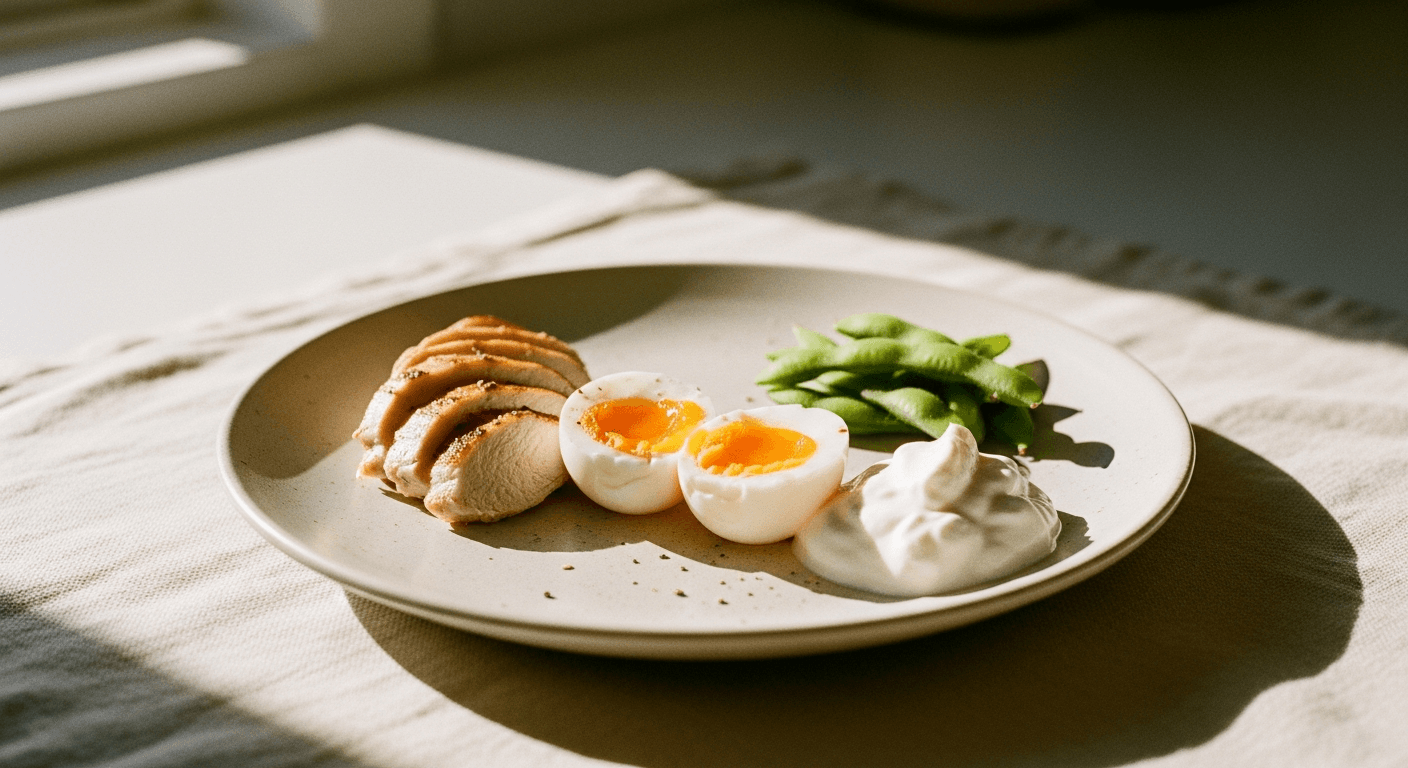
GLP-1 receptor agonists like semaglutide and tirzepatide are delivering real, significant weight loss for millions of people. But there's a catch that doesn't get nearly enough attention: when you eat dramatically less, your body doesn't just lose fat. It loses muscle too. And for most GLP-1 users eating on appetite alone, the muscle loss is substantial enough to matter long-term.
The good news is that this is largely preventable. With a structured approach to protein intake, meal timing, and resistance training, you can protect the lean mass that makes your metabolism work and your body function well. Here's exactly how to do it.
Why GLP-1 Users Are Losing More Muscle Than They Realize
Studies on GLP-1 therapies consistently show that between 25% and 40% of total weight lost comes from lean mass rather than fat. That's a significant proportion, and it's driven less by the medication itself than by the severe caloric restriction that follows appetite suppression.
When your hunger signals are blunted, it's easy to eat 1,200 to 1,400 calories a day without much effort. The problem is that most people at that intake level are falling 40 to 60 grams short of their daily protein needs without realizing it. At 60 to 80 grams of protein per day, your body doesn't have the raw material to maintain muscle tissue, so it breaks it down for fuel instead.
This matters beyond aesthetics. Muscle mass is directly linked to metabolic rate, insulin sensitivity, bone density, and long-term mobility. Losing it during weight loss creates a harder road back, especially if you eventually reduce or stop GLP-1 therapy.
How Much Protein You Actually Need on GLP-1 Therapy
The standard recommendation of 0.8 grams of protein per kilogram of body weight was never designed for people in a significant caloric deficit. For GLP-1 users, current clinical guidance points to a higher target: 1.2 to 1.6 grams per kilogram of body weight, or roughly 100 to 140 grams per day for most adults.
If you weigh 180 pounds (82 kg), that puts your target around 100 to 130 grams of protein daily. If you weigh 220 pounds (100 kg), you're looking at 120 to 160 grams. These numbers feel challenging when you're not hungry. That's exactly why protein has to become a deliberate, strategic priority rather than something you get to after everything else.
The practical starting point: set a protein target before you set a calorie target. Build your meals around protein first, then fill remaining calories with carbohydrates and fats based on your energy needs and preferences.
Protein Distribution Matters More Than You Think
Here's something that changes the strategy significantly. Research consistently shows that spreading protein across three to four meals produces better muscle protein synthesis than consuming the same total amount in one or two large sittings. This is especially true when total daily protein is already low, which is the reality for most GLP-1 users.
Your muscles can only use so much protein at once for synthesis. A 60-gram protein dinner doesn't do twice the work of a 30-gram one. The excess gets oxidized for energy rather than used to build or maintain tissue. Hitting 30 to 40 grams of protein at breakfast, lunch, and dinner, with a protein-focused snack if needed, keeps muscle protein synthesis elevated across the day.
This is one reason why skipping breakfast or eating a very light first meal creates problems on GLP-1 therapy. If you're already eating less overall, compressing your protein into fewer meals compounds the deficit at the cellular level.
Leucine-Rich Foods: The Non-Negotiable Priority
Not all protein triggers muscle protein synthesis equally. Leucine, one of the three branched-chain amino acids, acts as the primary signal that tells your muscles to start building. Foods high in leucine are particularly valuable when total protein intake is constrained.
The best leucine-rich sources available to most people include:
- Chicken breast and turkey: around 2.5 to 3 grams of leucine per 150-gram serving
- Canned tuna and salmon: practical, affordable, and easy to portion
- Eggs and egg whites: highly bioavailable and easy to prepare in small amounts
- Greek yogurt and cottage cheese: high protein density with a manageable volume, which matters when appetite is suppressed
- Whey protein: the highest leucine concentration of any protein source, making it particularly useful when full meals feel difficult
- Edamame and firm tofu: strong options for plant-based eaters, though you'll need higher quantities to match leucine from animal sources
Protein shakes aren't optional extras for GLP-1 users. They're a practical tool for hitting targets when a 6-ounce chicken breast feels like too much food. A single whey shake can deliver 25 to 30 grams of high-quality protein in a few hundred calories and a small volume that most people on GLP-1 therapy can tolerate well.
Resistance Training: The Other Half of the Equation
Protein alone won't fully protect your muscle. The stimulus to retain lean mass has to come from somewhere, and on a significant caloric deficit, that signal needs to be resistance training. Current clinical guidance suggests that combining adequate protein with consistent strength training can offset up to 80% of the lean mass loss associated with GLP-1-driven weight reduction.
That's a number worth taking seriously. It means most of the muscle loss that GLP-1 users experience isn't inevitable. It's a result of not training and not eating enough protein. The medication creates the conditions; your choices determine the outcome.
This is exactly why strength training has become the top fitness goal of 2026 across demographics that include GLP-1 users specifically. The shift reflects a growing understanding that weight loss and muscle preservation are separate problems requiring separate solutions.
For most people, two to three resistance training sessions per week is enough to provide the anabolic stimulus needed to preserve lean mass. You don't need to train every day. You do need to lift with sufficient intensity, meaning weights that challenge you in the eight to fifteen repetition range rather than very light loads for high reps.
If you're new to resistance training or returning after a break, easing back into training progressively is essential to avoid injury, particularly when your calorie intake is lower and recovery capacity is reduced.
A 1,400-Calorie Day With 130 Grams of Protein
Here's what a practical GLP-1-compatible day of eating looks like when protein is the priority. This template is built around 1,400 calories, which is a realistic intake for many GLP-1 users, with 130 grams of protein distributed across four eating occasions.
Breakfast (approximately 350 calories, 35g protein)
- 3 whole eggs scrambled with one additional egg white
- Half a cup of low-fat cottage cheese on the side
- Black coffee or tea
Lunch (approximately 400 calories, 40g protein)
- 150g canned tuna or grilled chicken breast
- Large leafy green salad with olive oil and lemon
- Half a cup of chickpeas for fiber and additional protein
Afternoon snack (approximately 200 calories, 25g protein)
- One whey or casein protein shake mixed with water
- A small handful of almonds (about 15 pieces)
Dinner (approximately 450 calories, 30g protein)
- 150g salmon fillet or lean beef
- One cup of roasted vegetables (broccoli, zucchini, bell pepper)
- Half a cup of cooked quinoa
This structure keeps protein high without requiring large meal volumes, which is critical when appetite suppression is significant. Each eating occasion provides enough leucine to trigger muscle protein synthesis, and the overall calorie level aligns with what many GLP-1 users are naturally consuming.
Women on GLP-1 therapy should note that the protein targets and training principles here apply equally regardless of gender. Evidence from over 126 studies confirms that women respond to strength training programming in the same way men do, and the same protein-per-kilogram guidelines apply across sexes.
Supplements Worth Considering
Beyond protein powder, two supplements have meaningful evidence behind them for GLP-1 users specifically focused on muscle preservation.
Creatine monohydrate has the strongest evidence base of any legal ergogenic aid. At three to five grams per day, it supports strength output during resistance training and has emerging evidence for protecting lean mass during caloric restriction. It's inexpensive and well-tolerated by most people.
Vitamin D and calcium are worth monitoring on a reduced calorie diet. GLP-1 users eating 1,200 to 1,400 calories daily often fall short on micronutrients, and both vitamin D and calcium play a direct role in muscle function and bone density. A standard multivitamin plus a dedicated vitamin D supplement covers most gaps.
For older adults on GLP-1 therapy, the muscle preservation strategy becomes even more critical. The dietary choices you make after 45 have compounding effects on longevity and physical function, and losing significant lean mass during a GLP-1 course can accelerate the natural age-related decline that begins in that decade.
The Mindset Shift That Makes This Work
GLP-1 therapy gives you a powerful tool for reducing caloric intake. But the medication doesn't know the difference between fat and muscle. That distinction is your job, and it requires treating protein as a non-negotiable daily target rather than an afterthought.
Think of your protein goal the same way you'd think of a medication dose. It's not optional, it doesn't get skipped when you're not hungry, and the consequences of missing it accumulate over time. Build meals around protein first. Use shakes when whole food feels like too much. Train with weights consistently. And track your intake, at least for the first few weeks, so you understand where your baseline actually sits.
The people who come out of GLP-1 therapy lighter and stronger are the ones who treat nutrition and training as active strategies, not passive side effects of appetite suppression. That outcome is available to you. It just requires building the system now, before the deficit does the damage.