
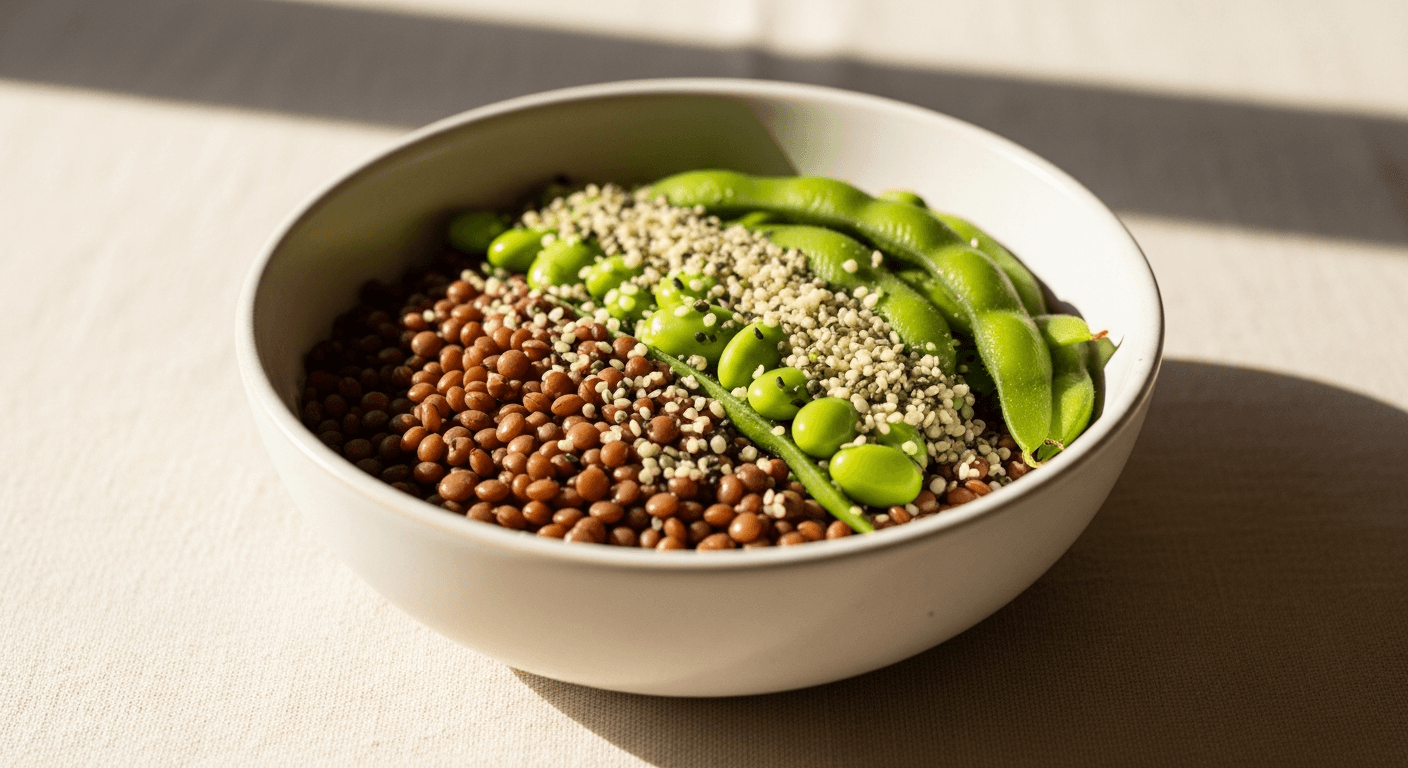
Protein is having a cultural moment. As strength training became the top fitness goal of 2026, daily protein targets climbed with it. You'll find 40-gram shakes, carnivore-adjacent meal plans, and endless debates about grams per kilogram flooding every fitness feed. What you won't find as often is an honest conversation about what all that protein is doing to your gut.
The short answer: it depends entirely on how you're eating it. The longer answer is what this piece is about.
The Microbiome Doesn't Care About Your Macros. It Cares About What You Feed It.
Your gut microbiome is a community of trillions of bacteria, fungi, and other microorganisms that regulate digestion, immune function, inflammation, and even mood. What you eat directly shapes which species thrive and which die off. High protein intake, on its own, isn't inherently harmful. But the context around it almost always is.
When animal protein intake rises and fiber intake stays low, research consistently shows a shift in gut microbiome composition toward bacteria that produce pro-inflammatory compounds. One mechanism involves the fermentation of undigested protein in the colon. When carbohydrates and fiber aren't available as the primary fuel source, gut bacteria switch to fermenting amino acids instead. This process produces metabolites including hydrogen sulfide, ammonia, and p-cresol. At high concentrations, these compounds are associated with increased gut permeability and systemic inflammation.
A study published in Gut Microbes found that diets high in red and processed meat were linked to reduced populations of Bifidobacterium and Lactobacillus, two genera associated with intestinal barrier integrity and anti-inflammatory activity. Critically, participants consuming similar protein loads from mixed sources with adequate fiber did not show the same shifts. Total protein wasn't the problem. Source and fiber context were.
Plant Proteins Do Something Animal Proteins Don't
Here's where the picture gets interesting. Plant-based protein sources, including legumes, lentils, edamame, hemp seeds, and whole grains, don't just deliver amino acids. They bring prebiotic fiber along for the ride. That fiber feeds beneficial bacteria, supports short-chain fatty acid (SCFA) production, and reinforces the gut lining. You're essentially building muscle and feeding your microbiome with the same meal.
Legumes are the clearest example. A cup of cooked lentils provides roughly 18 grams of protein and 16 grams of fiber. Chickpeas deliver about 15 grams of protein per cup alongside 13 grams of fiber. These aren't just adequate protein sources. For gut health, they're genuinely superior vehicles, particularly when animal protein intake is already high.
The concern most people raise about plant proteins is amino acid completeness. It's a legitimate point. Most plant sources are limiting in at least one essential amino acid. But this becomes irrelevant across a day of varied eating. Combining legumes with grains, seeds, or even a moderate portion of animal protein across meals covers all essential amino acids without forcing you into an all-or-nothing choice.
For women navigating muscle building later in life, this balance matters enormously. As research on dietary improvements after 45 shows, protein quality and dietary variety are both independent predictors of long-term health outcomes. Optimizing one at the expense of the other is a trade-off you don't actually have to make.
Timing and Variety: The Two Variables Most Protein Advice Ignores
The dominant conversation around protein centers on total daily intake. Hit your number, job done. But your gut microbiome responds to patterns across time, not just daily totals. Monotony is a problem. Eating the same protein sources every day, particularly animal-heavy ones, reduces microbial diversity even when calories and macros look fine on paper.
Microbial diversity is consistently identified in the literature as a marker of gut resilience. A less diverse microbiome is more susceptible to dysbiosis, less effective at producing SCFAs, and associated with higher systemic inflammation. Rotating your protein sources, alternating between chicken, fish, eggs, legumes, tofu, and dairy, introduces different substrates that support different bacterial populations.
Timing plays a role too, though not in the way protein-timing folklore usually suggests. The question isn't whether you eat protein within 30 minutes of training. It's whether your protein loads are distributed in a way that doesn't overwhelm your digestive capacity at any single sitting. Research suggests the gut can absorb and utilize around 25 to 40 grams of protein per meal efficiently, with the upper end applying to larger individuals with high muscle mass. Consistently eating 70 to 80 grams in a single meal doesn't double the benefit. It increases the amount of undigested protein reaching the colon, where bacterial fermentation then becomes the issue.
Spreading protein across three to four meals throughout the day supports both muscle protein synthesis and microbiome stability. It's a convergence, not a compromise.
Practical Meal Structure: How to Protect Your Gut Without Sacrificing Your Gains
You don't need to overhaul your diet. You need to build smarter defaults into the meals you're already eating. Here's what the evidence actually supports:
- Pair high-protein meals with fermented foods. Yogurt, kefir, kimchi, sauerkraut, and miso introduce live cultures that can partially offset microbiome disruption from high animal protein loads. A 2021 study in Cell found that a high-fermented-food diet increased microbiome diversity within 10 weeks, outperforming a high-fiber intervention over the same period. Including even one fermented food per day adds meaningful benefit.
- Add fibrous vegetables to every protein-centered meal. Broccoli, artichokes, leeks, garlic, and asparagus are particularly high in prebiotic fibers that feed beneficial bacteria. These don't need to dominate the plate. A generous side serving is enough to shift the fermentation balance in the colon from protein to carbohydrate, reducing toxic metabolite production.
- Use legumes as a protein extender, not a protein replacement. If you're eating a ground beef bowl, swap half the beef for black beans. You maintain the iron and complete amino acid profile while introducing fiber and prebiotic substrate. Total protein stays similar. Gut impact changes substantially.
- Rotate your protein sources across the week. Build a weekly rotation that includes at least two to three plant-based protein sources alongside your animal proteins. Aim for a minimum of 25 to 30 grams of fiber per day. Most people eating high-protein diets are getting under 15 grams. That gap is where microbiome disruption lives.
- Don't treat protein shakes as gut-neutral. Whey and casein are highly bioavailable, but they arrive without fiber and often in large single-dose quantities. If shakes are part of your routine, blend them with a tablespoon of ground flaxseed or psyllium husk, and pair them with a piece of fruit. You're not undermining the protein. You're giving your gut something to work with.
The Bigger Picture: Strength Goals and Gut Health Aren't in Conflict
The framing that gut health is a soft wellness concern and protein is a serious performance concern is outdated. Gut health directly affects nutrient absorption, including the amino acids you're eating all that protein to get. A disrupted microbiome reduces the efficiency of protein utilization, increases systemic inflammation that interferes with recovery, and impairs the gut-brain axis in ways that affect training motivation and sleep quality.
In other words, neglecting your gut while chasing protein targets isn't a neutral choice. It's quietly working against the goal you think you're optimizing for.
This matters whether you're a 28-year-old training five days a week or someone navigating the outdated advice still circulating for women over 50. The gut-muscle connection doesn't become relevant at a certain age. It's operating in the background the entire time.
And if you're building a sustainable fitness routine, one that supports strength, longevity, and overall health, the evidence points consistently toward the same structure. More variety, more fiber, better source distribution, and fermented foods woven into daily eating. Not less protein. Smarter protein.
That's not a wellness compromise. That's what the science actually says.