
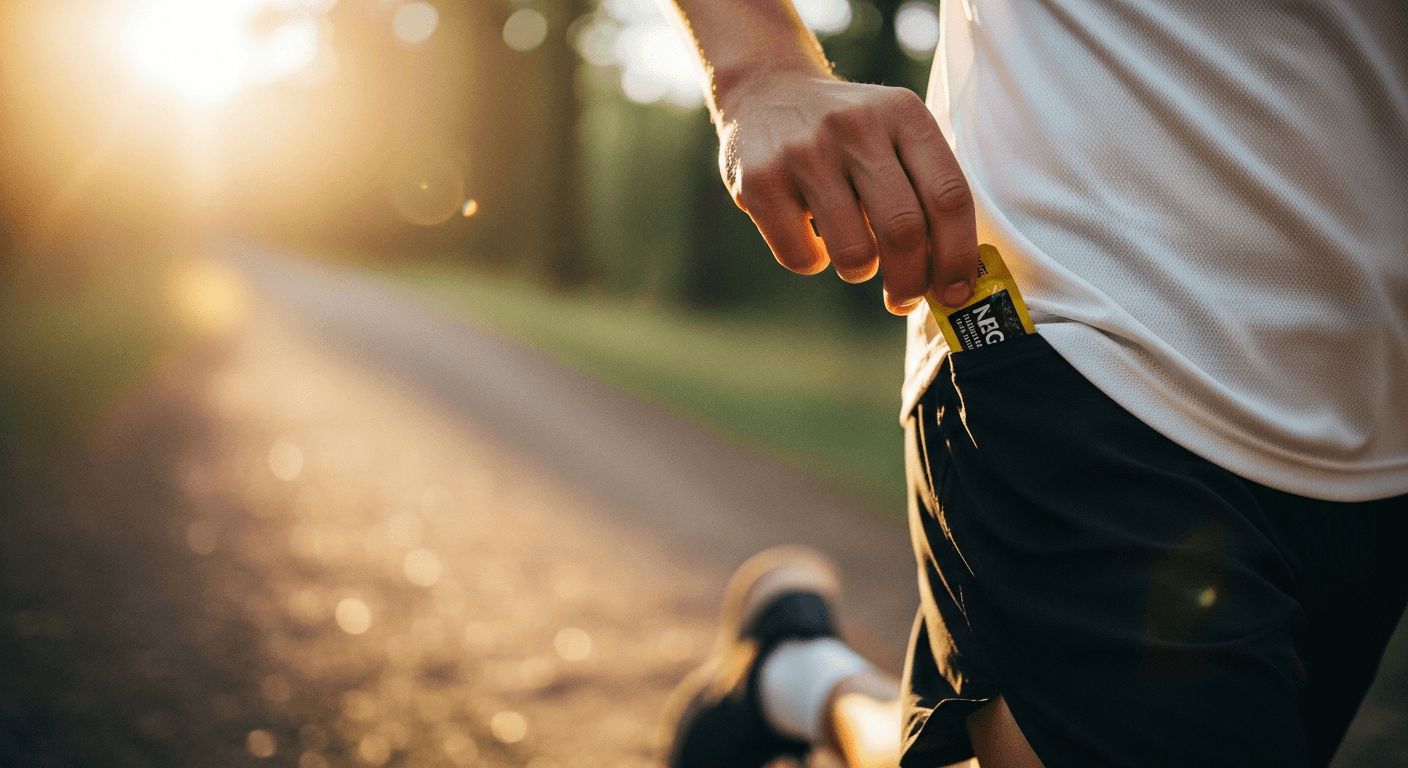
You've logged the miles, done the long rides, and nailed your taper. But on race day, your stomach turns against you. Cramping, bloating, nausea, an urgent need to stop at mile 18. GI distress is one of the most common reasons endurance athletes underperform, and it's almost entirely preventable.
The gut isn't just a passive passenger during exercise. It's a trainable system. And if you've never practiced your race-day nutrition strategy in training, you're essentially asking your digestive system to perform a task it's never rehearsed.
Why the Gut Struggles During Hard Efforts
During intense or prolonged exercise, blood is redirected away from your digestive organs toward your working muscles. That's a normal physiological response. The problem is that your gut still needs to absorb fluids, carbohydrates, and electrolytes to keep you fueled. When it's not used to doing that job under stress, things go wrong fast.
High-intensity exercise can reduce intestinal blood flow by up to 80%. Add heat, dehydration, and the mechanical impact of running, and you've created the perfect environment for GI symptoms. Research consistently shows that 30 to 50% of endurance athletes experience significant GI issues during competition, with rates climbing even higher in events lasting more than four hours.
The good news is that your intestine responds to repeated exposure. The transporters responsible for absorbing carbohydrates, specifically sodium-glucose transporters (SGLT1) and fructose transporters (GLUT5), can increase in both number and efficiency when regularly stimulated. That's the foundation of gut training.
What Gut Training Actually Means
Gut training is the systematic practice of consuming carbohydrates during exercise to improve your gastrointestinal tolerance and absorption capacity over time. It's not about eating more on race day and hoping for the best. It's about teaching your intestine to handle higher carbohydrate loads without triggering distress.
Studies have found that athletes who regularly consume carbohydrates during training see measurable increases in intestinal carbohydrate transport capacity within two to four weeks. One study showed that trained cyclists who practiced high-carbohydrate fueling (90g per hour) during long training rides reported significantly fewer GI symptoms compared to untrained controls attempting the same intake.
The mechanism works in both directions. Gut training also reduces gastric emptying time, meaning food moves from your stomach to your small intestine more efficiently. That alone can significantly cut down on the sloshing, heaviness, and nausea that many athletes associate with drinking sports beverages during hard efforts.
The 4 to 6 Week Protocol That Works
You don't need a complex plan. You need a progressive one. Here's a practical framework you can apply during your long training sessions in the final four to six weeks before your event.
Weeks 1 to 2: Establish the baseline. During your long runs or rides (sessions lasting 90 minutes or more), begin consuming 30 to 45 grams of carbohydrate per hour. A single energy gel, a handful of chews, or about 500ml of a standard sports drink will get you close. Focus on timing: take your first fuel at the 30 to 45 minute mark, not when you feel hungry. By the time hunger arrives, you're already behind.
Weeks 3 to 4: Increase the dose. Push your hourly intake to 60 grams. This is where many athletes start to feel some discomfort, which is precisely the point. That mild discomfort is your gut adapting. If you experience significant symptoms, scale back slightly and progress more gradually. The goal is consistent stimulation, not suffering through a long run doubled over.
Weeks 5 to 6: Simulate race conditions. Aim for 75 to 90 grams of carbohydrate per hour, ideally using the same products you plan to use on race day. At this intake level, using a mix of glucose and fructose sources is important. Because glucose and fructose use different transporters, combining them allows your gut to absorb more total carbohydrate per hour without overwhelming any single pathway. Many gels and sports drinks are already formulated with a 2:1 glucose-to-fructose ratio for exactly this reason.
Throughout all six weeks, practice consuming your fuel while running or riding at race effort, not during easy warmups. The gut behaves differently under intensity, and you want your training to reflect that.
What to Eat and What to Avoid
Not all carbohydrate sources behave the same way during exercise. Highly concentrated gels taken without adequate fluid can sit in your stomach and slow gastric emptying. Always wash gels down with water rather than a sports drink, unless the gel is specifically formulated as isotonic.
In the 24 to 48 hours before a long training session or race, reduce your intake of high-fiber foods, FODMAPs (fermentable carbohydrates found in foods like garlic, onion, beans, and certain fruits), and high-fat meals. These increase fermentation in the gut and can amplify symptoms during exercise. This isn't about eliminating nutritious foods from your diet long-term. It's about strategic timing.
Caffeine in gels can accelerate gastric emptying, which is useful for some athletes but can increase urgency in others. Test any caffeinated products during training before committing to them on race day.
It's also worth scrutinizing the quality of what you're putting in your body. Not all supplements and sports products are made equally, and knowing how to read a supplement label without getting fooled can help you separate products with proven formulations from those that rely on marketing rather than science.
Hydration Is Part of the Equation
Gut training isn't only about carbohydrates. Hydration status directly affects how your gut functions under exertion. Even mild dehydration (around 2% of body weight) can impair gastric emptying and worsen GI symptoms. Practicing your hydration strategy alongside your fueling strategy is essential.
For most endurance athletes, consuming 400 to 800ml of fluid per hour during exercise is a reasonable starting range, adjusted for heat, humidity, and sweat rate. If you're unsure of your sweat rate, weigh yourself before and after a one-hour training session without eating or drinking. Every kilogram of weight lost roughly equals one liter of fluid deficit.
Sodium is the key electrolyte for fluid retention and gut function. Products with 300 to 500mg of sodium per hour tend to support better fluid absorption than plain water alone during efforts beyond 60 to 90 minutes.
The Bigger Picture: Nutrition Consistency Pays Off
Gut training is a specific intervention, but it sits within a broader nutritional framework. Athletes who fuel well day to day tend to have better training adaptations, better recovery, and better race-day execution across the board. That includes adequate carbohydrate fueling, but also sufficient protein to support muscle repair and adaptation.
If you're putting in serious training volume, understanding your total nutritional needs matters. the standard protein guidelines most people follow are likely too conservative for active individuals, and underfueling in general undermines the adaptations you're working hard to earn.
Recovery between long training sessions also plays a role in how your gut responds to repeated fueling practice. Chronic fatigue and poor sleep can impair gut motility and increase intestinal permeability, making GI symptoms more likely. the most evidence-backed recovery strategies in 2026 increasingly recognize the gut-recovery connection as a genuine performance variable, not a footnote.
Putting It Together Before Race Day
Here's the key principle: never do anything on race day that you haven't already done in training. That applies to your shoes, your pacing, and especially your nutrition. If you're racing a marathon or triathlon and you've never consumed 60 grams of carbohydrate per hour while running at threshold pace, race day is not the time to find out how your stomach handles it.
Your gut can adapt, but it needs the stimulus. Four to six weeks of progressive fueling practice is enough to make a meaningful difference for most athletes. Start earlier if your event is longer than a half-ironman or marathon, or if you have a history of significant GI distress.
One more thing: the products and strategies that work best for gut training vary between individuals. Some athletes tolerate gels easily; others do better with chews or liquid carbohydrates. Some handle fructose without issue; others are more sensitive. applying a clear framework to evaluate what works versus what's overhyped can help you cut through the noise and build a fueling plan grounded in your own physiology rather than someone else's sponsored recommendation.
Your gut is trainable. Give it the work, and it'll show up ready on race day.