
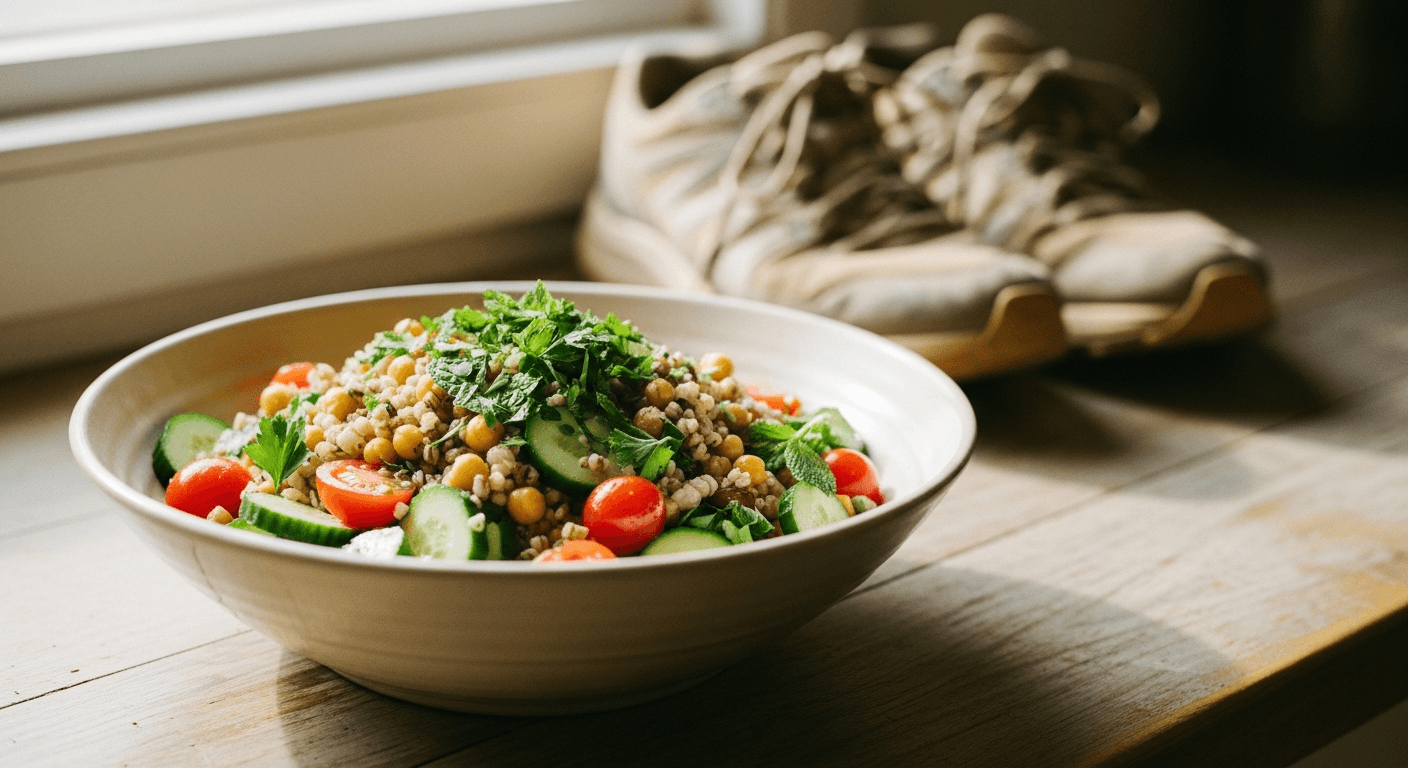
The 2026-2030 Dietary Guidelines for Americans represent the most significant shift in federal nutrition policy in decades. For the first time, the guidelines explicitly endorse a whole-diet pattern that maps closely onto Mediterranean-style eating, moving away from the old model of targeting isolated nutrients like saturated fat grams or milligrams of sodium. For athletes, this isn't a minor bureaucratic update. It's a policy-backed signal to rethink how you build your plate.
From Nutrients to Patterns: What the New DGAs Actually Say
Previous editions of the Dietary Guidelines focused heavily on individual nutrients. Reduce sodium. Hit your fiber target. Watch your saturated fat intake. The 2026-2030 edition takes a different approach, centering its recommendations around overall dietary patterns rather than nutrient-by-nutrient math.
The Mediterranean dietary pattern, characterized by high intake of vegetables, legumes, whole grains, olive oil, nuts, and omega-3-rich fish, is now recognized by the guidelines as having the strongest overall evidence base for reducing risk of cardiovascular disease, type 2 diabetes, and several cancers. These are noncommunicable diseases that, while associated with sedentary populations, also affect long-term athlete health and recovery capacity.
The practical implication is significant. Rather than asking whether you're getting enough of nutrient X, the framework now asks whether your overall eating pattern is consistent with what the evidence shows to be protective. That's a more useful question for athletes trying to optimize their diet without turning every meal into a calculation.
Why This Matters for Athletic Performance Specifically
Most sports nutrition advice has historically borrowed from clinical nutrition: protein grams per kilogram, carbohydrate timing windows, specific micronutrient targets. That approach isn't wrong, but it tends to treat food as a delivery vehicle for nutrients rather than as a complex system with additive and synergistic effects.
The Mediterranean pattern, as now acknowledged by the 2026-2030 DGAs, produces outcomes that isolated nutrient supplementation doesn't reliably replicate. For example, the anti-inflammatory effect of a diet rich in olive oil, oily fish, and colorful vegetables isn't just about omega-3 fatty acids or polyphenols in isolation. It comes from the combination, the food matrix, and the consistent pattern across meals and days.
For athletes managing high training loads, chronic low-grade inflammation is a real performance variable. Research consistently links pro-inflammatory dietary patterns, those high in ultra-processed foods, refined grains, and seed oils, with slower recovery, greater perceived soreness, and higher injury risk over time. The Mediterranean pattern works in the opposite direction, and the new guidelines give you a policy-level framework to justify prioritizing it.
It's also worth reading this alongside why the new 2025-2030 guidelines target 1.2 to 1.6 g/kg for protein intake, because the DGAs' shift toward pattern-based thinking doesn't eliminate protein considerations for athletes. It situates them within a broader food quality context.
The Core Foods: What to Actually Eat More Of
The Mediterranean pattern emphasized in the new guidelines isn't complicated, but it does require some deliberate substitutions if you're coming from a typical Western diet. Here's what the evidence, and now the federal guidelines, points toward for athletes:
- Olive oil as your primary fat source. Extra-virgin olive oil is rich in oleic acid and polyphenols with documented anti-inflammatory effects. It replaces butter, refined vegetable oils, and processed spreads as your go-to cooking fat.
- Legumes several times per week. Lentils, chickpeas, black beans, and white beans provide a combination of plant protein, complex carbohydrates, and fermentable fiber that supports both muscle fueling and gut health. The fiber component matters more than most athletes realize.
- Whole grains over refined grains. Oats, farro, barley, quinoa, and whole wheat provide more sustained glycemic response and more micronutrient density than white bread or white rice. For endurance athletes, this doesn't mean avoiding higher-GI carbohydrates around training. It means making whole grains your baseline.
- Oily fish two to three times per week. Sardines, mackerel, salmon, and anchovies deliver EPA and DHA at levels that meaningfully affect inflammation markers. Supplemental fish oil works, but the whole-food source comes with additional nutrients the supplement doesn't.
- Vegetables and fruit as volume foods. Not as sides, but as structural components of most meals. The Mediterranean pattern is not a low-carbohydrate approach. Vegetables provide carbohydrate, fiber, polyphenols, and hydration simultaneously.
- Nuts and seeds daily. Walnuts, almonds, and pumpkin seeds add healthy fats, protein, and minerals like magnesium and zinc that are commonly depleted in athletes with high sweat rates.
What you're eating less of under this framework: ultra-processed foods, refined sugars, engineered protein bars as staples, and fast food as a recovery strategy. None of this is new. What's new is that federal nutrition policy now says the same thing in plain terms.
Meal Timing and the Mediterranean Pattern: How They Interact
One area where the Mediterranean approach requires some athlete-specific adaptation is meal timing. Traditional Mediterranean eating involves larger midday meals and lighter evening meals, a pattern that doesn't always map cleanly onto two-a-day training schedules or early morning competition.
The good news is that the pattern-centric approach of the new DGAs doesn't mandate rigid meal timing. It prioritizes food quality and overall pattern consistency. That means you can apply Mediterranean principles around your training schedule without restructuring your entire day.
Pre-training, a meal anchored by whole grains, a modest amount of lean protein, and a small amount of healthy fat gives you sustained energy without the glycemic spike and crash of refined-carbohydrate alternatives. Post-training, a combination of high-quality protein, legumes or whole grains, and olive oil-dressed vegetables hits both the recovery macronutrient requirements and the anti-inflammatory food quality targets simultaneously.
If you're training for endurance events specifically, the interaction between carbohydrate availability and Mediterranean-style eating needs more nuance. the complete guide to long-duration sports nutrition covers how to maintain adequate glycogen stores while staying consistent with whole-food eating patterns across multi-hour sessions.
For athletes interested in how meal timing affects muscle protein synthesis specifically, the evidence on anabolic windows has also been updated. protein timing and the anabolic window breaks down what the current research actually supports versus what's marketing.
The Gut Health Connection You Shouldn't Ignore
One reason the Mediterranean pattern produces outcomes that isolated supplementation doesn't is its effect on the gut microbiome. A diet rich in diverse plant foods, fermentable fibers from legumes and whole grains, and polyphenols from olive oil and vegetables consistently produces a more diverse and metabolically active gut microbiome in clinical research.
For athletes, gut microbiome diversity is increasingly linked to training adaptation, immune function, and even mood stability during high-load training blocks. This isn't fringe science anymore. gut health and athletic performance research has matured significantly, and the Mediterranean diet's fiber diversity is one of the strongest dietary levers you have for supporting it.
The 2026-2030 DGAs acknowledge the microbiome evidence base more directly than any prior edition, which is another sign that pattern-based, fiber-rich eating is no longer being positioned as an optional lifestyle preference. It's part of the core evidence on health maintenance.
What to Do With Protein Supplements Under This Framework
The shift toward whole-food dietary patterns doesn't mean protein supplements are useless. It means they're repositioned as supplements in the literal sense: additions to a diet that's already providing quality protein through food.
Whole-food protein sources consistent with Mediterranean eating include fish, legumes, eggs, Greek yogurt, and modest amounts of lean poultry. These sources come with additional nutrients, fiber in the case of legumes, and bioactive compounds that whey isolate doesn't provide. If you're hitting your protein targets through food first, a supplement post-training is a tool, not a foundation.
Where athletes tend to get this wrong is substituting protein bars and shakes for actual meals during busy training periods. Under the new DGA framework, that's exactly the kind of shift away from food quality that undermines the pattern-level benefits the guidelines are now pointing toward.
The Broader Picture: Performance and Longevity Together
One of the most useful things about the new DGAs' alignment with Mediterranean eating is that it closes the gap between performance nutrition and long-term health nutrition. Previously, athletes could feel justified in eating in ways that optimized short-term output but created long-term risk. High processed-food intake, low vegetable diversity, heavy reliance on engineered products.
The Mediterranean pattern, now backed by both the strongest evidence base in dietary research and the 2026-2030 federal guidelines, gives you a framework where the food that protects your cardiovascular system, supports your gut microbiome, and reduces chronic inflammation is also the food that fuels your training and supports your recovery. That alignment is what makes the policy shift genuinely useful rather than just symbolically interesting.
You don't need to eat every meal in perfect Mediterranean style to benefit. The evidence supports consistent pattern adherence, not perfection. Start with the substitutions that are easiest for your schedule and training load, build from there, and let the food quality compound over time the same way training does.
If you're tracking how nutrition science as a whole is shifting in 2026, the key nutrition lessons from April 2026 offers a useful broader context for where the evidence is moving beyond just the DGAs.