
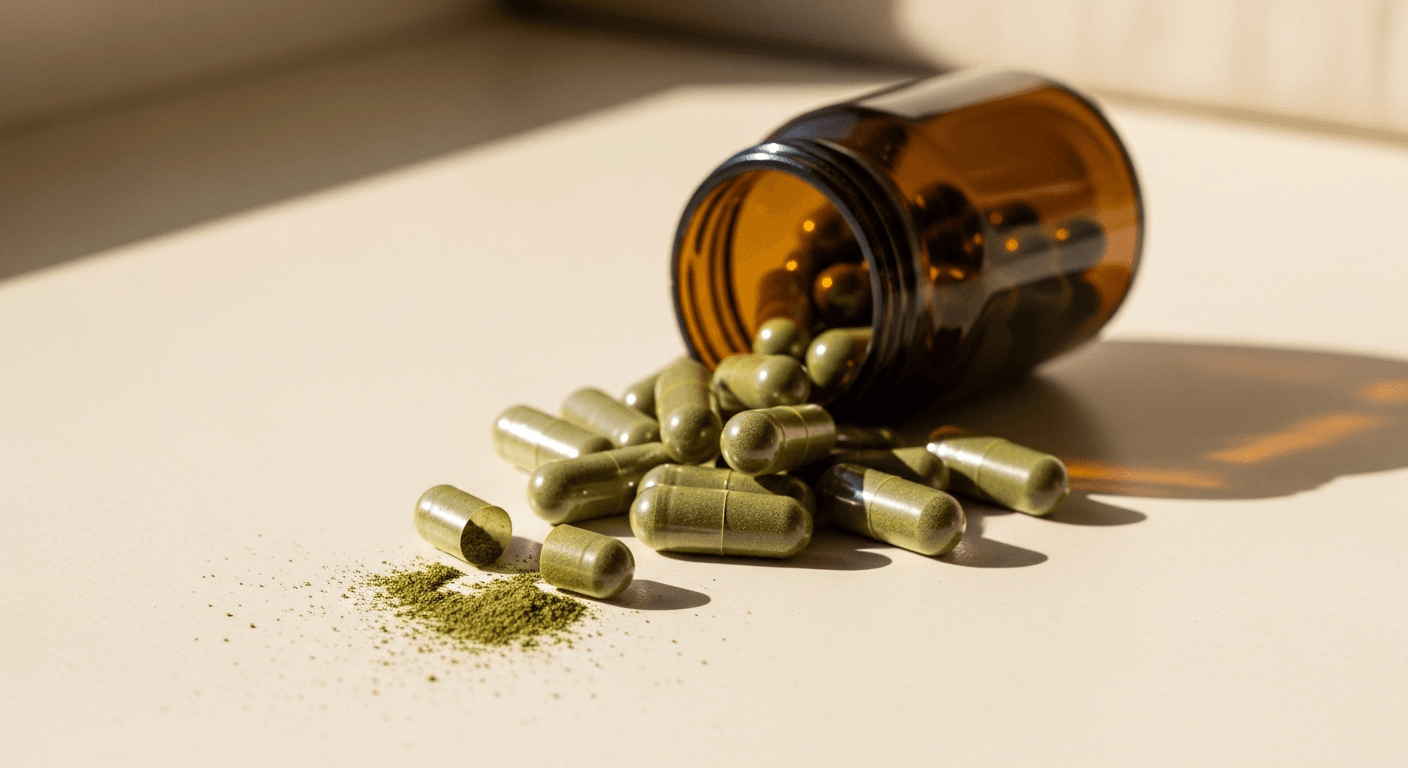
If you've been taking moringa capsules in 2026, stop and read this first. A confirmed Salmonella contamination risk has triggered a federal recall, and the investigation behind it just got significantly larger.
This isn't a precautionary alert. People have gotten sick. Here's everything you need to know right now.
The Recall: What Was Pulled and Why
On May 26, 2026, Total Nutrition Inc. issued a voluntary recall of moringa capsules sold under two brand names: Tnvitamins and Doctor's Pride. The recall was triggered by confirmed risk of Salmonella contamination in the moringa leaf powder used to manufacture both products.
Salmonella is a bacterial pathogen that causes salmonellosis, characterized by diarrhea, fever, abdominal cramps, and vomiting. Symptoms typically appear six hours to six days after exposure and last four to seven days. For most healthy adults, the illness resolves without medical treatment. For young children, older adults, pregnant women, and people with weakened immune systems, it can become life-threatening.
The recalled products were distributed nationally and are likely still sitting in medicine cabinets and supplement drawers across the US, UK, Canada, and Australia. If you purchased any moringa capsule product in 2026, you need to verify your lot number against the FDA recall database immediately at fda.gov/safety/recalls-market-withdrawals-safety-alerts.
22 New Illnesses: Why the Investigation Was Reopened
The FDA and CDC first opened a multi-state investigation into moringa-linked Salmonella cases in January 2026. That investigation was paused. It has now been formally reopened after 22 new illnesses were reported across multiple states, bringing the case count to a level that regulators no longer consider isolated or coincidental.
Multi-state Salmonella investigations typically involve epidemiological interviews, product sample testing, and supply chain tracing. When the FDA and CDC work jointly on a case like this, it signals that the contamination source is likely tied to a widely distributed product rather than a single retail location or regional batch.
The fact that illnesses continued to emerge after the initial investigation suggests the contaminated supply chain remained active. That's a significant concern for anyone who purchased moringa products during the first half of 2026.
What to Check Right Now
Here's the immediate action list if you or someone in your household uses moringa supplements:
- Stop using any moringa capsule product purchased in 2026 until you've verified it against the recall list.
- Check the lot number on your bottle. Lot numbers are typically printed on the bottom of the bottle or along the side label seam. Cross-reference it with the FDA's official recall notice for Total Nutrition Inc.
- Do not flush or throw away recalled products before documenting them. Take a photo of the lot number and packaging. If you became ill, that documentation matters.
- Contact the retailer where you purchased the product. Most retailers are required to issue refunds on recalled items.
- Report illness to the FDA via MedWatch (fda.gov/safety/medwatch) or by calling 1-800-FDA-1088. Report to the CDC through your state health department.
- See a doctor if you've experienced diarrhea, fever, or gastrointestinal symptoms in recent weeks and were taking moringa capsules.
If you're using moringa leaf powder in loose form rather than capsules, the same caution applies. The suspected contamination vector in this investigation is imported moringa leaf powder itself, not the capsule manufacturing process. Any moringa powder product from an unverified source purchased this year warrants scrutiny.
The Supply Chain Problem Behind This Recall
Moringa oleifera is primarily grown in South Asia, sub-Saharan Africa, and parts of Latin America. Most moringa leaf powder sold in the US is imported, often processed and packaged under contract before being rebranded by domestic supplement companies.
This supply chain model creates transparency gaps. When a finished product is recalled, tracing the contamination back to a specific farm, processing facility, or transit point is extraordinarily difficult. The FDA's investigation into this case reflects exactly that challenge.
The supplement industry in the US operates under the Dietary Supplement Health and Education Act (DSHEA) of 1994, which does not require manufacturers to prove their products are safe or effective before bringing them to market. The FDA can only act after a problem is identified. That regulatory gap is why recalls are reactive rather than preventive.
This is directly relevant to how you evaluate any supplement going forward. The question isn't just whether a product works. It's whether the company behind it can trace every ingredient in it. Most can't, or won't.
What Third-Party Testing Actually Means
The phrase "third-party tested" appears on supplement labels with increasing frequency, but it doesn't mean the same thing across the board. There are meaningful differences between certification bodies, and those differences matter in a contamination context.
The most rigorous independent certifications for supplements sold in the US and globally include NSF International, USP (United States Pharmacopeia), and Informed Sport. These organizations test for contaminants including heavy metals, pesticides, and pathogens. A product certified by one of these bodies has undergone testing that a standard manufacturer self-audit doesn't come close to matching.
The moringa products named in this recall did not carry these certifications. That's not a coincidence. It's a pattern that repeats across most supplement safety incidents. When you're evaluating a supplement, third-party certification isn't a bonus feature. It's a baseline requirement for any product you're going to ingest regularly.
For a broader look at how supply chain transparency intersects with what actually ends up in your body, your gut microbiome's response to environmental pollutants is worth understanding, particularly if you're consuming products with unclear sourcing.
What the Evidence Actually Says About Moringa
This recall doesn't erase the research on moringa, but it's worth separating the marketing from the science.
Moringa oleifera leaf has a legitimate nutritional profile. It contains meaningful concentrations of vitamin C, vitamin A, calcium, potassium, and protein relative to its dry weight. Several human trials have examined its potential effects on blood glucose regulation, inflammation markers, and lipid profiles, with modest but real signals in some populations.
What it doesn't have is robust evidence supporting the dramatic wellness claims that dominate its marketing. Phrases like "superfood," "miracle tree," and "complete nutrition" are not supported by the current clinical evidence base. The studies that exist are small, often short-term, and not consistently replicated.
If you've been taking moringa for general wellness reasons, the honest answer is that the benefit evidence is thin. If you've been taking it for a specific, clinically-relevant reason under medical guidance, that conversation is worth revisiting with your doctor in light of this recall. For evidence-based approaches to supplementation that have a stronger safety and efficacy track record, the science on probiotics for athletes offers a useful contrast in how to evaluate supplement claims rigorously.
The Broader Lesson: "Natural" Is Not a Safety Guarantee
This incident follows a familiar script. A plant-based supplement marketed as natural, clean, and free of synthetics turns out to carry a bacterial contamination risk precisely because of how and where it was grown and processed.
Salmonella is not introduced in a lab. It's a naturally occurring pathogen. It thrives in soil, in water, and in the kind of agricultural and processing environments that produce raw plant materials. "Natural" describes an origin. It says nothing about safety, purity, or quality control.
This applies across the supplement category. It applies to protein powders, herbal capsules, greens blends, and every other product that starts as a raw agricultural material and ends up on a shelf. The supply chain between those two points is where contamination happens, and it's where most supplement companies offer the least transparency.
The same critical thinking that makes you question a highly processed food label should apply when you're reading a supplement ingredient list. If you'd like a sharper framework for evaluating nutrition products without getting lost in marketing language, the shift toward personalized nutrition backed by blood biomarkers is one direction the industry is moving toward accountability.
And if you're reassessing your entire supplement stack in light of this, it's also worth applying that same rigor to the rest of your health routine. Complicated isn't better, in supplementation or in training. Science consistently points toward simpler approaches producing better results, and the same principle holds when you're deciding what to put in your body.
The Short Version
- Total Nutrition Inc. recalled Tnvitamins and Doctor's Pride moringa capsules on May 26, 2026.
- The recall is linked to confirmed Salmonella contamination risk in imported moringa leaf powder.
- 22 new illnesses prompted the FDA and CDC to reopen a multi-state investigation first opened in January 2026.
- Check your lot numbers at fda.gov. Stop use immediately if your product matches the recall.
- See a doctor if you've had recent gastrointestinal symptoms and were taking moringa.
- Only purchase supplements with verified third-party certifications from NSF, USP, or Informed Sport.
- "Natural" and "safe" are not synonyms. Supply chain transparency is what actually matters.