
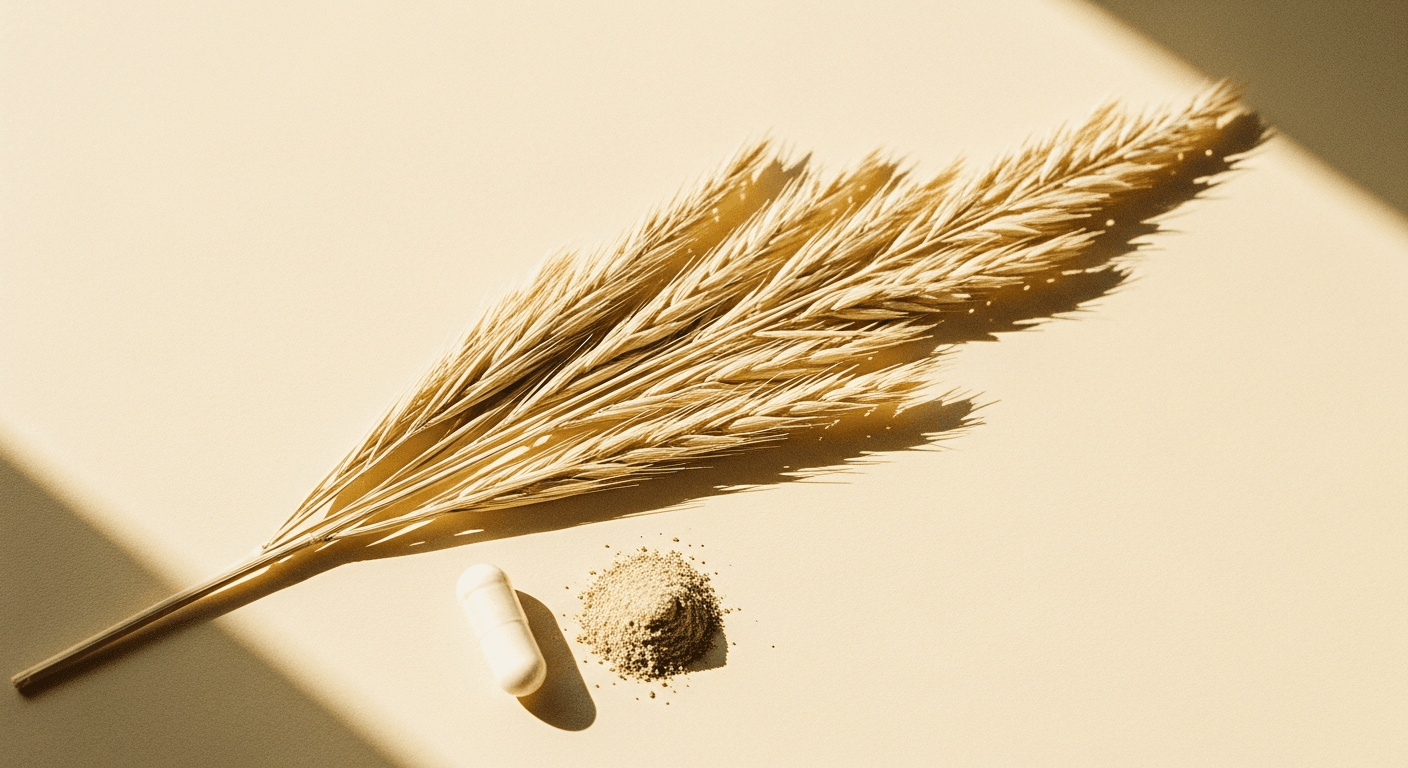
A new randomized controlled trial published in Taiwan on April 30, 2026 found that supplementation with napiergrass extract led to measurable improvements in hand grip strength among participants. If you follow sports nutrition research, that sentence probably raised an eyebrow. Napiergrass is not an ingredient you'll find on the shelves at your local supplement retailer. Until now, it hasn't had much credible clinical data behind it. That changes with this study.
Here's what the research actually shows, why hand grip strength matters more than you might think, and what you should realistically expect if this ingredient eventually makes it into mainstream products.
What Is Napiergrass, Exactly?
Napiergrass (Pennisetum purpureum) is a fast-growing tropical grass native to sub-Saharan Africa. It's been used historically as livestock fodder and, in some traditional medicine systems, as a plant with anti-inflammatory and antioxidant properties. It's also being studied as a biofuel crop. Its role in human health, let alone sports nutrition, has been essentially unexplored at the clinical level.
The extract used in this trial is derived from the plant's leaves and stems, where researchers have identified a profile of phenolic compounds, flavonoids, and other phytochemicals. These are the kinds of bioactives that, in other plant extracts, have been associated with reducing oxidative stress and supporting muscle recovery. The mechanism isn't fully established in humans yet, but the working hypothesis is that napiergrass extract may reduce inflammation-driven muscle degradation and support contractile function over time.
What the RCT Actually Found
The trial was a double-blind, placebo-controlled randomized study. Participants were divided into groups receiving either the napiergrass extract or a placebo over a set supplementation period. The primary outcome measured was hand grip strength, assessed using a calibrated dynamometer. The extract group showed statistically significant improvements in grip strength compared to the placebo group by the end of the intervention.
Secondary outcomes varied, and the researchers noted that the improvements were most consistent in participants who were not already strength-trained. That's an important detail. It suggests the extract may offer more benefit to those with lower baseline muscular function, such as older adults, sedentary individuals, or people returning from injury, rather than competitive athletes already operating near their strength ceiling.
This aligns with a broader conversation in exercise science about whether additional inputs provide diminishing returns the fitter you already are. If you want context on that dynamic, Is There a Ceiling to How Much Exercise Actually Helps? covers the underlying physiology in detail.
Why Hand Grip Strength Is Worth Taking Seriously
If your first reaction is that grip strength sounds like a narrow or oddly specific metric, it's worth reconsidering. Hand grip strength is one of the most validated proxy measures in exercise physiology and longevity research. Dozens of large-scale epidemiological studies have linked grip strength to all-cause mortality, cardiovascular health, functional independence in aging, and overall lean muscle mass.
When researchers want a quick, non-invasive, reproducible measure of neuromuscular function, grip strength is a standard tool. It's not a perfect window into your squat or your sprint, but it correlates meaningfully with whole-body muscular health. A supplement that moves the needle on grip strength in a controlled setting is making a real claim, not a superficial one.
This is also why the finding has relevance beyond hardcore gym culture. The people who might benefit most from plant-based muscle support ingredients are often not competitive lifters. They're adults over 50 managing sarcopenia risk, post-surgery patients rebuilding strength, or people with sedentary lifestyles trying to protect their long-term health.
Where Napiergrass Fits in the Plant-Based Supplement Landscape
The sports nutrition industry has been actively searching for credible plant-based alternatives to synthetic compounds for several years. Demand for clean-label, non-stimulant muscle support products has grown considerably, driven partly by health-conscious consumers who are skeptical of heavily engineered formulations.
Ingredients like ashwagandha, fenugreek, and Rhodiola have accumulated enough evidence to earn real shelf space. Others, like shatavari, are still building their clinical case. Shatavari: The Women's Supplement Now Entering European Markets is a useful comparison point for how botanical ingredients move from traditional use to evidence-based consideration. Napiergrass is at the earliest stage of that journey, but the RCT gives it a legitimate starting point.
The broader context is that functional nutrition is becoming more sophisticated. Consumers and practitioners are asking harder questions about what's in products and what the evidence actually says. That shift is showing up at the industry level too, as After Huel, Danone Is Redefining What Eating Well Means explores in the context of major acquisitions reshaping the market. Novel plant extracts with clinical backing will increasingly find commercial pathways they wouldn't have had a decade ago.
The Caveats You Need to Understand
One well-designed RCT is a signal. It's not a recommendation. Before you start suggesting napiergrass extract to clients or looking for it in your next pre-workout stack, here are the questions that still need answers.
- Sample size: The trial was conducted on a relatively small cohort. The statistical significance observed may not replicate across larger, more diverse populations. Replication studies are needed before confidence levels can rise substantially.
- Duration: Short-term supplementation trials tell you something, but they don't tell you whether benefits accumulate, plateau, or reverse over time. Long-term safety and efficacy data don't exist yet for this ingredient.
- Dosing standardization: The extract used in the study was likely produced under controlled research conditions. Commercial extracts, if and when they appear, may not match the potency, purity, or phytochemical profile of the trial material. This is a persistent problem across botanical supplement research.
- Population specificity: The participants in this trial were drawn from a specific demographic context. Whether results translate to athletes, older adults in Western populations, or people with chronic conditions is not yet known.
- Mechanism confirmation: The proposed anti-inflammatory and antioxidant pathways are plausible but not yet confirmed as the active mechanism in humans. Without mechanistic clarity, it's harder to predict who will respond and under what conditions.
None of this invalidates the study. It just means the honest answer right now is: interesting, worth watching, not yet actionable for most people.
What This Means for Practitioners and Informed Consumers
If you're a coach, dietitian, or sports nutrition practitioner, your job here is to contextualize the excitement without either dismissing it or overpromising. A single RCT on grip strength doesn't justify adding a new supplement to a client's protocol. But it does justify paying attention to where the research goes next.
For consumers who follow supplement science closely, napiergrass extract is now on the radar in a meaningful way. It joins a list of plant-based ingredients that have cleared the first credible clinical hurdle. Whether it clears the next ones depends on whether researchers and, eventually, manufacturers invest in follow-up work.
It's also worth keeping perspective on where supplements sit within a broader performance picture. The fundamentals of training consistency, adequate protein intake, sleep quality, and stress management drive the vast majority of muscle adaptation. If you're not already structuring your training with intention and variety, a novel botanical extract is unlikely to move the dial much.
Sleep, in particular, is often underestimated as a muscle recovery factor. Research on sleep consistency and circadian rhythm suggests that irregular sleep patterns can undermine the physiological processes that support muscle repair and strength gains over time. Supplements operate at the margins. The fundamentals don't.
The Bottom Line
Napiergrass extract is not a household name in sports nutrition, and it's not going to be one next month. But the April 2026 RCT out of Taiwan is a legitimate first step. The finding that it improved hand grip strength in a controlled trial puts it in a different category from the hundreds of ingredients that circulate in wellness marketing without any clinical backing.
Watch this space. If replication studies follow, and if commercial extraction can match research-grade quality, napiergrass could become a credible addition to the plant-based muscle support category within the next few years. For now, the right response is informed curiosity, not supplementation.