
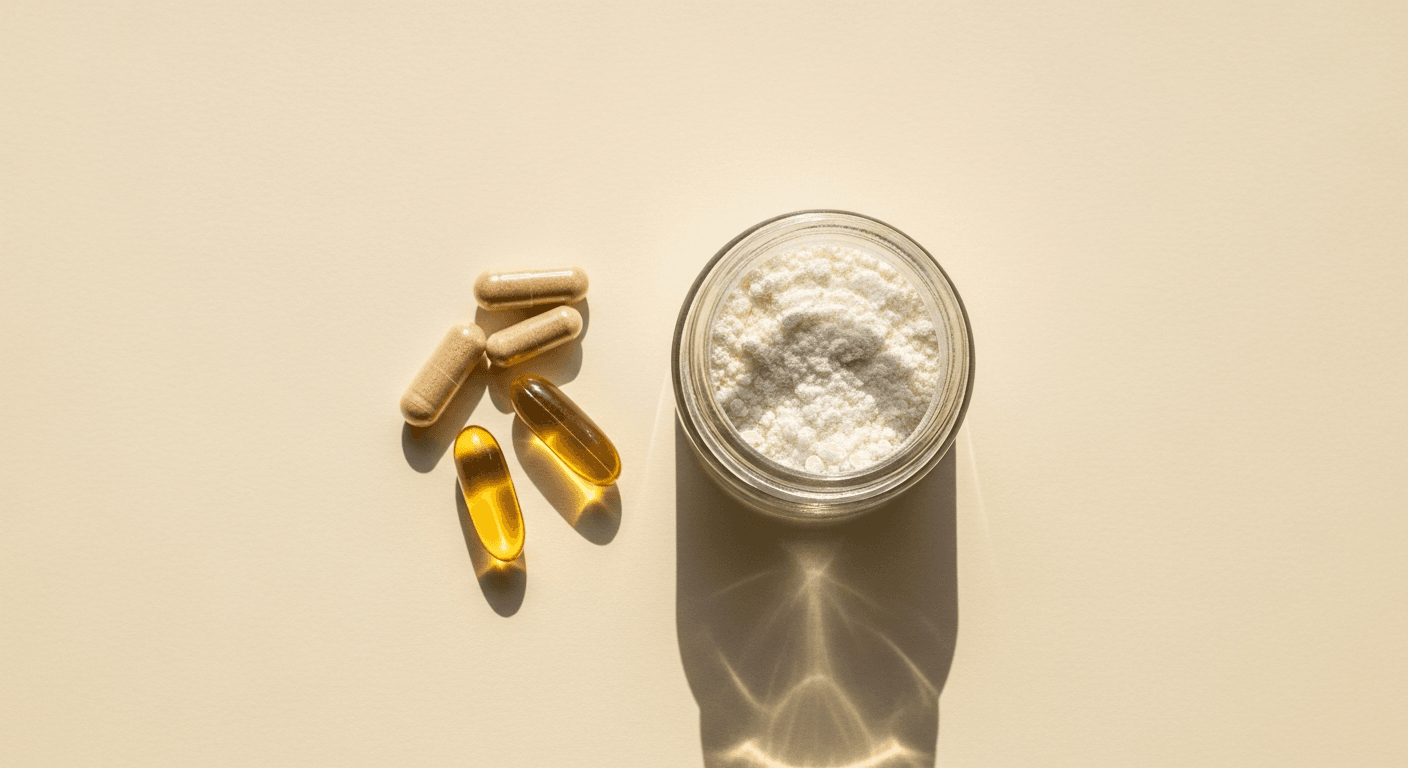
Walk into any supplement retailer or scroll through an online storefront in 2026 and you'll notice something has shifted. The shelves that once held basic protein powders and creatine now carry postbiotic recovery blends, next-generation electrolyte formulas, and adaptogen-spiked performance drinks claiming to do everything short of filing your taxes. The category is expanding fast. Your budget is not.
So before you spend $60 on a product that arrived on the market three months ago, here's what the current evidence actually says about the biggest new supplement categories, and a practical filter you can apply to anything new before handing over your card.
Why 2026 Feels Different for Sports Supplements
A few converging forces are driving the current expansion. Personalized nutrition is going mainstream, with more athletes using blood work and biomarker data to guide their protocols. Gut health research has exploded. And the line between functional food, sports supplement, and pharmaceutical is blurring at retail level.
The global sports nutrition market is projected to exceed $50 billion by 2027, according to industry analysts. That kind of growth attracts serious investment. It also attracts serious marketing budgets that often outrun the clinical research by several years. If you want to use your spending strategically, understanding how to use your own blood work and biomarkers is a far smarter starting point than trusting a product claim at face value.
Next-Generation Electrolyte Formulas: Real Upgrade or Fancy Salt?
Standard electrolyte products have been around for decades. What's new in 2026 is the pivot toward "precision hydration," with formulas built around individual sweat-rate data and higher sodium concentrations than you'd find in a traditional sports drink.
The science behind sodium's role in hydration is solid. Research consistently shows that sodium drives fluid retention more effectively than water alone, particularly during endurance exercise lasting over 60 to 90 minutes. Products delivering 500 to 1,000 mg of sodium per serving are genuinely different in mechanism from a 100 mg mainstream sports drink.
Where the marketing gets ahead of the evidence is in the add-ons: trace minerals at homeopathic doses, "structured water" formulations, and proprietary mineral complexes with no independent trial data. Strip those away and you're often looking at a well-dosed sodium, potassium, and magnesium product. That's useful. It's just not $45-per-bag useful when a well-formulated $20 alternative exists. For a clearer breakdown of what your body actually needs during heat and activity, the evidence on electrolytes in the heat covers the core physiology without the noise.
Postbiotic Recovery Products: The Most Interesting New Category
Probiotics (live bacteria) and prebiotics (fiber that feeds them) have been in supplement aisles for years. Postbiotics are different. They're the bioactive compounds produced when gut bacteria ferment fiber, including short-chain fatty acids, peptides, and cell wall fragments. You don't need live bacteria to deliver them.
This matters for athletes because a growing body of research connects gut microbiome health to systemic inflammation, immune function, and even muscle protein synthesis. A 2024 meta-analysis published in a peer-reviewed nutrition journal found that postbiotic supplementation reduced exercise-induced inflammatory markers in recreationally trained adults, with the strongest effects seen in higher-intensity training cohorts.
That's legitimately interesting. It's also early-stage. Most trials are short (under 12 weeks), involve small sample sizes, and use specific postbiotic strains that may not match what's in a commercial product. If you're considering spending $50 to $80 per month on a postbiotic blend, check whether the product specifies its strain or compound, cites any trial data on that specific formulation, and lists dosages that match published research. Most won't tick all three boxes.
Adaptogen-Based Performance Blends: Still Mostly a Story
Ashwagandha. Rhodiola. Cordyceps. Lion's mane. These ingredients have been circulating for years, but 2026 has seen them packaged aggressively into pre-workout and intra-workout formulas targeting stress resilience, cognitive performance under fatigue, and faster recovery.
Ashwagandha has the strongest sports-relevant evidence of the group. Several randomized controlled trials show it can meaningfully reduce cortisol, improve VO2 max in untrained to moderately trained individuals, and support strength gains over eight to twelve weeks of consistent use. The effective dose in most trials sits between 300 and 600 mg of a standardized extract daily.
Rhodiola shows modest evidence for reducing perceived exertion during aerobic exercise. Cordyceps and lion's mane, despite heavy marketing in the sports context, have very limited human trial data in athletic populations. When you see four adaptogens stacked in a single product, you're almost certainly looking at underdosed individual ingredients. A 50 mg ashwagandha hit inside a proprietary blend will do very little.
Peptide and Collagen-Based Joint Products: More Nuanced Than You'd Think
Joint support supplements have traditionally been glucosamine and chondroitin territory, a category that accumulated decades of mixed evidence. The 2026 wave is collagen peptides, often combined with vitamin C and specific amino acid profiles targeted at cartilage and connective tissue synthesis.
The research here is more encouraging than the joint supplement category usually delivers. Hydrolyzed collagen peptides at 10 to 15 grams daily, consumed before exercise, have shown measurable increases in collagen synthesis markers in tendons and ligaments across multiple trials. The timing appears to matter: taking collagen peptides approximately 30 to 60 minutes before loading exercise enhances delivery to connective tissue.
The caveat is that most premium collagen products are priced at $60 to $90 per month when you could achieve the same dose with a less-marketed product at half the cost. The ingredient is largely commoditized. You're often paying for the branding.
The Label Problem Hasn't Gone Away
One issue cuts across every new supplement category in 2026: label accuracy. Third-party testing data consistently shows that a meaningful percentage of sports supplements contain either less of the stated ingredient than labeled, or unlisted compounds altogether. This is not a fringe issue.
Before spending on any supplement, it's worth understanding why supplement labels still can't always be trusted in 2026 and what third-party certification actually means for product quality. NSF Certified for Sport, Informed Sport, and USP verification are the three credible marks. If none of them appear on a new launch, treat the label with appropriate skepticism.
A Practical Framework for Evaluating Any New Supplement
The supplement industry moves faster than peer-reviewed research ever will. That means you need a consistent decision process, not a product-by-product Google search that leads you to a sponsored review. Here's a framework that holds up across trend cycles:
- Identify the active mechanism. What is the product claiming to do, biologically? If you can't answer that question from the label, the brand either doesn't know or doesn't want you to know.
- Find the human evidence. Animal studies and in-vitro research don't transfer reliably to human physiology. Look for randomized controlled trials in humans, ideally in populations similar to you in training level and health status.
- Check the dose. Compare the amount of each key ingredient in a serving to the doses used in published trials. A proprietary blend that obscures individual ingredient quantities is a red flag.
- Verify the claim specificity. "Supports recovery" is meaningless as a claim. "Reduces delayed-onset muscle soreness by X% over Y weeks at Z dose" is a testable statement. Hold brands to specificity.
- Look for third-party certification. NSF, Informed Sport, or USP certification means an independent lab has verified what's actually in the product. It doesn't validate the marketing claims, but it does mean you're getting what you paid for.
- Consider the baseline first. Most athletes underinvest in sleep, protein adequacy, and overall dietary quality before layering on supplements. Recovery habits that consistently work rarely require a new product launch. They require consistency with the unglamorous fundamentals.
Where to Spend and Where to Wait
If you're going to allocate supplement spending in 2026, the evidence currently supports a short list. Creatine monohydrate remains the most robustly researched performance supplement in existence, with a price point to match. Protein supplementation is warranted when you're not hitting your daily target through food. Vitamin D warrants attention if your blood work shows deficiency. Ashwagandha has enough evidence to justify a trial if stress and recovery are specific concerns.
Postbiotics are the most scientifically interesting new category, but the evidence isn't mature enough to justify premium pricing yet. Next-generation electrolyte formulas are worth using if you have high sweat rates during training. Strip them down to sodium, potassium, and magnesium and buy on dose rather than brand story.
For anything else landing in your feed this year, run it through the framework above. And if you're unsure whether your overall nutrition approach is actually optimized before adding supplements to the picture, the diet changes that actually move the needle are almost always a better investment than the next category to hit retail.
The supplement market will keep expanding. Your job is to stay skeptical, stay specific, and spend where the evidence leads, not where the marketing points.