
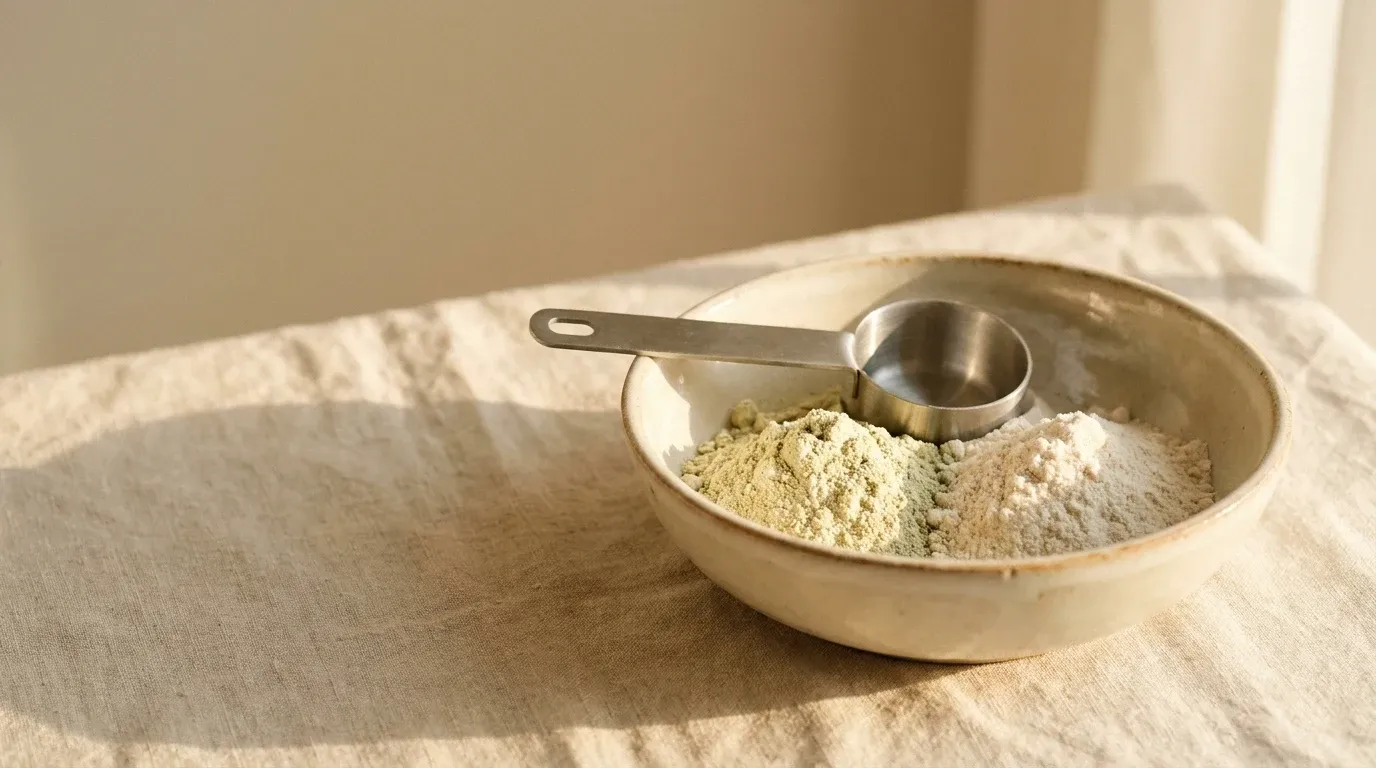
Plant protein has matured. What started as a niche category for vegans and the lactose-intolerant has become the default choice for a growing share of active consumers worldwide. And within that category, one combination has pulled ahead of the rest: pea and wheat protein blends. They're showing up in everything from ready-to-drink shakes to functional baked goods, and the science behind why they work together is solid enough to take seriously.
This guide cuts through the marketing to explain what's actually in these products, how to read the label intelligently, and how to build them into a training diet without running into the digestive problems that catch a lot of people off guard.
Why Pea and Wheat Work Better Together
Neither pea protein nor wheat protein is complete on its own. Pea protein is genuinely impressive in several ways. It's high in branched-chain amino acids (BCAAs), particularly leucine and isoleucine, and it's well-tolerated by most people. Its digestibility score (PDCAAS) sits comfortably above 0.8 in most studies. The gap is methionine, a sulfur-containing essential amino acid that pea protein contains in relatively low amounts.
Wheat protein, meanwhile, fills that methionine gap reasonably well. It also brings glutamine and proline to the table. What wheat protein lacks is lysine, which pea protein has in abundance. Put them together and you get a profile that covers the essential amino acid spectrum far more completely than either source alone. That's the core argument for blending, and it holds up under scrutiny.
This principle of amino acid complementarity isn't new. Whole-food traditions around the world have been combining legumes and grains for centuries. What's different now is that supplement manufacturers are engineering these ratios precisely, and some are publishing the actual amino acid breakdowns on their labels. That transparency matters when you're trying to optimize muscle protein synthesis rather than just hit a daily protein number.
Reading the Label: What Actually Matters
The front of the bag will tell you almost nothing useful. "Complete amino acid profile" and "plant-powered" are marketing phrases. Flip to the nutrition facts and the supplement facts panel. Here's what to look for.
- Total protein per serving: For active adults focused on muscle maintenance or growth, you want at least 25 to 30 grams per serving. Products delivering 20 grams are fine as a supplement to a meal, but they're not going to cut it as a standalone post-workout option.
- Leucine content: This is the single most important number that most labels obscure. Leucine is the primary trigger for muscle protein synthesis, and the threshold to activate that response is generally cited around 2 to 3 grams per serving. Some brands list leucine specifically under the amino acid profile. If it's missing from the label, that's a red flag or at minimum a reason to contact the company before buying.
- The protein ratio: The best-performing blends in current research tend to sit somewhere between 60/40 and 70/30 pea-to-wheat. A product that's mostly wheat protein with a small pea addition isn't the same thing.
- Additives and fillers: Maltodextrin, excessive artificial sweeteners, and proprietary blends that obscure individual ingredient doses are worth avoiding. Price doesn't always predict quality here. Products in the $40 to $65 range for a 2-pound bag can be just as transparent as premium options running $80 and above.
It's also worth checking whether the product has been third-party tested. NSF Certified for Sport and Informed Sport are the two certifications that carry real weight, particularly if you're a competitive athlete subject to testing.
High-Dose Servings: The 50g Problem
Some products, particularly those marketed for mass gain or post-workout recovery, pack 50 grams of protein into a single serving. The idea is appealing. One shake, done. But the physiology doesn't fully cooperate.
Research consistently shows that the body's ability to use protein for muscle protein synthesis plateaus somewhere between 20 and 40 grams per meal in most adults, depending on body size, training status, and the rate at which the protein is digested. Plant proteins, including pea and wheat, tend to digest more slowly than whey, which is actually an advantage for sustained amino acid delivery. But dumping 50 grams into your gut at once still creates a bottleneck.
The more immediate issue is gastrointestinal discomfort. High single doses of plant protein, particularly wheat-containing blends, can cause bloating, gas, and cramping in a significant proportion of users. This isn't an indication that plant protein is inferior. It's a dose-response issue. Spreading your intake across two or three meals, each providing 25 to 35 grams, gives your digestive system time to process what it's received and lets your muscles access amino acids more consistently over the course of the day.
If you're training for muscle hypertrophy specifically, this distribution strategy aligns well with what the evidence supports. Consistent amino acid availability across the day, rather than one large bolus, appears to produce better outcomes for muscle protein synthesis over time.
Integrating Pea-Wheat Blends into a Training Diet
Protein timing matters less than protein totals, but it's not irrelevant. Here's a practical framework for using these blends effectively.
Post-workout: A 25 to 30 gram serving within two hours of resistance training is a reasonable target. The post-exercise window is real, even if it's wider than the old "30 minutes or you lose it" mythology suggested. Pairing your shake with a carbohydrate source helps replenish glycogen and may slightly enhance the anabolic response.
Between meals: If your diet is structured around two or three main meals and your total daily protein intake is falling short of your targets (typically 1.6 to 2.2 grams per kilogram of body weight for active adults), a mid-morning or mid-afternoon shake is an efficient fix. This is also where casein protein's slower digestion rate makes it worth considering as a complement to a pea-wheat blend across different times of day.
Before training: Pre-workout protein is underused. A 20 to 25 gram serving an hour before training provides amino acids during your session without the GI issues that can come from eating a full meal too close to exercise.
For older adults, these considerations become more urgent. Muscle protein synthesis becomes less efficient with age, a phenomenon researchers call anabolic resistance, meaning higher protein doses per meal may actually be warranted. If you're over 50 and managing muscle mass, understanding how your aging muscles respond to protein and resistance training changes how you approach both supplementation and exercise programming.
What to Stack With Pea-Wheat Protein
Protein doesn't work in isolation. A few additions are worth considering depending on your goals.
- Creatine monohydrate: The evidence for creatine supporting strength and lean mass is about as robust as nutrition science gets. It pairs logically with any protein supplement. If you're weighing different stack options, the comparative evidence on creatine combined with HMB or hydration strategies is worth reviewing before you spend money.
- Fiber: Counterintuitively, adding fiber to a high-protein diet can actually improve outcomes. Research has shown that certain fiber supplements support both strength metrics and joint health, which matters if you're training consistently. A daily fiber supplement may do more than you expect when combined with adequate protein intake.
- Joint support: High training volumes put stress on connective tissue. If you're running a high-protein protocol alongside serious resistance training, adding a joint health compound is worth considering. Not every joint supplement earns its label claims, so prioritizing ingredients that have actual clinical backing saves money and frustration.
Pricing and What to Expect in 2026
The market for pea-wheat blends has expanded considerably and competition has driven prices down. You can find quality products in the $40 to $55 range for a 2-pound bag, and bulk options often bring the per-serving cost below $1.50. Higher-priced products in the $70 to $90 range exist, but the premium doesn't always reflect better amino acid profiles. It often reflects branding, flavoring, or the cost of certifications.
Subscription pricing is now common across most major brands. A 30-serving bag on subscription typically costs 10 to 15 percent less than one-time purchases. Given that consistent supplementation is what produces results, not occasional use, the subscription model makes financial sense if you've settled on a product that works for you.
The Bottom Line
Pea and wheat protein blends have earned their place as a serious option for active adults. They're not a compromise version of whey. They're a different product with genuine strengths, particularly their amino acid complementarity, sustained digestibility, and compatibility with a wide range of dietary needs.
Read the label past the front panel. Prioritize leucine disclosure. Keep individual servings in the 25 to 30 gram range unless you have specific reasons to go higher. And build your protein intake across meals rather than concentrating it in one shake. That's the framework that gets results, regardless of which blend you choose.