
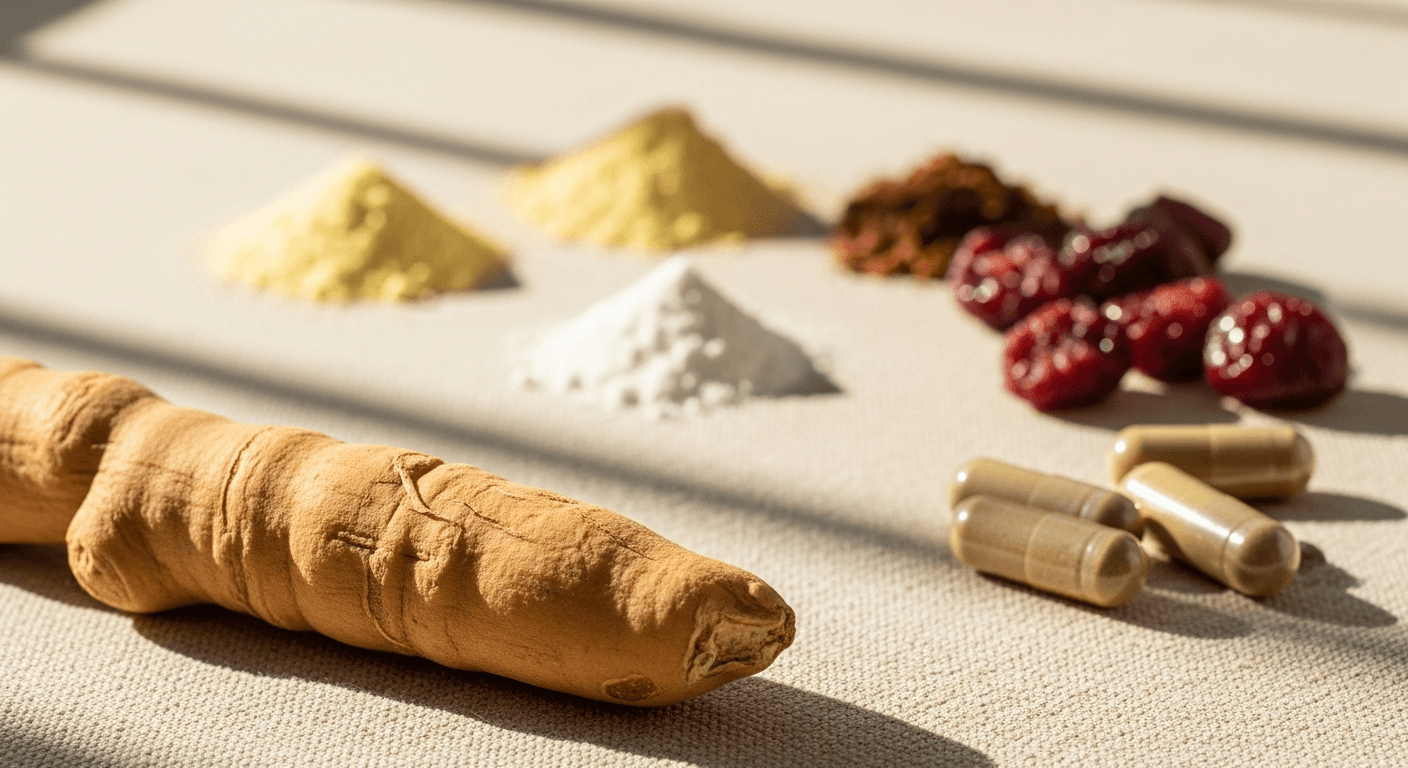
The plant-based supplement market is growing fast, and the claims are growing faster. Walk into any health food store or scroll through any supplement brand's Instagram, and you'll find adaptogens, herbs, and botanical extracts positioned as serious muscle-building tools. Some of them have real science behind them. Many don't.
With napiergrass now entering the research conversation following a 2026 clinical trial, it's a good moment to take stock. Which plant-based ingredients for muscle support actually have credible evidence? And which are still running on marketing momentum, mechanistic theory, and wishful thinking?
Here's what the current research actually shows.
Napiergrass: The Newest Name in the Conversation
Napiergrass (Pennisetum purpureum) has long been known as a fast-growing tropical forage crop. It's not what most people picture when they think of muscle support. But a randomized controlled trial published on April 30, 2026 out of Taiwan changed that perception, at least partially.
The study found that supplementation with napiergrass extract was associated with improved hand grip strength in participants compared to placebo. That's a meaningful signal. Hand grip strength is a validated proxy for overall muscular function and is widely used in clinical research on aging, sarcopenia, and physical performance.
That said, this is one RCT. The sample size, duration, and population characteristics matter enormously when interpreting results like these, and a single trial, however well-designed, doesn't establish an ingredient. What it does is open a line of inquiry worth tracking. Napiergrass is now a legitimate candidate for further study, not a proven muscle-support ingredient you should immediately go looking for on a supplement label.
The pattern here isn't unusual. New plant-based ingredients enter the research conversation regularly, often from traditional agricultural or medicinal contexts. Fat Burner Supplements in 2026: What Science Actually Says covers a similar dynamic in the weight-loss supplement space, where early mechanistic promise rarely survives rigorous clinical testing intact.
Ashwagandha: The Benchmark for Plant-Based Muscle Evidence
If you're benchmarking plant ingredients for muscle support against each other, ashwagandha, specifically the KSM-66 extract, is the one to beat. It's not a new discovery, but its evidence base has matured significantly over the past decade.
Multiple randomized controlled trials in resistance-trained adults have shown that KSM-66 supplementation produces measurable improvements in muscle strength, recovery time, and body composition. A frequently cited 8-week RCT found that participants supplementing with KSM-66 showed significantly greater gains in bench press and leg extension strength compared to placebo, alongside reductions in exercise-induced muscle damage markers.
The proposed mechanism involves ashwagandha's withanolide compounds, which appear to modulate cortisol, reduce oxidative stress, and support anabolic hormone signaling. Crucially, the clinical data lines up with that mechanistic story, which isn't always the case in this space.
Typical doses in the successful trials range from 300 to 600 mg of KSM-66 daily. Effect sizes are real but moderate. You're not looking at the kind of results you'd get from pharmaceutical intervention. But as plant-based options go, ashwagandha has earned its position at the top of the evidence hierarchy.
Fenugreek: Moderate Evidence, Inflated Claims
Fenugreek (Trigonella foenum-graecum) has a legitimate research profile, particularly around testosterone and lean mass in men. Several RCTs have shown that fenugreek supplementation, typically standardized for furostanolic saponins, can support testosterone levels and contribute modestly to improvements in body composition.
The key word is modestly. Effect sizes in the clinical literature are real but small. Fenugreek is not a natural testosterone booster in the dramatic sense that most marketing implies. It appears to work partly by inhibiting enzymes that convert testosterone to estrogen and dihydrotestosterone, rather than by directly stimulating testosterone production. That's a meaningful distinction.
If you're a resistance-trained man looking for incremental support, fenugreek at doses around 500 to 600 mg daily may offer some benefit. If you're expecting the kind of results the packaging often suggests, you're going to be disappointed. The gap between clinical effect size and marketing language in this category is wide.
Rhodiola Rosea and Panax Ginseng: Adaptogens With a Muscle-Support Reputation They Haven't Fully Earned
Rhodiola rosea and Panax ginseng are two of the most recognized adaptogens in the global supplement market. Both have credible evidence for stress reduction, fatigue management, and cognitive performance under physical or psychological load. That's not nothing.
But muscle building and muscle support are different claims. And here's where the marketing often stretches past what the data supports. Neither ingredient has a robust body of RCT evidence specifically demonstrating direct muscle hypertrophy, strength gains, or meaningful improvements in body composition in healthy, resistance-trained adults.
Rhodiola has shown some promise in reducing perceived exertion and improving endurance performance, which could indirectly support training volume and recovery. Panax ginseng has similar indirect pathways. But these are stretch mechanisms, not direct evidence. When a supplement label positions either ingredient as a muscle-support compound, it's typically conflating general adaptogenic function with specific anabolic outcomes. Those aren't the same thing.
This matters because you might genuinely benefit from rhodiola or ginseng as part of a broader wellness stack, particularly if your training is being undermined by stress or poor recovery. Insomnia's Real Problem Is Unpredictability, Not Short Sleep and Sleep Consistency: The Overlooked Lever for Better Rest are worth reading in this context, since sleep quality is one of the most underappreciated variables in muscle recovery. But don't expect rhodiola or ginseng to replace the training stimulus itself.
The Evidence Hierarchy You Should Be Using
Not all evidence is equal, and the supplement industry has historically exploited that gap. Here's a practical framework for evaluating plant-based muscle-support claims:
- RCT data in relevant populations: Randomized controlled trials in healthy adults who exercise, with muscle-specific outcomes, are the gold standard. Ashwagandha KSM-66 meets this bar. Napiergrass now has a first entry-level data point here.
- Mechanistic and in-vitro studies: Cell culture studies and animal models can identify promising pathways, but they tell you very little about whether an ingredient will produce a meaningful effect in a human body under real conditions. The failure rate between in-vitro promise and clinical reality is high.
- Observational and traditional use data: This can support plausibility and inform dosing hypotheses, but it's not a substitute for clinical trials. Many traditional plant medicines have failed or underperformed when subjected to rigorous testing.
- Marketing-derived claims: These deserve the most skepticism. Proprietary blends, undisclosed dosages, and vague references to "studies" without accessible citations are red flags.
This framework applies broadly. The same principles that separate credible from speculative claims in muscle support apply across supplement categories, as covered in depth in the evidence review of fat-burner supplements in 2026.
Why the Marketing-Evidence Gap Is Getting Wider
The functional nutrition market is expanding rapidly. Major food and supplement brands are competing aggressively for consumer trust and shelf space. That pressure creates incentives to position ingredients based on early-stage science, traditional use, or even adjacent research rather than waiting for confirmatory RCTs.
Consumers, meanwhile, are increasingly health-conscious but often lack the tools to evaluate supplement claims critically. After Huel, Danone Is Redefining What Eating Well Means explores how mainstream acquisition is reshaping the functional food and supplement landscape, with implications for how claims are communicated and regulated.
The result is a market where genuinely evidence-backed ingredients share shelf space with speculative ones, often at similar price points and with similarly confident packaging language. Knowing the difference requires looking past the label.
What This Means Practically for You
If muscle support is a genuine goal, the most evidence-backed plant-based strategy currently available is KSM-66 ashwagandha, used consistently at clinically studied doses alongside a well-structured resistance training program. The training variable matters far more than any supplement, and it's worth understanding how training volume and stimulus interact before adding complexity. Is There a Ceiling to How Much Exercise Actually Helps? covers that question directly.
Fenugreek is a reasonable secondary consideration for men focused on body composition, with realistic expectations about effect size. Napiergrass is worth watching as the research develops. Rhodiola and Panax ginseng have their place in a stress and recovery context, but their direct muscle-building credentials don't justify the positioning they often receive.
And for any ingredient you haven't seen in that shortlist above, apply the evidence hierarchy. Ask whether there are RCTs in humans. Ask whether the outcomes measured actually map to muscle strength or hypertrophy. Ask whether the dose in the product matches the dose used in the research. Most of the time, the answer to at least one of those questions will give you a clear picture of what you're actually buying.