
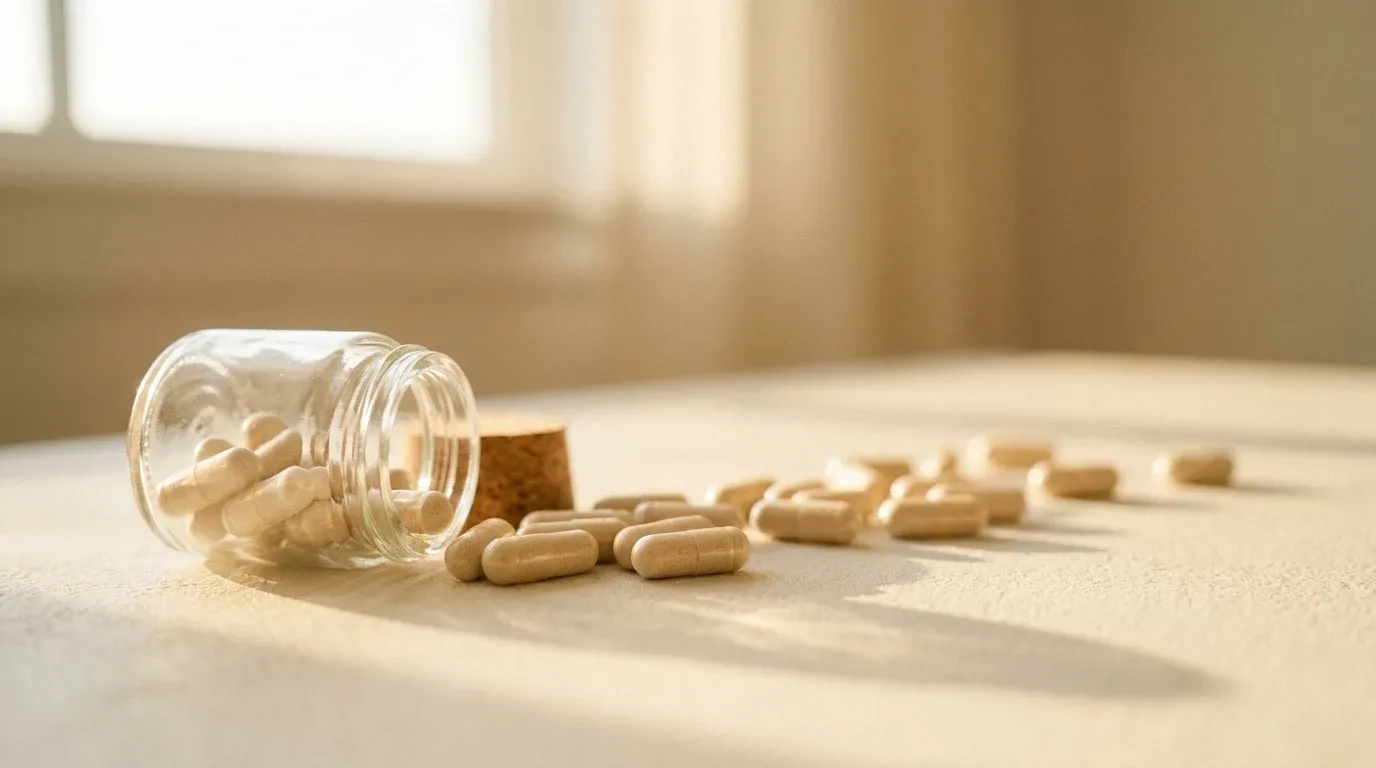
You've probably spent time picking the right probiotic. You've checked the CFU count, looked for strains with clinical backing, and maybe even refrigerated the bottle. But a growing body of research is quietly shifting the conversation. The real action, it turns out, may not come from the bacteria themselves. It may come from what bacteria produce.
That's the premise behind postbiotics, and the 2026 science supporting them is hard to ignore.
What Are Postbiotics, Exactly?
Postbiotics are bioactive compounds produced by bacteria during metabolism or upon cell death. They include short-chain fatty acids (SCFAs) like butyrate, propionate, and acetate, as well as extracellular vesicles (EVs), bacterial cell wall fragments, enzymes, and other metabolites that exert measurable physiological effects in the human body.
The International Scientific Association for Probiotics and Prebiotics formally defined postbiotics in 2021 as "preparations of inanimate microorganisms and/or their components that confer a health benefit on the host." That definition matters because it separates the functional compound from the living organism that made it. You're getting the benefit without needing the bacteria to survive the journey.
This is not a minor distinction. It changes how you think about supplementation entirely.
The Core Problem With Live Probiotic Supplements
Probiotics are live bacteria, and live bacteria face serious logistical challenges before they ever reach your colon. Gastric acid, bile salts, digestive enzymes, and transit time all work against them. Studies consistently show that significant percentages of CFUs in probiotic capsules don't survive to reach the large intestine in viable form. Refrigeration requirements make the problem worse, since cold chains are frequently broken between manufacture, retail, and your kitchen.
Even when live bacteria do reach the gut, they have to colonize successfully against an established microbiome. For most healthy adults, that colonization is transient. The strains you swallow typically don't take up permanent residence. The clinical benefits you see in probiotic trials often disappear shortly after supplementation stops.
None of this means probiotics are useless. For specific clinical applications, like antibiotic-associated diarrhea or certain IBS presentations, the evidence is solid. But for general gut health optimization, the live-organism model has real reliability gaps.
How Postbiotics Bypass Those Problems
Postbiotics don't need to be alive. They're already the finished product. Butyrate doesn't have to survive gastric acid because it's a small organic molecule, not a bacterial cell. Extracellular vesicles are nanoscale lipid structures that carry bioactive cargo across mucosal barriers. Neither depends on microbial survival counts to function.
This also means postbiotics are shelf-stable. You don't need refrigeration, and potency doesn't depend on the CFU count holding up between manufacture and consumption. For supplement users who've been frustrated by products that seem inconsistent, this represents a meaningful practical upgrade.
There's a parallel worth drawing here. Research on why ingredient testing doesn't predict your joint supplement's results shows that bioavailability gaps are a systemic problem across the supplement industry. Postbiotics partly sidestep that gap by delivering compounds that don't require a biological survival process to remain active.
The 2026 Butyrate Research: Epigenetics Changes the Argument
Here's where the science gets genuinely compelling. A 2026 study published in Clinical Nutrition Research demonstrated that butyrate, the SCFA produced primarily by the fermentation of dietary fiber in the colon, can epigenetically suppress inflammatory signaling pathways by inhibiting histone deacetylases (HDACs).
HDAC inhibition changes gene expression patterns related to inflammation. Specifically, butyrate suppresses the transcription of pro-inflammatory cytokines through chromatin remodeling. That means the mechanism of action is independent of living bacterial counts. You don't need a thriving probiotic colony to get the effect. You need butyrate to be present and bioavailable in the colon.
This is a significant shift. Most probiotic research frames the benefit in terms of microbial diversity and population dynamics. The butyrate epigenetics data suggests that the downstream molecular effects may be achievable directly, without going through the living-organism intermediary.
Extracellular vesicles are generating similar interest. EVs produced by gut bacteria can cross epithelial barriers, carry microRNA and proteins, and modulate immune cell behavior systemically. Early research indicates they may influence inflammation in tissues beyond the gut itself, including liver and adipose tissue.
Why Athletes and Active Individuals Should Pay Attention
Gut inflammation isn't just a digestive issue. For people who train regularly, it has direct consequences for nutrient absorption, recovery speed, and systemic immune function.
During and after intense exercise, intestinal permeability increases temporarily, a phenomenon sometimes called "leaky gut." This allows bacterial products and food antigens to cross the gut lining and trigger systemic inflammatory responses. Athletes in heavy training blocks are particularly vulnerable. If gut inflammation is chronically elevated, nutrient uptake from meals is compromised, which affects everything from muscle protein synthesis to glycogen replenishment.
Butyrate specifically supports colonocyte health, the cells lining the colon that act as the primary barrier against permeability. Adequate butyrate availability helps maintain tight junction integrity, which is precisely the mechanism that limits exercise-induced permeability. That's not a peripheral concern for performance. It's central to recovery.
This connects to a broader picture of how the body handles physical stress. The cognitive and inflammatory load from training affects recovery in ways that go beyond the muscles. Research on what cardio does to your brain at the neurological level illustrates how systemic inflammation and circulation affect organs far from the site of training. Managing gut inflammation is part of managing that systemic load.
For athletes considering recovery protocols, it's also worth noting how other interventions interact with gut function. Cold plunge therapy after training affects circulation and inflammatory signaling in ways that may compound or counteract gut-based recovery strategies, depending on timing and context.
What Postbiotic Supplements Actually Look Like
The postbiotic supplement market is still maturing, but several formats are now widely available:
- Sodium butyrate and tributyrin capsules: These deliver butyrate directly to the colon. Tributyrin is a triglyceride form that's better tolerated and more resistant to upper-GI breakdown.
- Heat-killed bacterial preparations: Also called "tyndallized" probiotics. The bacterial cells are inactivated but their structural components, including cell wall fragments and internal metabolites, remain intact and bioactive.
- Fermented food concentrates: Standardized extracts from fermented foods that preserve the metabolite profile without live organisms.
- Lactoferrin and other bioactive proteins: Compounds derived from bacterial or dairy fermentation processes that modulate immunity and inflammation independently.
Pricing for quality postbiotic supplements generally runs between $30 and $70 per month, which is roughly comparable to mid-tier probiotic products. The difference is in what you're actually paying for: a stable compound with a defined mechanism rather than a viable bacterial count that may or may not survive to your gut.
Should You Drop Probiotics Entirely?
That's not what the research is saying. Probiotics retain clear clinical value in specific contexts. If you've recently completed a course of antibiotics, a high-quality multi-strain probiotic with evidence-backed strains is a reasonable short-term intervention. For travelers dealing with acute digestive disruption, certain Lactobacillus and Saccharomyces strains have real support.
The more useful framing is to think of postbiotics as the mechanism-first approach and probiotics as the ecosystem approach. Both can matter. But if you're a generally healthy adult looking for consistent, daily gut support, postbiotics may offer more reliability for less uncertainty.
It's also worth thinking about the dietary foundation underneath any supplement. Butyrate production in your colon depends on dietary fiber fermentation. A high-fiber diet rich in resistant starch, legumes, and whole grains is the most effective way to support endogenous butyrate production. No supplement fully replaces that substrate.
The Bigger Picture for Long-Term Health
Gut health doesn't exist in isolation. Inflammation, microbiome function, and metabolic health are entangled with sleep, exercise, and stress in ways that are becoming increasingly well-documented. Women navigating hormonal transitions, for example, often find that inflammatory load affects cognitive performance as well as physical recovery. Research on how aerobic exercise sharpens thinking in women over 50 points to inflammation management as a shared mechanism across these outcomes.
Sleep quality also modulates gut permeability and microbiome diversity in measurable ways. Adults over 50 who struggle with disrupted sleep, a documented and growing problem, are also more likely to have compromised gut barrier function. That bidirectional relationship between sleep disruption and gut inflammation is relevant when thinking about where to focus your supplementation strategy. Understanding what workers over 50 face in terms of sleep disruption puts some of these gut health patterns in practical context.
The science on postbiotics is moving fast. The 2026 epigenetics data on butyrate is not a final word; it's an opening argument. But it's a strong one. If you've been spending money on probiotic supplements without seeing consistent results, the postbiotic model offers both a scientific explanation for why and a more reliable alternative to try.