
Protein at Every Meal: What the Updated 2026 Guidelines Actually Mean for You
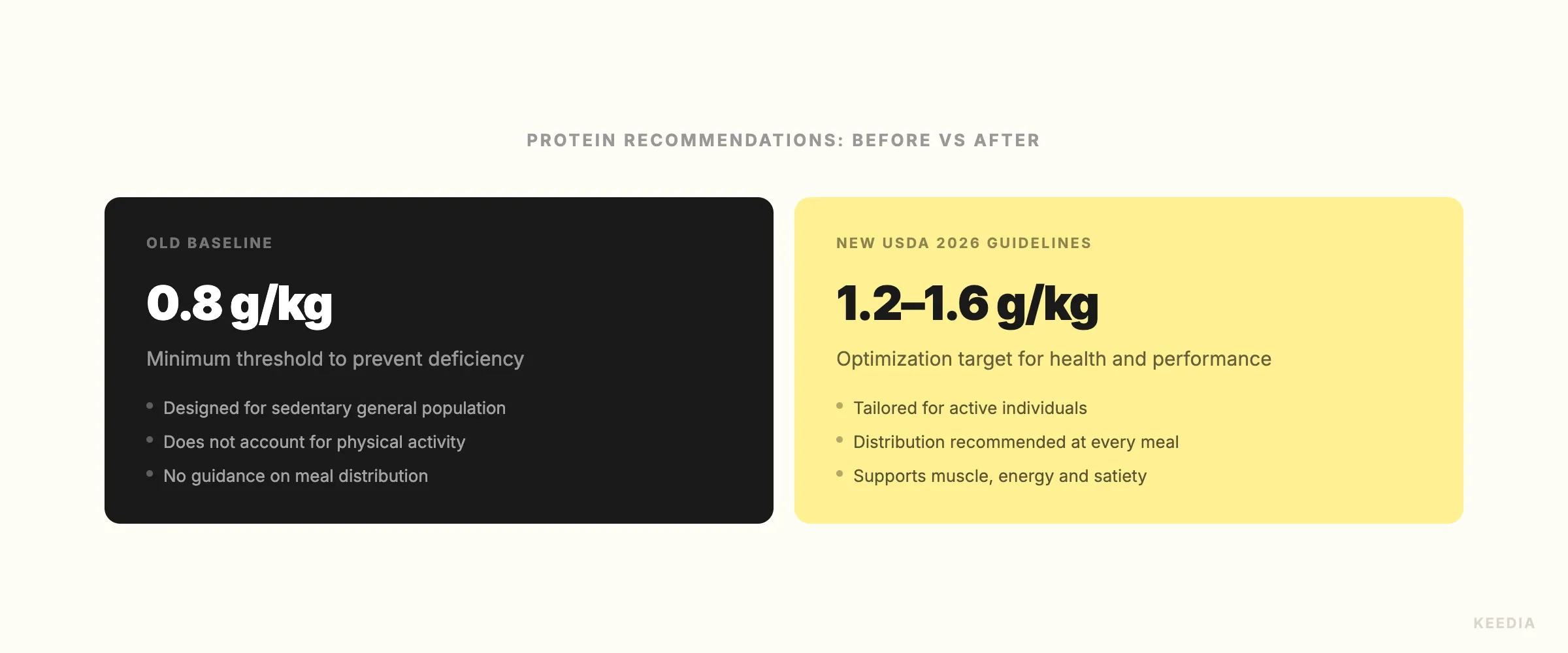
For decades, the 0.8 grams of protein per kilogram of body weight per day figure was treated as gospel. It was the number on every nutrition handout, the baseline dietitians referenced, the target baked into mainstream dietary advice. That number is now officially outdated.
The updated 2026 USDA dietary guidelines have moved the recommended daily protein intake to 1.2 to 1.6 grams per kilogram of body weight, with a specific emphasis on distributing that protein across every meal rather than concentrating it in one or two sittings. For active people, this isn't a minor tweak. It's a meaningful recalibration of how you should be thinking about food throughout the day.
Why the Guidelines Changed
The old 0.8g/kg figure was built around preventing deficiency, not optimizing function. It was the minimum needed to avoid muscle wasting in sedentary adults. Researchers and sports nutrition specialists have argued for years that this threshold was far too conservative for anyone exercising regularly, managing weight, or trying to preserve muscle as they age.
The updated guidelines reflect a growing body of evidence showing that higher protein intake supports muscle protein synthesis, satiety, metabolic rate, and body composition. The meal-distribution recommendation matters just as much as the total target. Research consistently shows that spreading protein intake evenly across three meals produces better muscle-building outcomes than eating the same total amount unevenly throughout the day.
This connects directly to what researchers studying longevity have found: muscle mass and strength are among the most reliable predictors of long-term health outcomes. As covered in VO2max and Muscle Strength Are the Two Real Markers of Longevity, preserving lean tissue isn't a vanity goal. It's a functional one with real consequences for how long and how well you live.
57% of Americans Are Already Prioritizing Protein
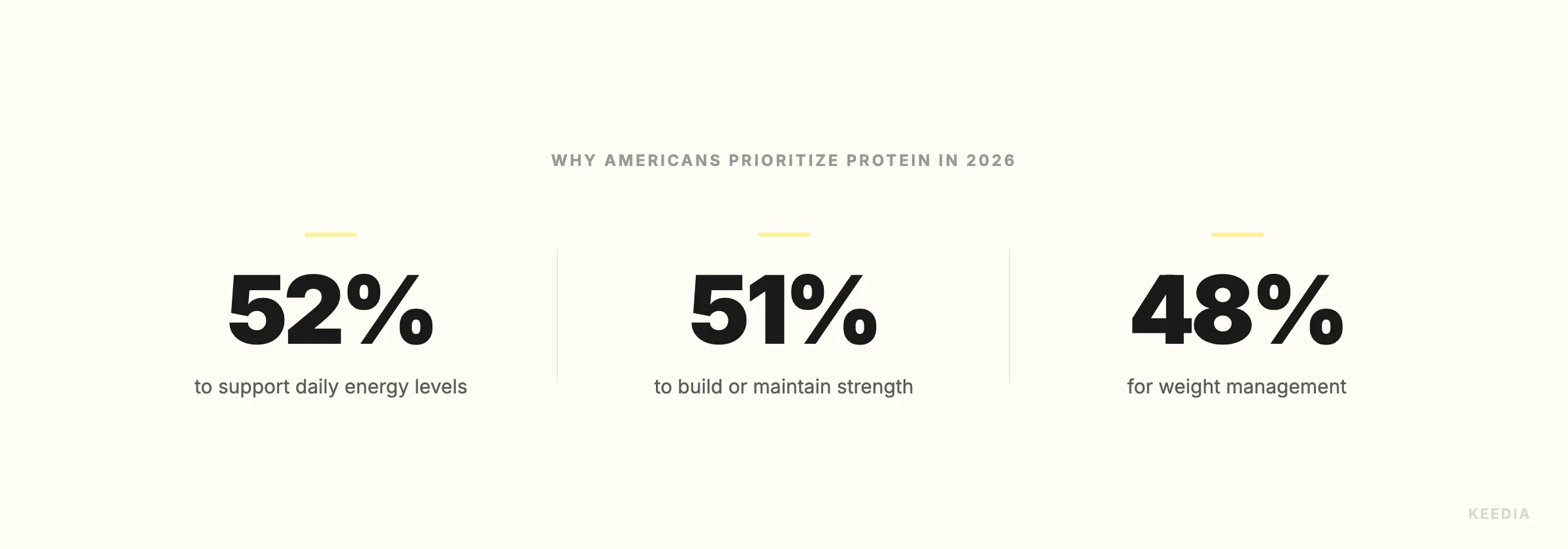
The guidelines are catching up to consumer behavior, not leading it. In 2026, 57% of Americans report actively prioritizing protein in their diets, a significant jump from prior years. The top reasons cited are energy (52%), strength (51%), and weight management (48%).
These aren't bodybuilder motivations. They're everyday concerns shared by people who work full-time, exercise a few times a week, and want to feel better. The protein conversation has moved well outside the gym and into mainstream health culture.
That shift is visible in spending patterns. Protein supplement sales reached $8.6 billion in 2025, up 12.4% year-over-year. Whey protein holds the largest single share of the supplement category at 43.3%, though plant-based alternatives continue to grow as formulations improve and the category attracts consumers who can't or won't use dairy-based products.
The broader supplement market is also being shaped by trends like GLP-1 medications, which are changing how certain consumers think about appetite, protein adequacy, and muscle preservation. GLP-1 Drugs Are Reshaping the Supplement Market — Here's What's Actually Growing breaks down exactly which categories are gaining ground as a result.
What 1.2 to 1.6g/kg Actually Looks Like in Practice
The math is straightforward once you know your weight in kilograms. Divide your weight in pounds by 2.2 to get kilograms, then multiply by your target range.
- A 68kg (150 lb) person needs 82 to 109 grams of protein per day
- An 82kg (180 lb) person needs 98 to 131 grams per day
- A 95kg (210 lb) person needs 114 to 152 grams per day
To distribute that evenly across three meals, you're aiming for roughly 27 to 50 grams per meal, depending on your body weight and activity level. Here's what that looks like with real food.
Building a High-Protein Breakfast
Breakfast is where most people fall short. A bowl of oatmeal with fruit might feel nutritious, but it often delivers fewer than 10 grams of protein. That's a gap you'll struggle to close later in the day without overeating at dinner or relying heavily on supplements.
Strong breakfast options for hitting 30 or more grams of protein include:
- 3 whole eggs plus 3 egg whites scrambled with Greek yogurt on the side (approximately 35 to 40g)
- Cottage cheese bowl (1 cup, full fat) with hemp seeds and a scoop of protein powder blended into coffee or a smoothie (approximately 40 to 45g)
- Turkey or chicken sausage with two eggs and a slice of whole grain toast (approximately 30 to 35g)
- Smoked salmon on a whole grain base with two hard-boiled eggs (approximately 32 to 38g)
Greek yogurt, cottage cheese, eggs, and lean meats are the most efficient breakfast protein sources by gram per calorie. If you train in the morning, prioritizing protein in this meal also helps reduce cortisol-driven muscle breakdown post-workout. The relationship between training stress and recovery nutrition is explored in How Exercise Controls Cortisol — and Which Intensity Actually Works.
Building a High-Protein Lunch
Lunch gives you more flexibility because most people have access to a wider range of foods. The goal is still 30 to 45 grams, and it's achievable without eating uncomfortably large portions.
- Grilled chicken breast (170g / 6 oz) with a lentil-based salad and feta (approximately 50g)
- Canned tuna or salmon (one large can) mixed into a grain bowl with chickpeas (approximately 40 to 45g)
- Turkey wrap with hummus, spinach, and a hard-boiled egg on the side (approximately 35 to 40g)
- Tempeh stir-fry with edamame over brown rice for plant-based eaters (approximately 30 to 35g)
Fish deserves particular attention here. Beyond its protein content, emerging research points to meaningful recovery benefits tied to its omega-3 profile. Omega-3 and Muscle Recovery: What the New Nature Study Actually Shows covers the specific mechanisms and what amounts appear to matter.
Building a High-Protein Dinner
Dinner tends to be the easiest meal to hit protein targets because people typically cook more substantial portions. The risk is overloading dinner to compensate for low intake earlier in the day, which research suggests is less effective for muscle protein synthesis than consistent distribution.
- Lean beef or bison steak (170g / 6 oz) with roasted vegetables and a side of black beans (approximately 50 to 55g)
- Baked salmon fillet (170g) with quinoa and steamed broccoli (approximately 45g)
- Chicken thighs (two large, bone-in) with a white bean and vegetable soup (approximately 48 to 52g)
- Shrimp stir-fry with tofu and edamame over cauliflower rice for a lower-calorie, high-protein option (approximately 40 to 45g)
If you're tracking protein seriously, a kitchen scale removes most of the guesswork. Estimating portion sizes by eye tends to produce consistent underestimates, particularly with cooked meats, which lose mass during cooking.
Do You Need Supplements to Hit These Targets?
Not necessarily, but they help a lot of people bridge gaps without adding significant calories or spending time preparing additional food. A single scoop of whey protein typically delivers 20 to 25 grams of complete protein in under 30 seconds of preparation. That's why whey continues to dominate the category at 43.3% market share despite the growth of plant-based alternatives.
Plant-based protein blends (typically combining pea and rice protein) now deliver amino acid profiles comparable to whey, particularly when formulated to include adequate leucine content. Leucine is the amino acid most directly responsible for triggering muscle protein synthesis, and it's a key reason why not all protein sources are equally effective per gram.
Iron adequacy also matters for active people, especially women. Low iron impairs energy production and protein utilization regardless of how much protein you're eating. Iron for Athletes: Which Form, What Dose, and Who Actually Needs It covers who should be paying attention and what the evidence supports.
The Practical Takeaway
The updated 2026 guidelines aren't asking you to eat an extreme diet. They're asking you to eat protein more deliberately and more consistently across the day. For most active adults eating three meals, the target is roughly 30 to 50 grams per sitting, achieved through a combination of animal or plant proteins at each meal.
The fact that 57% of Americans are already focused on protein suggests this shift is accessible, not just aspirational. The people hitting these targets aren't elite athletes on complicated meal plans. They're people who've learned to anchor each meal around a solid protein source and adjust everything else around that foundation.
That's the practical core of what the new guidelines are recommending. Build your plate around protein first, aim for consistency across all three meals, and treat the daily total as a floor rather than an aspirational ceiling. For active people trying to maintain strength, manage weight, and keep energy levels steady, it's among the highest-return nutritional habits available.