
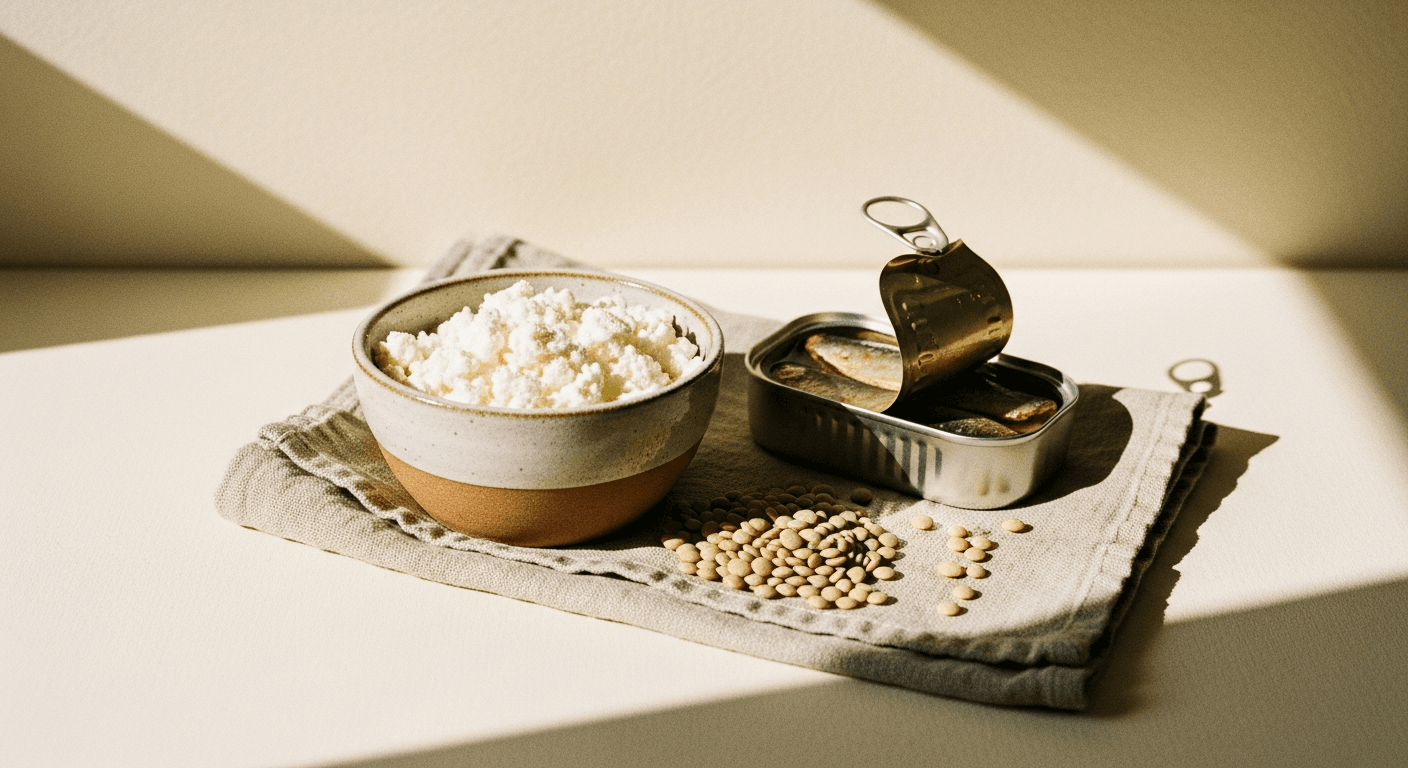
Grocery prices in 2026 haven't exactly calmed down. Whether you're shopping in the US, UK, Canada, or Australia, your dollar buys less protein than it did three years ago. And yet the supplement industry keeps pushing $50 tubs of whey and $4 protein bars as if budget constraints don't exist. They do. Here's how to eat enough protein to support serious training without letting your nutrition spending spiral.
Why Cost-Per-Gram of Protein Actually Matters
Most nutrition advice talks about grams per serving. That's useful, but incomplete. What you really need to know is how much usable protein you're getting per dollar spent. When you run those numbers, several everyday foods beat branded supplements by a significant margin.
Here's a rough cost-per-gram breakdown based on average US retail prices in mid-2026:
- Canned sardines (in water): roughly $0.03–$0.05 per gram of protein, with a 3.75 oz can delivering around 22g
- Cottage cheese (2% fat, store brand): approximately $0.04–$0.06 per gram, with a full cup offering 25–28g
- Dried lentils: $0.02–$0.04 per gram, with a half-cup dry serving yielding around 18g cooked
- Eggs (large, dozen): $0.04–$0.07 per gram depending on region, with 6g per egg
- Branded whey protein powder (mid-tier): $0.05–$0.09 per gram after accounting for serving size
- Retail protein bars: often $0.10–$0.18 per gram, with added sugars and ultra-processed ingredients to boot
The gap is real. Sardines and lentils aren't just cheaper per gram. They also come with micronutrients, fiber, and healthy fats that processed supplements can't replicate. Before you dismiss protein bars entirely, though, it's worth understanding what you're paying for in terms of functional ingredients stacked into a single product.
Bioavailability: Not All Protein Is Equal in Your Body
This is where the conversation gets more nuanced. Grams on a label don't tell you how much of that protein your muscles actually absorb and use. The metric that captures this best is the Digestible Indispensable Amino Acid Score, or DIAAS. Animal proteins generally score above 1.0, meaning they meet or exceed human needs. Most plant proteins score below that threshold.
Cottage cheese and sardines both score high on bioavailability. Cottage cheese is particularly notable because it's rich in casein, a slow-digesting protein that sustains amino acid delivery for hours. Sardines deliver complete protein alongside omega-3 fatty acids, which have been shown to improve muscle protein synthesis in their own right.
Lentils are the more complicated case. Their DIAAS score sits around 0.59–0.65, which means your body uses a meaningfully smaller fraction of what the label says. You can offset this in two ways: eat larger portions, or combine lentils with a complementary protein source like rice, dairy, or eggs in the same meal. The leucine content of lentils is also relatively low, and leucine is the primary amino acid that triggers the muscle protein synthesis response.
This matters most if you're eating fewer than four meals a day. When each meal has to do more heavy lifting, hitting the leucine threshold (roughly 2.5–3g per sitting) becomes critical. A cup of cooked lentils delivers around 1.3g of leucine. A cup of cottage cheese delivers around 2.4g. A can of sardines delivers close to 2g. Pair lentils with eggs or cottage cheese in the same meal and you clear the threshold without much effort.
The Three Workhorses: A Closer Look
Cottage Cheese
Cottage cheese has had a sustained comeback in athletic nutrition circles, and the reasons are legitimate. A single cup provides 25–28g of protein, a meaningful hit of calcium, and a slow-digesting protein profile that makes it particularly useful before sleep. Research consistently shows that consuming casein protein within an hour of going to bed increases overnight muscle protein synthesis, especially relevant for people doing strength or resistance training.
Store-brand cottage cheese typically runs $3.50–$5.50 for a 24 oz container. That's three to four servings of high-quality protein for under $6.
Canned Sardines
Sardines are arguably the most underrated protein source for active people. A single 3.75 oz can provides 22g of complete protein, roughly 1,000mg of omega-3s, and a solid dose of vitamin D and B12. The omega-3 component is worth flagging separately. These fatty acids reduce exercise-induced inflammation and may improve the anabolic response to training. You're essentially getting a protein source and a recovery supplement in one.
Canned sardines in water run about $1.50–$2.50 per can at most US supermarkets. That's a hard value to beat, especially when you consider that the most convenient protein formats on the market often cost five times more per gram.
Dried Lentils
Lentils are the cheapest protein per gram on this list, and they bring fiber, iron, and folate that animal sources don't. A one-pound bag typically costs $1.50–$2.50 and yields multiple high-protein meals. For plant-based athletes or anyone trying to reduce animal product consumption without sacrificing protein targets, lentils are non-negotiable.
The key is strategic pairing. Lentils with a poached egg, lentils in a cottage cheese bowl, or a lentil soup finished with a can of sardines. These combinations push the amino acid profile closer to completeness and raise the effective leucine delivery per meal.
Where Supplements Still Make Sense
This isn't an argument against supplements across the board. There are real scenarios where they earn their cost. If you're training twice a day, traveling with no reliable kitchen access, or consistently falling 30–40g below your daily protein target despite whole food efforts, a mid-tier whey or plant blend has a practical role.
The problem isn't supplements themselves. It's defaulting to them as a primary strategy when whole foods are cheaper and often more effective per dollar. If you're hitting your targets with cottage cheese, sardines, eggs, and lentils, spending $50 a month on whey powder is largely redundant.
It's also worth remembering that heavy training loads create demands beyond protein. Recovery quality, sleep, and connective tissue health all influence how well your body uses the protein you consume. If you're training hard, your tendons and connective tissue need deliberate recovery time that no supplement can shortcut. And if you're concerned about long-term strength retention, the data on age-related muscle loss starting in your mid-30s makes the case for consistent dietary protein even more compelling.
A Simple Weekly Protein Budget Framework
Here's a practical framework for allocating your protein spending based on training load. It doesn't require a spreadsheet. It requires knowing three numbers: your daily protein target, your average meals per day, and your weekly grocery budget for protein foods.
Step 1: Set your daily target. For active adults, 0.7–1g of protein per pound of bodyweight is a well-supported range. A 170-pound athlete aiming for the upper end needs around 170g per day.
Step 2: Map your whole food baseline. Calculate what you can realistically get from low-cost whole foods each day. Two cans of sardines (44g) plus two cups of cottage cheese (54g) plus a lentil meal with an egg (28g) puts you at roughly 126g. That's already 74% of the target for approximately $7–$9 in food costs.
Step 3: Fill the gap with supplements if needed. The remaining 44g can come from a single scoop of whey ($0.50–$1.00 per serving) or another whole food meal. Only buy as much supplement as you actually need to close that gap, not a full canister by default.
Step 4: Scale with training load. On high-volume training weeks, bump protein targets by 10–15% and increase whole food portions first. Sardines and cottage cheese scale cheaply. Protein bars don't.
One more layer worth adding to this framework: consistency matters more than precision. Research on protein timing suggests that distributing intake across at least three to four meals delivers better muscle protein synthesis outcomes than cramming most protein into one or two sittings. This is especially relevant for athletes who train in the morning and then skip lunch.
Practical Shopping List to Start This Week
- One 24 oz container of store-brand cottage cheese (3–4 servings, $4–$5)
- Six cans of sardines in water (6 servings, $9–$15)
- One pound of dried green or red lentils (7–8 servings, $1.50–$2.50)
- One dozen large eggs (12 servings, $3–$5)
- One bag of frozen edamame (optional plant-based leucine booster, $3–$5)
That's roughly $21–$32 for a week's worth of protein variety, with enough combined protein to support a serious training schedule. Compare that to a week of daily protein bars at $4 each and the math becomes obvious quickly.
Eating for performance doesn't require a premium budget. It requires a bit of planning and a willingness to work with foods that the supplement industry has little financial incentive to promote.