
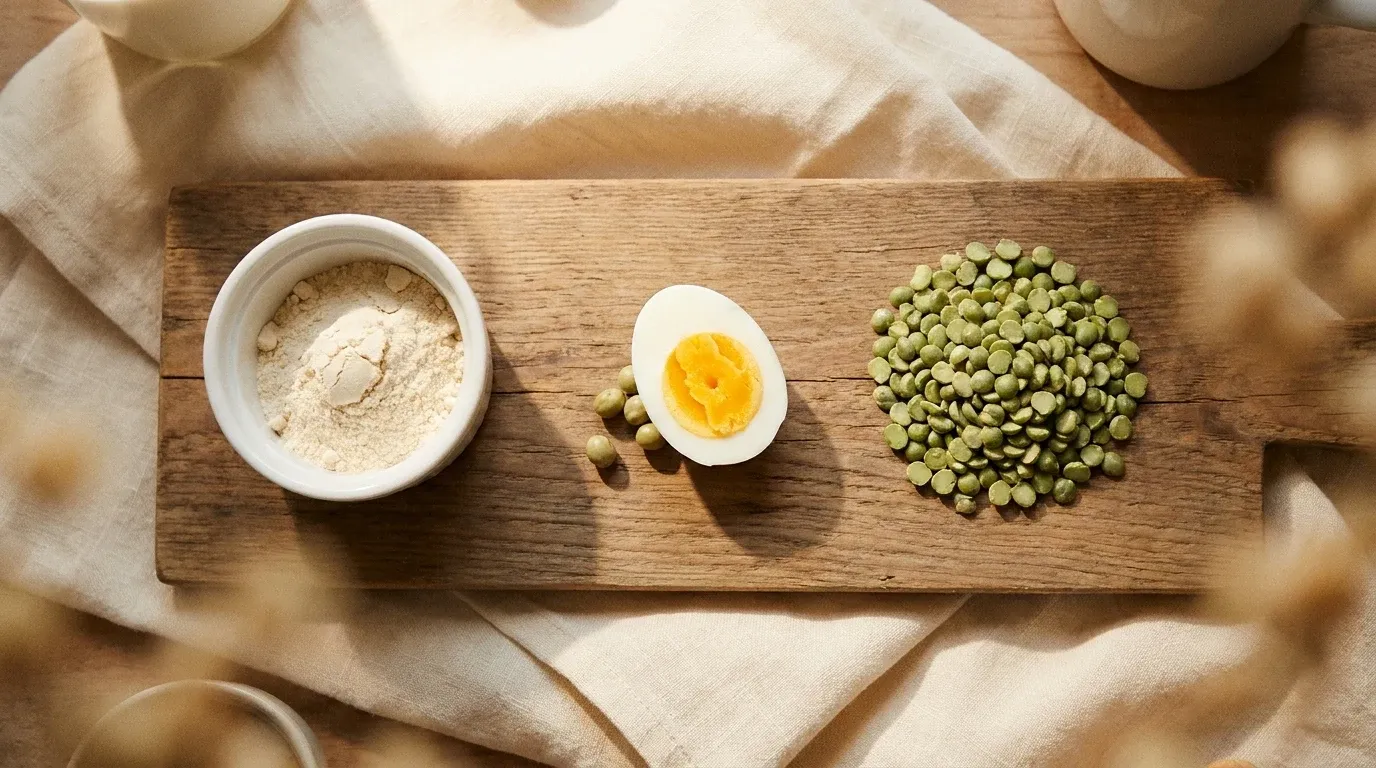
The number on the front of your protein tub, the one that reads "25g protein per serving," tells you almost nothing useful. It doesn't tell you how much of that protein your body can actually absorb and use, or whether the amino acid profile matches what your muscles are asking for after a hard training session. For that, you need to understand protein quality scores. And right now, most consumers don't.
Two scoring systems dominate the conversation: PDCAAS and DIAAS. One is outdated but everywhere. The other is the current gold standard but nearly invisible on product labels. Knowing the difference could meaningfully change how you spend your money and how well you recover.
PDCAAS vs. DIAAS: Why the Label Is Lying to You by Omission
PDCAAS, the Protein Digestibility-Corrected Amino Acid Score, became the global standard in 1993. It measures how well a protein's amino acid profile matches human needs, then corrects for digestibility. The problem is how it handles its math. PDCAAS caps its score at 1.0. Any protein that exceeds human amino acid requirements in any category gets truncated, which means you lose information. Whey, casein, and egg white all score 1.0 on PDCAAS. So does soy. The scores look identical even when the proteins behave differently in your body.
DIAAS, the Digestible Indispensable Amino Acid Score, was introduced by the Food and Agriculture Organization of the United Nations in 2013 to fix those problems. Instead of measuring fecal digestibility at the end of the gut, it measures amino acid absorption at the end of the small intestine. That's a more accurate picture of what actually gets into your bloodstream. DIAAS also doesn't cap at 1.0, so superior proteins can score higher, which makes real comparisons possible.
The practical gap between the two systems is significant. Whole milk protein has a DIAAS around 1.18. Whey protein concentrate lands around 1.09. Meanwhile, pea protein sits at roughly 0.82, and wheat protein can drop as low as 0.45. Under the old PDCAAS system, some of those differences were invisible. Under DIAAS, they're not.
Despite being more accurate, DIAAS rarely appears on consumer packaging. Regulatory bodies in the US, UK, and elsewhere haven't mandated it yet, so brands have little commercial incentive to surface a number that might make their product look worse than competitors. As research on protein requirements continues to evolve, understanding the gap between what labels say and what your body gets becomes more important. your protein and exercise needs are likely higher than current guidelines suggest, which makes protein quality, not just quantity, a real variable worth optimizing.
Why Plant Proteins Score Lower and What You Can Do About It
Plant proteins tend to score lower on DIAAS for two main reasons. First, most single plant sources are limiting in at least one indispensable amino acid. Pea protein is low in methionine. Wheat is very low in lysine. Rice is low in lysine too. Second, plant foods contain anti-nutritional factors like phytates and tannins that reduce how efficiently your small intestine absorbs amino acids.
This doesn't mean plant proteins are inadequate. It means you need to be more deliberate about how you use them.
The most practical solution is protein blending. When you combine plant proteins with complementary amino acid profiles, the weaknesses of one source get covered by the strengths of another. The combined DIAAS of a well-designed blend can approach, and in some formulations come close to matching, the score of whey.
Some combinations that work well in practice:
- Pea + rice protein: Pea covers lysine, rice covers methionine. A typical 70/30 pea-to-rice blend can reach a DIAAS in the range of 0.90 to 1.00, depending on processing method and amino acid content.
- Pea + wheat: Less optimal than pea-rice but widely used in commercial products. Wheat's low lysine content is partially offset by pea's strength there, though combined scores tend to stay lower than pea-rice blends.
- Soy protein: As a standalone, soy is the strongest plant option with a DIAAS around 0.90 to 1.00. It's the only single plant protein that covers all indispensable amino acids at levels close to animal proteins, though some people avoid it for hormonal or digestive reasons.
- Plant blend + leucine fortification: Some premium products add free-form leucine to their blends. Leucine is the primary amino acid trigger for muscle protein synthesis, and boosting it can partially compensate for lower overall DIAAS scores in a training context.
For plant-based athletes specifically, research consistently shows that higher total protein intake, typically toward the upper range of 1.6 to 2.2 grams per kilogram of body weight, compensates for the lower biological availability of plant sources. The strategy is to eat more and blend smarter, not to abandon plants.
Animal Proteins: Where the Scores Actually Land
If you're not following a plant-based diet, you have access to proteins that naturally score well on DIAAS without any blending strategy required.
- Whey protein concentrate: DIAAS approximately 1.09. Fast-digesting, high in leucine, well-researched for post-training recovery.
- Whole eggs: DIAAS approximately 1.13. One of the most complete whole food sources available.
- Milk (whole or low-fat): DIAAS approximately 1.14 to 1.18. Worth noting if you're open to dairy. the evidence for dairy as a performance nutrition tool is stronger than most people expect.
- Casein: DIAAS approximately 1.08. Slower-digesting than whey, often used before sleep for sustained amino acid availability.
- Chicken breast: DIAAS approximately 1.08. High protein density per calorie, very low in fat.
Animal proteins generally require less nutritional strategy to hit high quality targets. That said, protein quality is only one factor in a broader diet. Whole food sources carry additional micronutrients, fiber contexts, and health implications that isolated scoring doesn't capture.
A Decision Tree: Picking the Right Protein for Your Situation
You don't need a nutrition degree to apply this. Here's a straightforward framework based on diet type, training volume, and budget.
Step 1: What's your diet type?
If you eat animal products without restriction, whey concentrate or whole food sources like eggs, chicken, and dairy cover your quality needs efficiently. Focus on hitting your total daily protein target, roughly 1.6 to 2.2g per kilogram of body weight if you train regularly, before worrying about optimizing further.
If you're vegetarian but eat dairy and eggs, you're in a strong position. Whey, casein, Greek yogurt, and eggs all score above 1.0 on DIAAS. You can meet both quality and quantity targets without supplementing aggressively.
If you're fully plant-based, the blending strategy becomes central. Prioritize a pea-rice blend or a soy-based product as your supplement anchor. Increase total protein intake by 10 to 20 percent compared to omnivore targets to account for lower digestibility. Consider a leucine-fortified product if your training volume is high.
Step 2: What's your training volume?
Casual exercisers, meaning two to three sessions per week at moderate intensity, have more flexibility. Protein quality matters less when you're not creating significant muscle protein breakdown. Whole food sources with adequate total protein are sufficient.
Serious athletes training four or more times per week need to be more precise. Post-training protein quality and speed of absorption start to matter more. This is where fast-digesting, high-DIAAS proteins like whey or a high-quality pea-rice blend earn their place. the case for structured strength training as a foundation for health is well-established, and the protein strategy that supports it deserves the same level of attention.
Step 3: What's your budget?
Whey concentrate is typically the best value for quality: around $1.00 to $1.50 per 25g serving from reputable brands. Premium plant blends (pea-rice with leucine fortification) often run $1.50 to $2.50 per serving. Whole food sources like eggs and canned fish remain the most cost-effective high-quality protein options across all diet types.
If budget is tight, don't default to the cheapest protein powder without checking the amino acid profile. A lower-cost product with a poor DIAAS is a worse investment than slightly pricier whole food alternatives. The supplement market is crowded and not always transparent. the gap between marketing claims and actual product quality in the supplement industry is a known problem worth keeping in mind when you're shopping.
The Bottom Line on Protein Quality
Grams per serving is a starting point, not a finish line. PDCAAS scores that top out at 1.0 flattened meaningful differences between proteins for decades. DIAAS is more informative but hasn't made it onto consumer labels in any consistent way yet. Until it does, you need to do a small amount of independent research to know what you're actually buying.
For most people, the practical answer is simpler than the science: choose high-quality whole food proteins as your foundation, supplement strategically if your training demands it, and if you're plant-based, blend and increase volume rather than assuming a low gram count is working. The scoring systems are tools to help you think clearly. They don't replace a solid, consistent diet built around your actual goals.