
Spermidine isn't a household name yet, but it's quietly becoming one of the more research-backed compounds in the longevity and metabolic health space. A new study adds to that case, linking higher spermidine intake to improved liver function markers and lower BMI in overweight adults. Here's what the evidence actually shows and whether it belongs in your supplement stack.
What the New Research Found
The study, published in a peer-reviewed clinical nutrition journal, examined overweight adults over a sustained intervention period. Participants with higher spermidine intake showed measurable improvements in liver enzyme levels, specifically ALT and AST, two standard markers used to assess liver stress and function. Elevated ALT and AST are common in people with excess body weight and are early warning signals for non-alcoholic fatty liver disease.
The spermidine group also showed reductions in BMI compared to controls. The effect sizes were modest but statistically significant, which matters in a field where overpromising is rampant. We're not talking about dramatic weight loss. We're talking about a signal worth paying attention to, particularly for people managing metabolic risk.
What makes this study stand out is its focus on a population, overweight adults, where liver health and metabolic strain are already elevated. That's a clinically relevant group, not a healthy-volunteer sample that tells you little about real-world benefit.
Why Spermidine Matters Biologically
Spermidine is a polyamine, a naturally occurring compound found in every cell in your body. Its most studied mechanism is autophagy activation. Autophagy is the process by which cells clear out damaged components and recycle them. Think of it as cellular housekeeping. As you age, autophagy declines, and that decline is associated with accelerated cellular aging, inflammation, and metabolic dysfunction.
Spermidine appears to stimulate autophagy in a way that mimics some of the effects of caloric restriction, without the restriction. That's the core reason researchers have been interested in it as a longevity-adjacent compound for over a decade.
In the context of liver health, autophagy plays a direct role. Liver cells depend on autophagy to process lipid droplets and clear out dysfunctional mitochondria. When that process is compromised, fat accumulates in liver tissue. Spermidine's ability to support autophagy may explain why it's showing up in liver function data.
The BMI Data in Context
The BMI reductions observed in this study are real, but they need framing. A statistically significant BMI reduction in a research setting doesn't automatically translate to meaningful weight loss in your daily life. The magnitude matters, and in this study, it was modest.
That said, BMI is a blunt instrument. Even small reductions in BMI alongside improved liver enzymes suggest something metabolically meaningful is happening. When you combine that with what we know about autophagy and fat metabolism, the picture becomes more interesting than any single number suggests.
It's also worth noting that spermidine's effects are unlikely to operate in isolation. Why Diet and Exercise Together Beat Either One Alone is a principle that applies here too. Spermidine appears to work best as part of a broader metabolic strategy, not as a standalone fix.
Food Sources First: Where Spermidine Naturally Lives
Before reaching for a supplement, it's worth knowing that spermidine is abundant in several common foods. The richest sources include:
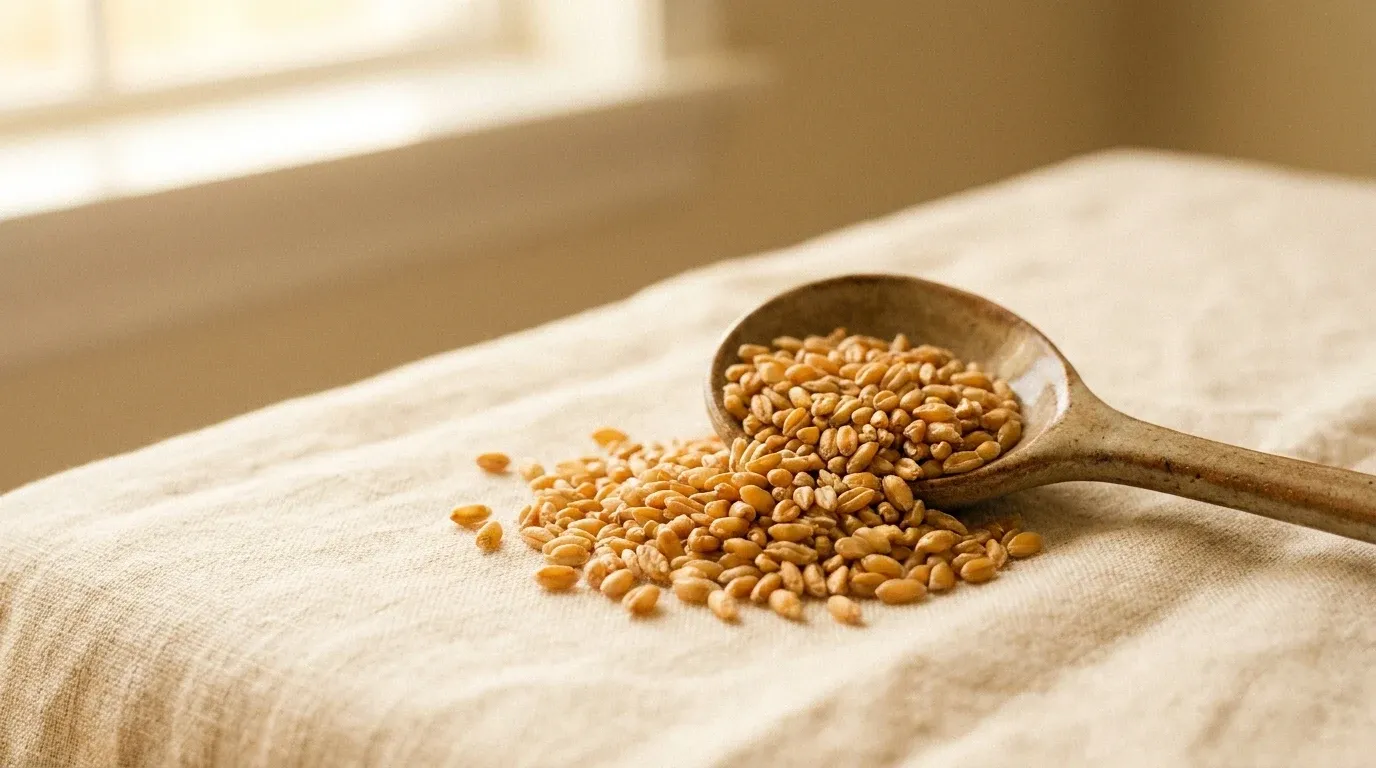
- Wheat germ: consistently the highest concentration of spermidine in any food, with roughly 243 mg per kilogram
- Soybeans and soy products: a solid plant-based source with meaningful polyamine content
- Aged cheeses: particularly cheddar and parmesan, where fermentation increases polyamine concentration
- Mushrooms: especially shiitake, which are among the best non-grain sources
- Peas and lentils: accessible, affordable, and often underrated for micronutrient density
A food-first strategy is genuinely viable here. If you're regularly eating whole grains, legumes, and fermented foods, you're likely already getting meaningful spermidine intake. This isn't a compound you can only access through capsules.
The Mediterranean diet, which is high in many of these foods, has been associated with higher circulating spermidine levels in population studies. That's one reason researchers suspect dietary pattern, not just supplementation, may explain some of the longevity signals seen in Mediterranean cohorts.
The Supplement Market: Growing Fast, Quality Inconsistent
Spermidine supplements have expanded rapidly over the past three years. Products typically come in capsule form, standardized to wheat germ extract, and are marketed heavily around autophagy and anti-aging benefits. Pricing in the US market ranges widely, from around $30 to over $80 per month depending on dosage and brand positioning.
The problem is that quality control in this category is inconsistent. Spermidine is a relatively unstable compound, and the actual spermidine content in capsules doesn't always match label claims. Third-party testing is not universal, and the regulatory bar for supplements in the US, UK, and Australia doesn't require pre-market efficacy proof.
If you're considering a spermidine supplement, look for products that carry third-party certification from organizations like NSF International, Informed Sport, or USP. These don't guarantee efficacy, but they do verify that what's on the label is actually in the bottle at the stated dose.
Dosages used in clinical research typically range from 1 mg to 6 mg of spermidine per day. Many commercial supplements sit at the lower end of that range. Higher isn't automatically better here, and exceeding studied dosages doesn't have strong support in the literature.
Who This Research Is Most Relevant For
This study is most directly relevant for overweight adults concerned about metabolic health, particularly those with early markers of liver strain or elevated fasting glucose. If you're already managing your weight through diet and movement, spermidine-rich foods can reasonably fit into that framework without adding supplementation costs.
For people interested in longevity broadly, spermidine fits into the same category as compounds like berberine or urolithin A. credible biological mechanism, early but promising human data, and a growing body of research that hasn't yet produced the kind of large-scale randomized controlled trials that would move it from "promising" to "established." That's not a reason to dismiss it. It's a reason to stay calibrated.
Exercise remains the most evidence-backed autophagy activator available to you. How Exercise Rewires Your Metabolism Through One Hormone gets into the mechanistic depth of how physical activity reshapes metabolic function at the cellular level. Spermidine and exercise may work through overlapping pathways, which is an area of active research.
Strength training in particular deserves mention here, given its documented effects on metabolic rate, insulin sensitivity, and body composition. Is Strength Training the Key to Women's Longevity? covers how resistance training stacks up as a longevity tool, and many of the mechanisms involved intersect with what spermidine research is pointing toward.
The Bigger Picture on Liver Health and Metabolic Risk
Non-alcoholic fatty liver disease now affects an estimated 25% of adults globally. It often develops silently, with no obvious symptoms until liver function is significantly compromised. Elevated liver enzymes in routine bloodwork are frequently the first detectable sign. The fact that a dietary compound can move those markers in a clinically meaningful direction, even modestly, is worth taking seriously.
Liver health is also tightly connected to broader metabolic outcomes. Can Diet and Exercise Actually Reverse Type 2 Diabetes? explores how metabolic interventions can produce structural changes in disease risk, not just symptom management. Spermidine research is early relative to that body of evidence, but it's pointing in a consistent direction.
The practical takeaway is straightforward. You don't need to overhaul your life around this research. Adding wheat germ to your morning oatmeal, eating more legumes, and including fermented dairy if it suits your diet will get you meaningful spermidine from food. If you choose to supplement, be selective about brand quality and realistic about what current evidence can and can't promise.
Bottom Line
Spermidine is one of the more credible compounds in the longevity-adjacent supplement space, and this new research on liver function and BMI adds useful clinical context. The mechanisms are real, the food sources are accessible, and the supplement market is growing. Quality and dosage consistency in that market remain genuine concerns.
Use the food-first approach where you can. If you supplement, verify third-party testing. And keep it in proportion: spermidine works best as one layer in a metabolic health strategy that includes consistent movement, good sleep, and a diet that isn't doing damage in the first place.