
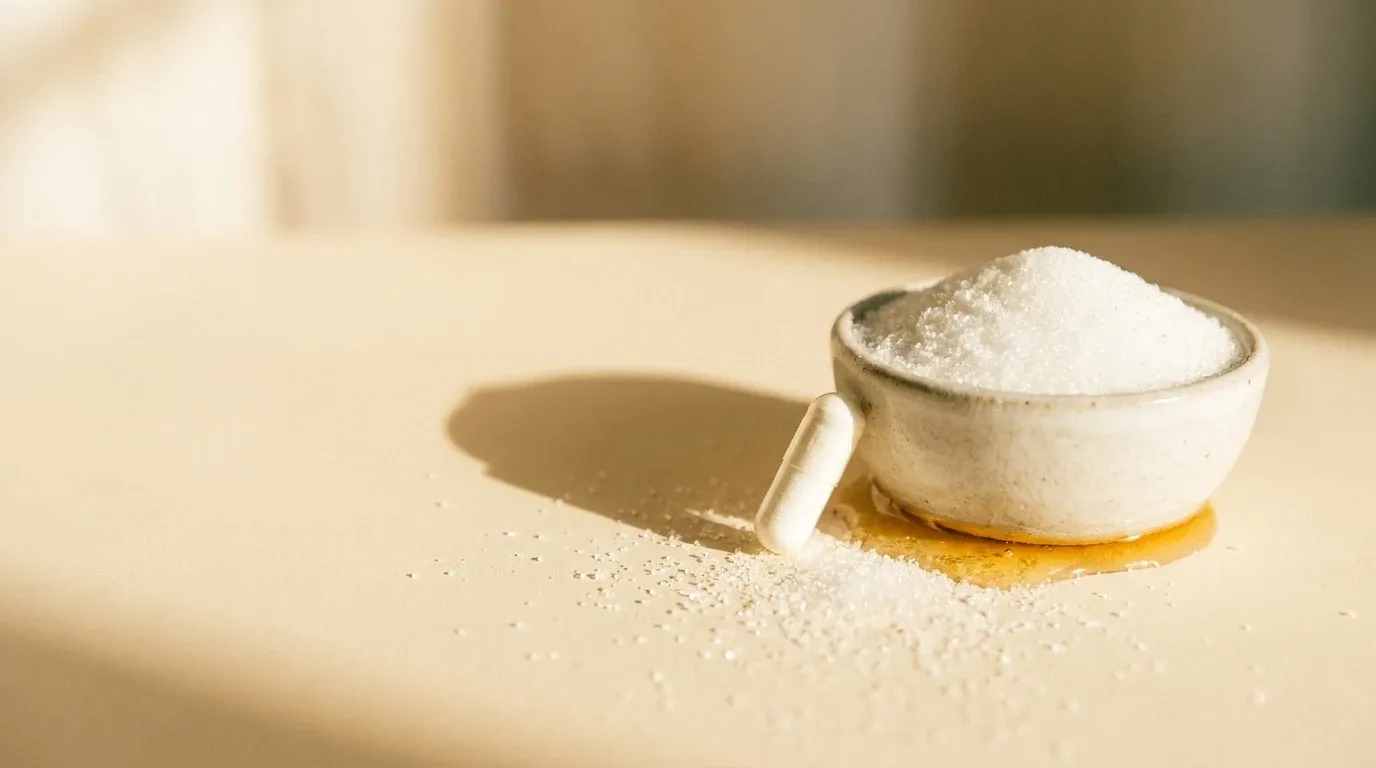
You already know antibiotics disrupt your gut. That's been established. What's less understood is how dramatically your diet during treatment shapes the severity of that disruption. Specifically, sugar doesn't just passively sit in your gut while antibiotics do their work. It actively accelerates the damage.
This isn't a minor nuance. Research into microbiome recovery following antibiotic courses consistently shows that dietary sugar intake during and immediately after treatment is one of the strongest modifiable factors in how badly your gut flora is destabilized. Here's what's actually happening inside your digestive tract, and what you can do about it.
Why Sugar Makes Antibiotic Damage Worse
Antibiotics are blunt instruments. They eliminate a broad range of bacteria, including many of the beneficial strains that keep your gut ecosystem balanced. What they don't reliably eliminate are certain pathogenic or opportunistic bacteria that have evolved resistance mechanisms or that thrive precisely in the post-antibiotic vacuum.
Strains like Clostridioides difficile, certain Enterococcus species, and opportunistic Candida overgrowth share a critical trait: they metabolize simple sugars efficiently and rapidly. When you eat sugar during an antibiotic course, you're not feeding your beneficial bacteria. Most of them are already suppressed. You're feeding the strains that survived. You're handing fuel directly to the organisms most likely to dominate your gut at its most vulnerable point.
Studies using germ-free and antibiotic-treated animal models have shown that high-sugar diets following antibiotic exposure significantly increase the colonization of pathogenic species compared to control diets. The mechanism is straightforward: with fewer competing beneficial microbes present, sugar provides a selective growth advantage to the remaining opportunistic bacteria.
Simple Sugars Are the Bigger Problem
Not all carbohydrates behave the same way in an antibiotic-disrupted gut. This distinction matters practically.
Fructose and sucrose. those are the sugars found in soft drinks, fruit juice, table sugar, honey, and most processed foods. appear to be significantly more problematic during antibiotic courses than complex carbohydrates like oats, legumes, or root vegetables. The reason is fermentation rate. Simple sugars are rapidly broken down in the upper gut, making them immediately available to fast-replicating pathogenic bacteria. Complex carbohydrates, by contrast, ferment more slowly in the lower colon and tend to selectively feed the kinds of bacteria you actually want to rebuild.
Fructose in particular has been shown to alter gut barrier permeability independently of the microbiome, meaning it can contribute to intestinal inflammation even without the presence of dysbiotic bacteria. When you combine antibiotic-induced microbiome disruption with fructose-driven barrier damage, you're stacking two separate mechanisms of gut injury on top of each other.
This is why fiber is one of the most underrated tools in gut health, especially during and after an antibiotic course. Fiber-rich complex carbohydrates don't just avoid feeding pathogenic bacteria. They actively support the eventual recolonization of beneficial ones.
The Damage Window Is Longer Than You Think
Most people assume that once the antibiotic course is finished, the recovery process is mostly passive and reasonably quick. The research does not support that assumption.
Microbiome studies tracking gut flora diversity after standard antibiotic courses consistently show that measurable disruption persists for two to four weeks post-treatment. In some cases, particularly with broad-spectrum antibiotics or repeated courses, certain bacterial species don't fully recover within the study windows at all. The gut isn't just bouncing back the moment you take your last pill.
What this means practically is that your dietary behavior during those two to four weeks after finishing antibiotics matters nearly as much as what you eat during the course itself. Many people treat the end of their prescription as the end of the problem. It isn't. The window of vulnerability stays open, and sugar consumed in that post-treatment period can disrupt the recolonization process just as effectively as sugar consumed during treatment.
Understanding how to support this recovery period also intersects with other recovery fundamentals. Sleep and nutritional support are among the most effective recovery strategies for the body during periods of physiological stress, and microbiome recovery following antibiotics qualifies.
The 10-Day Antibiotic Protocol: A Practical Eating Framework
You don't need to rebuild your entire diet. You need to make targeted adjustments for a defined period. Here's a day-by-day framework structured across the core phases of a standard antibiotic course.
Days 1 to 3: Eliminate the Obvious Sugar Sources
Start with complete removal of the highest-impact items. This isn't about perfection. It's about removing the clearest fuel sources for opportunistic bacteria during the most disruptive phase of the antibiotic course.
- Cut out all sugar-sweetened beverages including fruit juice, soda, and energy drinks
- Remove processed snacks with added sugar (granola bars, flavored yogurts, packaged cereals)
- Avoid honey, agave, and table sugar as sweeteners during this window
- Whole fruit in moderate amounts is generally acceptable given the fiber content buffering sugar absorption
Replace these with: water, unsweetened herbal teas, plain sparkling water, and whole foods with low glycemic impact.
Days 4 to 7: Build the Prebiotic Foundation
While antibiotics are still active, you can begin laying the nutritional groundwork for eventual recolonization. Prebiotic fibers. found in foods like garlic, leeks, asparagus, oats, and legumes. selectively feed beneficial bacterial strains and are not efficiently fermented by most pathogenic species.
- Add one to two servings of prebiotic-rich vegetables per day
- Incorporate oats or barley as your primary grain sources
- Include cooked and cooled potatoes or rice, which increase resistant starch content
- Consider a prebiotic supplement if your diet is limited during illness
For a detailed breakdown of how prebiotics differ from probiotics and which one is worth prioritizing first, this breakdown of prebiotics versus probiotics is worth reading before you buy anything.
Days 8 to 10: Introduce Fermented Foods Strategically
Timing matters here. Introducing fermented foods during peak antibiotic activity can reduce their benefit since the antibiotic itself may suppress the live cultures you're trying to introduce. Waiting until the final days of the course, or immediately post-course, is more strategic.
- Plain, unsweetened yogurt with live cultures
- Kefir (unsweetened versions)
- Fermented vegetables like sauerkraut or kimchi
- Miso in soups or dressings
Avoid flavored or sweetened versions of these products. Many commercial yogurts and kefirs contain significant added sugar, which directly undermines the benefit. Check labels carefully.
The Post-Course Extension: Weeks 2 to 4
After finishing the antibiotic prescription, maintain the low-sugar framework for a further two to three weeks. This is the recolonization window, and it's when dietary choices have the greatest influence on which bacterial strains re-establish themselves as dominant.
During this period, the priority shifts from protection to active rebuilding. Continue the prebiotic foods. Continue the fermented foods. And keep simple sugar intake low. not eliminated permanently, but low enough that you're not creating a selective environment that favors the bacteria you don't want.
A few practical substitutions that sustain this without requiring constant discipline:
- Instead of flavored yogurt: plain Greek yogurt with a handful of berries and a teaspoon of chia seeds
- Instead of fruit juice: whole fruit or water infused with slices of citrus or cucumber
- Instead of sweetened granola: rolled oats with cinnamon, walnuts, and a small amount of banana for natural sweetness
- Instead of sweetened sauces and dressings: olive oil, lemon juice, mustard, or tahini-based alternatives
- Instead of processed snack bars: a small handful of mixed nuts or sliced vegetables with hummus
None of these substitutions require significant effort or cost. They require awareness of where sugar is hiding in what you'd otherwise consider normal, healthy eating.
What About Probiotics During the Course?
Probiotic supplementation during antibiotic treatment is a reasonable step, but it comes with a frequently overlooked caveat: timing. Taking a probiotic immediately alongside your antibiotic dose reduces its efficacy, as the antibiotic simply suppresses those cultures too. Most practitioners now recommend separating probiotic intake from the antibiotic dose by at least two hours.
Beyond timing, the quality and strain specificity of probiotic supplements varies enormously. The supplement industry is loosely regulated, and label claims don't always reflect what's actually in the product. Understanding what FDA supplement listings actually mean before spending money on a high-dose probiotic is a reasonable step.
The Broader Picture
Gut health doesn't exist in isolation. Your microbiome intersects with immune function, metabolic health, mental clarity, and your body's capacity to absorb nutrients effectively. Managing it well during an antibiotic course isn't a niche wellness concern. It's basic physiological maintenance.
The sugar-antibiotic interaction is a specific and actionable piece of that picture. You can't always control when you need antibiotics. You can control what you eat while you're on them. That window of influence is real, it's time-limited, and it's worth using deliberately.