
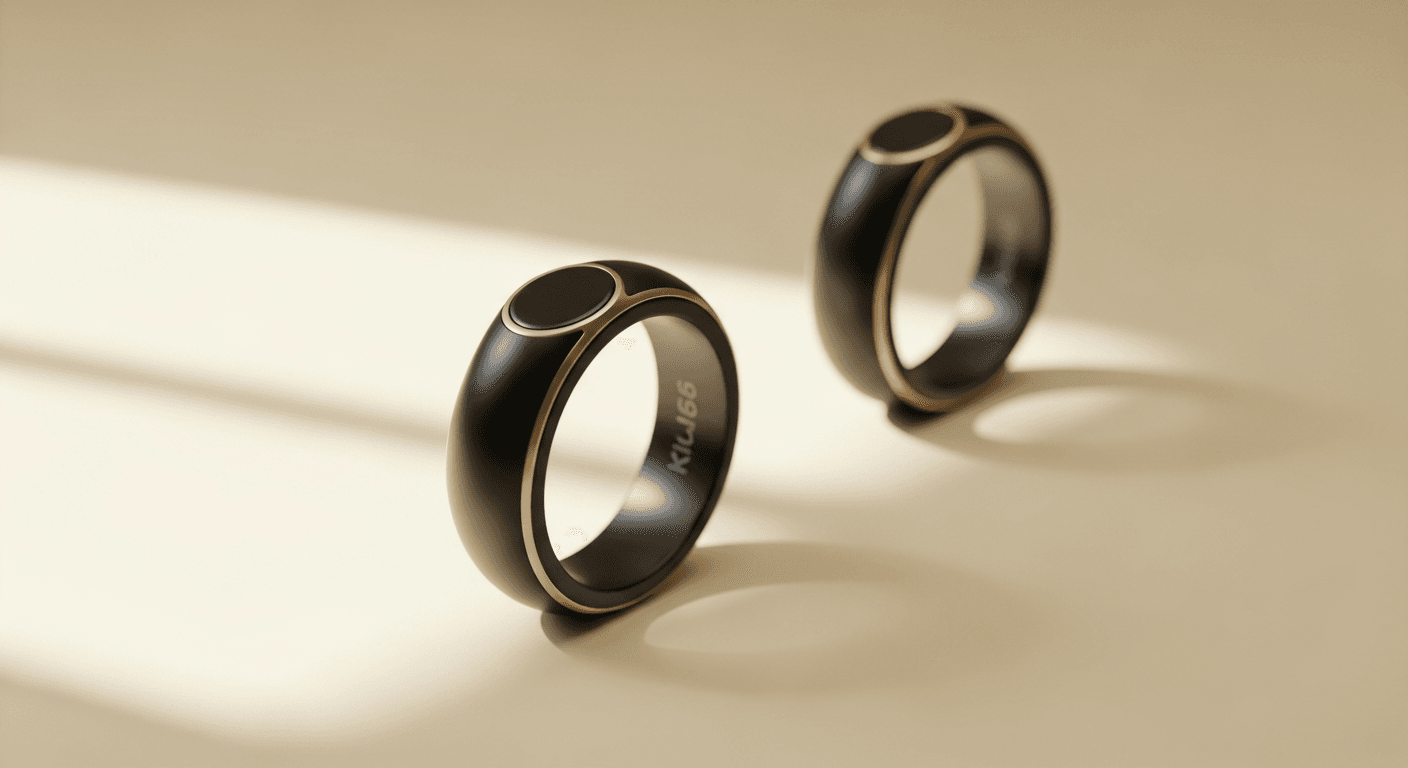
Oura just made its most consequential move yet. The Finnish wearable company best known for its sleek sleep-tracking ring has acquired Galen AI, an AI-powered health companion platform designed to turn biometric data into personalized coaching conversations. The deal is not a feature update. It's a strategic repositioning that every fitness brand, supplement operator, and digital health platform should be paying close attention to right now.
From Data Collector to Health Intelligence Platform
For years, Oura's value proposition was straightforward: wear the ring, get the data, interpret it yourself. Readiness scores, HRV trends, sleep stages. The ring was a sensor, not a coach. That distinction is now gone.
Galen AI fills exactly the gap that Oura's hardware couldn't close alone. Rather than surfacing raw numbers on a dashboard, Galen's platform wraps those numbers in context, feedback, and guidance. It's designed to ask the right follow-up questions, suggest behavioral adjustments, and deliver something closer to what a health coach does in a real session. Integrating that capability natively into Oura's ecosystem means the ring is no longer a passive device. It becomes an always-on coaching layer.
That's a fundamental shift in what Oura is selling. The product is no longer hardware plus an app. It's a vertically integrated health intelligence platform. And that changes the competitive landscape considerably.
The Consolidation Race Is Accelerating
This acquisition doesn't happen in isolation. WHOOP's $575 million funding round earlier this cycle signaled that the wearable category was entering a higher-stakes phase. Both companies are now investing heavily in the layer above hardware: the AI systems that interpret, contextualize, and act on the data the devices collect.
What's being compressed here is the middle ground. Standalone AI health coaching startups that positioned themselves as agnostic data interpreters, sitting between the wearable and the user, are now competing against the wearable brands themselves. That's a structurally difficult position. When the device maker controls the AI coaching layer, third-party platforms that built products on top of that data face a harder road to differentiation and a harder conversation with investors.
The playbook is familiar. It mirrors what happened in fitness technology when Technogym began building its own AI infrastructure rather than relying on third-party integrations. As Technogym's partnership with Google Cloud on AI fitness demonstrated, hardware makers are no longer content to be dumb endpoints in a broader software ecosystem. They want to own the intelligence layer too.
What This Means for Brands That Depend on Wearable Partnerships
Here's where the implications get practical and uncomfortable for a specific set of operators. Fitness equipment brands, supplement companies, and digital wellness platforms that have built engagement strategies around wearable data integrations are now looking at a narrower field of neutral partners.
If you're a supplement brand running personalized nutrition recommendations off a user's recovery score, or a gym operator serving up training load adjustments based on HRV data, you've been implicitly relying on wearable platforms as neutral infrastructure. That neutrality is eroding. As Oura builds out its own coaching and recommendation engine, it has less incentive to feed that data cleanly into competing touchpoints. And it has every incentive to keep users inside its own ecosystem.
The questions you need to be asking your tech team right now are blunt: Which wearable platforms does your product depend on for data? Do those agreements include exclusivity clauses? What happens to your engagement model if those data streams get throttled or re-routed to the platform's own coaching layer? These aren't hypothetical risks. They're contract-review tasks.
The personalization pivot now reshaping the $70 billion supplements market has pushed many nutrition brands toward data-driven individualization. That's smart strategy. But it only works if the data pipeline stays open, and that's no longer a safe assumption when the wearable company is also building the coaching layer you're competing with.
The Broader M&A Pattern: Buying the Science-Backed Touchpoint
The Oura-Galen deal fits neatly into the acquisition logic that has been driving deals across the health and wellness sector throughout 2026. Unilever's $1.2 billion acquisition of Grüns and Danone's move on Huel weren't primarily about product formulas or supply chains. They were about buying direct, trusted, science-adjacent consumer relationships at scale.
Big acquirers aren't buying revenue. They're buying touchpoints that consumers already trust for health guidance. A supplement pouch, a meal replacement, a health companion app. The common thread is that all of these assets sit in a user's daily routine with a health halo attached. Oura buying Galen is the same playbook applied to wearable hardware. The ring already has the daily touchpoint. Galen gives it the coaching credibility and the conversational stickiness that makes users harder to pull away.
This matters for brands evaluating their own positioning. If your product doesn't have a clear answer to the question "where do we sit in the user's health routine, and what trust signal do we carry there?" you're increasingly vulnerable to being displaced by platforms that can answer that question comprehensively. The consolidation is selecting for depth of relationship, not breadth of feature set.
Platform Lock-In Is Now a Strategic Risk, Not a Vendor Problem
For operators running digital health services, online coaching platforms, or hybrid training programs, the Oura-Galen deal raises a question that used to live in the IT department but now belongs in the boardroom. What does your dependency map look like?
Platform lock-in in fitness technology has historically been treated as a procurement inconvenience. You pick a software vendor, you get locked in, you negotiate at renewal. The Oura-Galen model introduces a different kind of lock-in risk. It's not just about your contract with the platform. It's about whether the platform you're integrated with is now a direct competitor to the health outcomes you're promising your clients.
If Oura's coaching engine tells a member to reduce training load on Tuesday, and your programming says to push hard on Tuesday, whose recommendation wins? In a world where the device is trusted more than the coach, that's not a hypothetical tension. It's an active one. Operators who haven't thought through this dynamic yet should revisit how they're selecting and positioning their tech stack. There's solid guidance on that in how to pick an online coaching platform in 2026 that's worth revisiting with fresh eyes given this consolidation shift.
And if your differentiation as a coach or operator is in behavioral change and the human relationship you build with clients, that's still a genuine moat. The reasons why are worth understanding. Behavior coaching remains the edge AI can't take from you, but only if you're actively using it rather than letting AI platforms substitute for it by default.
Practical Steps for Brands Right Now
The response to this kind of market shift isn't panic, and it isn't paralysis. It's deliberate audit and repositioning. Here's a working framework:
- Audit your data dependencies. List every wearable or health platform integration your product or service relies on for personalization, engagement, or analytics. Flag any where the platform is now developing capabilities that compete with your core offer.
- Review your data agreements. Understand what your current agreements actually allow in terms of data portability, exclusivity, and termination. Don't assume continuity.
- Build platform-agnostic data strategies where possible. If your personalization engine depends on a single wearable data source, you're exposed. Diversify inputs. Build toward first-party data ownership.
- Identify your coaching differentiation clearly. If you're competing with AI coaching tools now embedded in wearables, you need a sharper articulation of what you offer that they don't. Relationship depth, accountability structures, and programming nuance are real differentiators if you make them explicit.
- Watch the next 18 months closely. This consolidation cycle isn't finished. More acquisitions in the wearable-AI-coaching space are likely. Position your brand to benefit from fragmentation rather than getting caught flat-footed by it.
The Competitive Pressure Is Real, but So Is the Opportunity
It would be easy to read the Oura-Galen deal as purely threatening for smaller brands and independent operators. That reading is too simple. Consolidation always creates gaps. When platforms scale up and optimize for the mass user, they inevitably sacrifice the depth, specificity, and human texture that premium coaching and specialized nutrition brands can still deliver.
The operators and brands who treat this moment as a forcing function to sharpen their differentiation will come out better positioned. Those who don't notice the shift until it affects their data feeds or their member retention numbers will find themselves reacting rather than leading.
The wearable space is no longer about the device. It's about who controls the health intelligence layer. Oura just made a very clear statement about where it intends to sit. Now it's your turn to decide where you sit relative to that.