
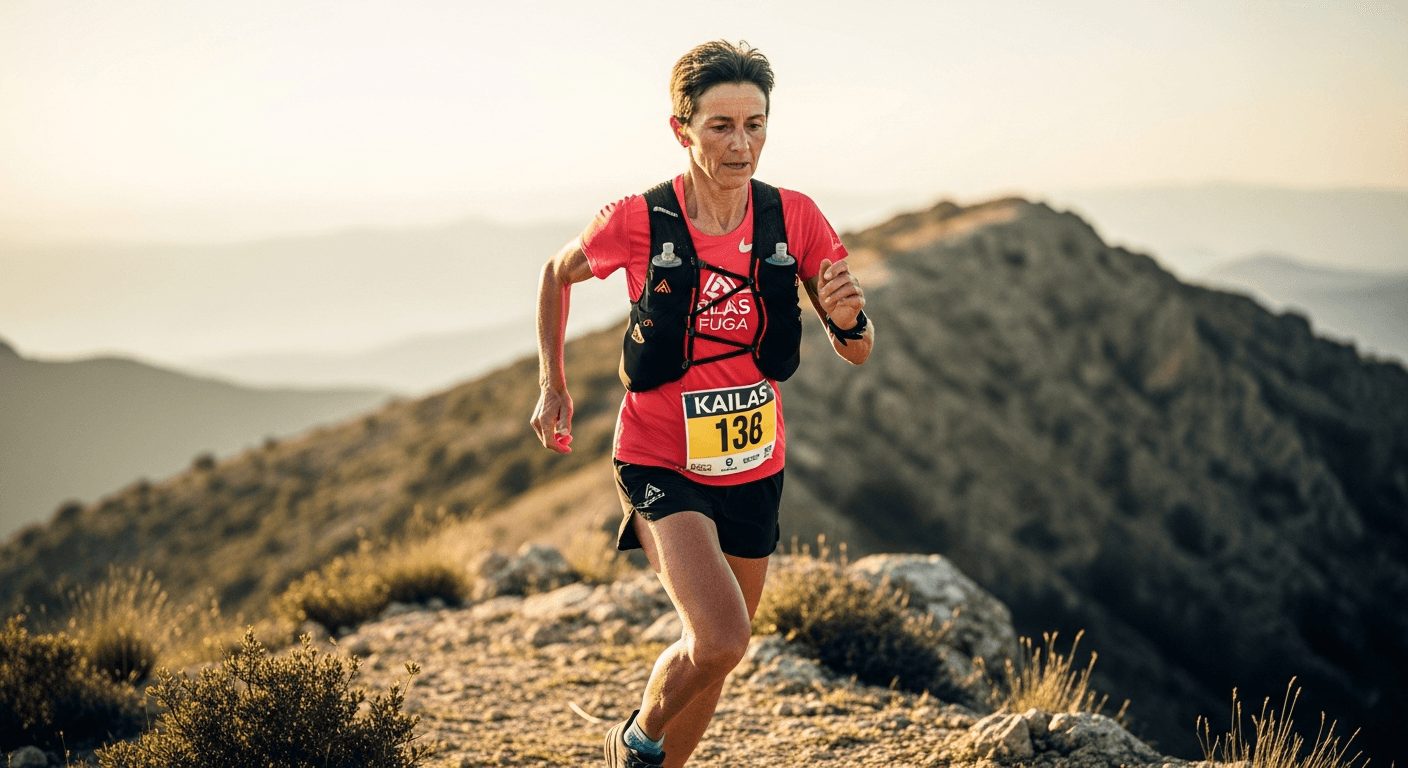
Azara Garcia Signs With Kailas: What It Means for Trail Running
When a brand makes a move in elite trail running, it rarely happens quietly. Kailas FUGA's signing of Azara Garcia de los Salmones isn't just a roster addition. It's a statement about where the Chinese outdoor brand intends to compete, and who it's willing to back to get there.
For those unfamiliar with the name, that's worth fixing immediately. Garcia de los Salmones is widely recognized as Spain's first professional female trail runner. She's been competing at the elite level for over three decades. She has multiple World Championship runner-up titles. And she's still racing, still winning, and still commanding the respect of a global trail community that has watched her build something from nothing in a country where the sport had no professional framework for women when she started.
Who Is Azara Garcia de los Salmones?
Trail running has a short institutional memory. New stars emerge every season, and athletes who built the sport's foundation often get less attention than they deserve. Garcia de los Salmones is a direct example of that gap.
She began competing seriously in mountain and trail disciplines in the early 1990s, at a time when professional infrastructure for female trail runners in Spain was essentially nonexistent. There were no dedicated sponsorship frameworks, no established race circuits shaped around women's performance, and very little financial support for athletes pursuing what was then a fringe discipline. She competed anyway, and she competed at the highest level.
Over her career, she has accumulated multiple runner-up finishes at the Trail World Championships, placing her among the most decorated Spanish trail athletes of any generation. That consistency across decades is rare in any endurance sport. In trail running, where the physical demands compound with age and terrain, it's genuinely exceptional.
She has also been vocal about the structural challenges facing women in trail running, particularly around sponsorship access and visibility. Her willingness to compete and advocate simultaneously has made her a significant figure beyond podium results.
What Kailas FUGA Is Building
Kailas is a Chinese outdoor and mountain sports brand that has been systematically expanding its global footprint over the past several years. Its FUGA line, focused specifically on trail running, has been the vehicle for that expansion. The brand has invested in technical gear development, international race partnerships, and now, high-profile athlete signings in European markets.
Signing Garcia de los Salmones is not a casual decision. European trail running is dominated by established Western brands with deep athlete rosters, long-standing race sponsorships, and strong consumer loyalty in key markets like France, Spain, Italy, and the UK. Breaking into that environment requires more than product quality. It requires cultural credibility, and that means partnering with athletes who carry genuine weight in those communities.
Garcia de los Salmones carries significant weight. She's not a rising talent being introduced to the market. She's a pioneer with three decades of racing history, a recognizable name across the European trail circuit, and a story that resonates with the kind of serious amateur runners who make purchasing decisions based on athlete alignment. For Kailas FUGA, that's a strategic asset.
The move also reflects a broader shift in how Asian outdoor brands are approaching Western markets. Rather than competing on price or volume, brands like Kailas are investing in elite credibility first. The logic is straightforward: if serious athletes trust the product, performance-oriented consumers follow. You can see a similar dynamic playing out in running footwear more broadly, as the competitive pressure on established running shoe brands continues to reshape the market.
The Timing Makes Sense
Trail running has experienced significant growth in participation over the past five years. Race entries across major European events have increased, the sport has attracted more media coverage, and the global community of competitive trail runners has expanded well beyond its traditional base in the Alps and Pyrenees.
That growth has created space for new brands to establish themselves before the market consolidates around a smaller number of dominant players. Kailas is moving during a window that won't stay open indefinitely.
The European summer calendar also provides immediate visibility. If you're tracking the races where elite athletes will be competing and representing their sponsors over the coming months, the schedule is stacked. A quick look at the top European trail races this summer gives you a sense of how much exposure a signing like this can generate in a concentrated period of time.
Garcia de los Salmones racing in Kailas FUGA gear at high-profile events throughout the season is exactly the kind of repeated, visible credibility signal that brand-building in trail running requires.
What This Means for Athletes Watching the Sponsorship Landscape
For competitive trail runners, particularly women who have been building their careers without significant brand support, the Kailas FUGA move is worth paying attention to for reasons beyond the athlete involved.
It signals that more brands are entering the European elite market, which increases competition for athlete partnerships and potentially expands the pool of support available to serious runners. Historically, sponsorship in trail running has been concentrated among a small number of established brands, and the barrier to entry for women has been demonstrably higher than for men. New players with investment appetite can change that dynamic.
It also reinforces a point that Garcia de los Salmones herself represents: longevity and consistency matter in elite trail running. Brands looking to build credibility don't always need the youngest or fastest athlete. They need athletes with authentic stories, proven performance records, and genuine standing in the community they're trying to reach.
The nutrition and recovery demands of sustaining that kind of career across three decades are substantial. why elite athletes invest heavily in nutrition support is increasingly well documented, and long-career trail runners are among the clearest examples of that investment paying off over time.
The Broader Signal for Trail Running
Trail running is at an interesting inflection point. The sport has grown fast enough to attract serious commercial investment, but it hasn't yet fully resolved the tension between its countercultural roots and its growing mainstream profile. Brand signings at the elite level are one of the visible markers of how that negotiation is playing out.
Kailas FUGA entering the European market with a high-profile female athlete signals a few things simultaneously. First, that the brand understands European trail culture well enough to know that credibility here is built differently than in mass-market sports. Second, that women's trail running is now commercially attractive enough to anchor a market entry strategy. Third, that the competitive landscape for established brands is about to get more complicated.
International expansion in trail running isn't limited to Europe either. Canadian athletes making an impact at Madeira Island Ultra-Trail is another example of how the sport's global geography is shifting, with competitive depth emerging from markets that weren't traditionally central to the elite trail world.
For Garcia de los Salmones, the Kailas partnership is a meaningful recognition of a career that deserved more visibility than it's consistently received. For Kailas, it's a calculated and well-reasoned entry point into a market that rewards authenticity. For the sport itself, it's further evidence that trail running's commercial and competitive center of gravity is genuinely global now.
What You Should Watch For
The practical question now is execution. Signings generate attention, but what happens next determines whether the investment pays off for either party. A few things are worth tracking over the coming months:
- Race performance and visibility: How Garcia de los Salmones performs in Kailas FUGA gear at major European events will shape the brand's credibility narrative in real time.
- Product line development: Whether Kailas uses this partnership to refine or expand its FUGA offering based on elite athlete feedback will indicate how seriously the brand is investing in technical product development for European conditions.
- Community engagement: Elite signings that stay at the elite level have limited reach. If Kailas builds ambassador programs or community initiatives around the partnership, that suggests a longer-term market building strategy rather than a short-term visibility play.
- Other European signings: Garcia de los Salmones is likely the first of multiple European athlete partnerships if Kailas is serious about this market. Watch for additional signings across different nationalities and disciplines.
Trail running doesn't have the commercial volume of road running, but it has something arguably more valuable for brand building: a passionate, loyal, and knowledgeable community that pays close attention to who athletes choose to partner with. Kailas FUGA has made a smart first move. The follow-through is everything.